Travel Weekly Preview 2014: Pointed in the right direction

By Bill Poling

The ingredients are in place for the travel industry to have a year of growth and prosperity in 2014. Demand is strong, the economy is improving, and the major supplier categories are beginning the year with their houses pretty much in order. 
With the consummation of the American-US Airways merger, the airline industry is getting reacquainted with profitability and is poised to push on. The cruise industry, buffeted by disasters and breakdowns in 2012 and 2013, is finally seeing the bad publicity recede.

Hotels and resorts, buoyed by rising rates and occupancies, continue to attract both guests and investors. The car rental industry, also firmed up by consolidation, is making itself more accessible every day. And tour and river cruise companies are beginning the year with momentum and product lines tweaked by innovation.

A quick scan of leading indicators suggests that, barring external disruptions, the economic environment will be good enough for every mode to do well. It even looks like the federal government might behave itself in 2014, sparing us the jolts of sequestration and shutdowns.

The recession knocked a lot of our abbreviations and acronyms on their ears: GDP, Nasdaq, etc. Most distressing for millions of workers, the typical IRA and 401(k) took a hit too. Most of these have regained their lost ground and some — the market indexes, for example — have picked up new momentum.

But early on, many experts honed in on two big data points that, more than any other, would tell the tale of this recovery: unemployment and housing. Both have been particularly stubborn, but as 2013 comes to a close there are signs that even these two laggards are finally getting traction.

Preview 2014According to the Bureau of Labor Statistics, the national unemployment rate dropped another notch, to 7%, in November, a level not seen since the index crossed that line on its way north in December 2008. The average work week and hourly wage are also trending up.

For 2014, the Federal Reserve is forecasting a continued drop in the unemployment rate, possibly to as low as 6.4%. Although the trend has been slow because of pockets of high unemployment in particular geographic areas and among certain demographic groups, the overall trend has been pronounced and positive.

On the housing front, there are still far too many homeowners dealing with foreclosure, and far too many homeowners are underwater on their mortgage (i.e., they owe more than the property is worth), but the tide has turned.

The National Association of Home Builders reported earlier this month that in 54 of the nation’s 350 metropolitan areas, activity in the housing market is at or above normal levels, based on an algorithm that factors in housing permits, home prices and employment levels.

More than a third of the metro markets were at 90% of normal, and overall the national housing market is running at 86% of normal, the association said.

October data from the Department of Housing and Urban Development put the number of underwater borrowers at 7.1 million, down from 10.8 million a year earlier. New foreclosure actions were down by a third.

The housing market and housing prices are particularly important markers because home equity is a major contributor to total household net worth and to many families’ sense of security and, consequently, their willingness to spend.

Notably, household net worth as measured by the Federal Reserve reached pre-recession levels in 2012, and total household equity in real estate, after sliding to $6.2 trillion in 2011, approached $9.7 trillion in this year’s third quarter.

Against this backdrop, optimism seems appropriate, and the airlines are apparently eager to oblige. IATA has forecast a 31% increase in global airline passengers during the five-year period between 2012 and 2017, which translates to nearly a billion new air travelers.

For the American travel market next year, the U.S. Travel Association is forecasting a 5% increase in total travel expenditures, to $940 billion, with $151 billion of that coming from a record 73.4 million international visitors.

This could go well. Unless something goes wrong.

Preview 2014: Cruise

By Tom Stieghorst

A rendering of the Costa Diadema.It’s been five years since the cruise industry has enjoyed anything like a historically “normal” year.

Starting with the 2008 financial meltdown and continuing through last year’s setback with the Carnival Triumph fire, the headwinds have made profit growth a struggle.

But 2014 could prove to be the breakout year for cruise earnings.

Norwegian Cruise Line Holdings CEO Kevin Sheehan is predicting a 60% rise in earnings before items like interest and depreciation. A Wave season that doesn’t put the industry in an early hole would improve pricing power throughout the year, a boon for agents as well as suppliers.

To be sure, forecasts are more measured at Royal Caribbean Cruises Ltd., and Carnival Corp. isn’t expecting positive year-over-year price comparisons until the second half of 2014.

But if prices do rebound, several factors will be working to keep them moving upward in 2014.

One is the increasing value that suppliers are placing on the travel agent distribution channel. It is likely, for example, that following Carnival Cruise Lines’ Carnival Conversations program, more agents are motivated to sell those ships today than they were a year ago.

Norwegian recently debuted an “Ask Away” monthly video chat with its top sales executives, while Princess Cruises has unveiled a rash of changes in 2013 designed to make selling that line easier.

An energized agent force can only stimulate demand for cruising, which supports improved pricing.

Cruise lines are also being more disciplined about buying new ships, to keep pricing power from eroding. Carnival, for example, is restricting growth to two to three ships a year across its 10-brand fleet. New deliveries scheduled for 2014 include the Costa Diadema, effectively a replacement for the Costa Concordia, and the Regal Princess, a sister to this year’s Royal Princess.

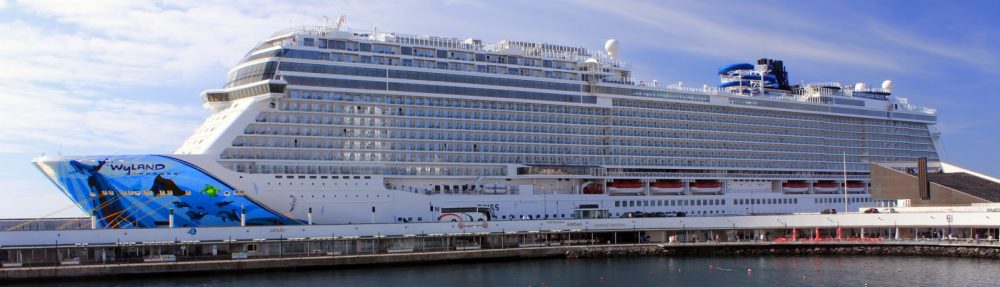
Also taking a sister ship next year will be Norwegian Cruise Line, which is adding the Norwegian Getaway in late January as a Miami-based version of the Norwegian Breakaway.

The most anticipated ship of 2014, however, will be Royal Caribbean International’s Quantum of the Seas, which will debut in the fall in New York. It is a new class for Royal, its first since the two successful Oasis-class giants.

Quantum will include several “wow” elements such as simulated skydiving and a London Eye-style observation capsule.

Another innovation debuting in 2014 will be “virtual balconies,” which are floor-to-ceiling screens on the wall of interior cabins onto which exterior views are projected. The Navigator of the Seas will get some in February in drydock before they are introduced on the Quantum.

Other innovations in 2014 come in itinerary planning, such as the Oceania Cruises world cruise, which debuts at an unheard-of 180-day length.

Below deck, new backup generators and air scrubber devices are being installed on some vessels to make cruises safer and cleaner next year.

On the service side, Carnival Cruise Lines rolls out two new main dining room programs in 2014 that will emphasize American cuisine.

In communications, several lines are upgrading to provide faster Internet access, with the most dramatic speeds promised for the Oasis and Quantum of the Seas, which will access a network of lower-orbiting satellites starting next year.

But not everything is going high-tech. Printed brochures are back at Carnival Cruise Lines in 2014 for the first time in five years.

Next year will be Carnival Corp. CEO Arnold Donald’s first full year at the helm, following his surprise appointment in 2013. Meanwhile, Edie Bornstein takes over as president of Crystal Cruises, and Cunard Line has new leadership, as well.

Two big anniversaries will be celebrated in 2014: The pioneering Queen Mary 2 will be 10 years old next year, and the Panama Canal will turn 100, leading to more interest in canal transits.

Challenges for 2014 will include crowding in the Caribbean, which will get the large MSC Divina and Norwegian Getaway ships as year-round additions to the market, as well as more short itineraries from Princess Cruises.

In Asia, expansions by Princess into Japan and by Royal Caribbean and Costa into China should continue, although the rise in tensions between those two countries might prevent the most desirable itinerary options.

And in Europe, signs of a turnaround in demand in the second half of 2013 could mean a better year in 2014. Although a weak economy in Spain has drained the life from that country’s cruise industry, Pullmantur will further redeploy in 2014 to Latin America, where it appears to be finding a second wind.