
As 2013 arrives, the cruise industry can only pray that there is no repeat of the signature event of 2012.
A year ago, travelers seemed ready to pay higher prices for cruises. Then the Costa Concordia accident happened, casting a pall over cruising that lasted for a good part of the year.
Looking at next year, Micky Arison, chairman of Carnival Corp., which owns Costa Cruises, said in September that prices are generally well positioned to reach parity with 2011 by Q2 2013.
However, for the Costa line in particular, “to climb back to where things were before will take a couple of years beyond 2013,” Arison said.
In some markets, there are signs that next year will be more normal. Starting in January, Norwegian Cruise Line is hiking prices 10% on its Pride of America ship in Hawaii.
Alaska will continue to regain capacity in 2013 that was lost to the ill-conceived passenger head tax several years ago. But trouble looms in 2015 with a tighter standard for low-sulfur fuel, though some breathing room remains for reaching a regulatory compromise.
The biggest unknown hanging over the industry for 2013 is Europe, both as a source of passengers and as a draw for North Americans faced with continued high airfares.
At Royal Caribbean Cruises Ltd., capacity for 2013 is down 20% in the Western Mediterranean and 9% in the Eastern Mediterranean.
“The European market continues to be the most puzzling market we’re facing,” said RCCL Vice Chairman Brian Rice.
Closer to home, cruise lines continue to bring more ships to within driving distance of their customers. Princess Cruises in 2013 will operate a ship year-round from San Francisco, giving the Bay Area drive-market itineraries to Alaska, Hawaii and coastal California.
Disney Cruise Line will offer a full year of cruising from Galveston, Texas, another popular drive market, while Norwegian, Carnival Cruise Lines and Holland America Line will all operate additional cruises from Boston.
 But the port with the biggest potential increase in passengers next year is New York, which stands to gain 4,000 passengers a week starting in May with the introduction of the $840 million Norwegian Breakaway.
The Breakaway is staking its claim to New York-area loyalists with a ship that boasts Sabrett hot dog carts and Brooklyn Brewery beer among its food offerings. Five water slides, a two-story spa and Norwegian’s first seafood restaurant are some of the Breakaway’s other attractions.
Another big debut will take place across the pond next year with the delivery of the Royal Princess, the first new ship for Princess in nearly five years. The 3,600-passenger ship will do 12-day Mediterranean cruises before repositioning in October to the Caribbean. Among its noteworthy features will be a cantilevered, glass-enclosed skywalk that extends 28 feet beyond the ship’s edge.
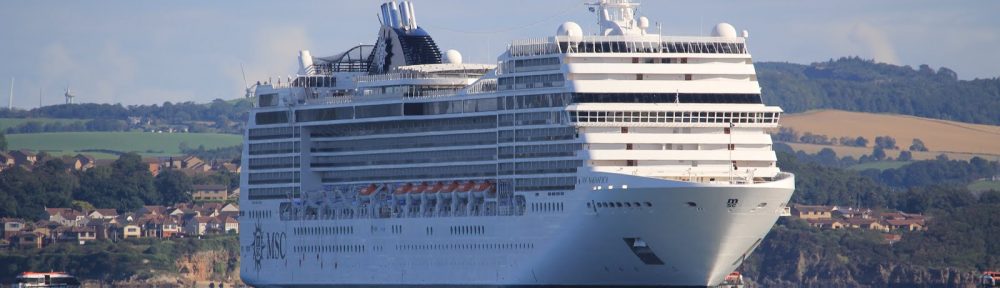
MSC Cruises also has an entrant in the newbuild derby, the $742 million Preziosa, which will boast a 394-foot water slide, the world’s longest at sea.
Carnival Cruise Lines in 2013 will take the wraps off the largest ship makeover in its history when it refits the 17-year-old Carnival Destiny in a 49-day drydock. When it emerges in April, the vessel will sail under a new name, the Carnival Sunshine, and with a slew of new features.
The $155 million transformation will add part of a new deck and expand two others, giving the ship a new layout.
Another 182 cabins will be added to the ship, along with new restaurants, more sports activities and a three-story, adults-only Serenity space.
The Sunshine is emblematic of the trend toward reusing and upgrading older ships rather than ordering new ones. Cruise executives say they want to add new ships in a more measured way than in the past to avoid excess capacity, which dilutes cruise pricing.
They are putting capital into retrofitting older ships with features from newer ones to give them a contemporary feel.
Another example is the Royal Advantage program under way at Royal Caribbean International, which is spending $500 million to modernize 11 ships.
Due for a makeover in 2013 are the Legend, Brilliance, Independence, Vision and Navigator of the Seas, which range in age from 5 to 18 years old.
Prominent among the additional features will be specialty restaurants that boost onboard spending, but the whole package should enable Royal, and agents, to tout new amenities that command better prices.
Deployments in 2013 will feature more cruise segments that can be combined into longer voyages. Celebrity Cruises, for example, will offer more short cruises in Europe that can be paired with a second short cruise with a different set of port calls.
“We want to have more seven-day itineraries for that family or couple who can’t get away for a long time,” said Dondra Ritzenthaler, senior vice president of sales at Celebrity.
Luxury lines, as always, will be focused in 2013 on destination development. Azamara Club Cruises will offer a night excursion with each cruise after its two ships come out of drydock early next year.
Another trend is a tighter watch on rebating, which makes for an uneven playing field among agents. Silversea Cruises cracked down on client poaching by saying that agents who rebook a client more than 30 days after they have already booked with a different agent will not receive a commission.
Whatever actions cruise lines take to improve their prospects, some of the key ingredients to prosperity remain beyond their control.
The wild card factors of the economy, oil prices and geopolitical stability can upend any strategy the industry has conceived.
That said, economic trends seem favorable going into 2013.
The wealth effect from a rising stock market could drive a more robust Wave season early in the year. At about $90 a barrel, oil prices were off their March high of $110 a barrel. And U.S. unemployment fell to 7.7% in November, meaning more consumers would be getting a paycheck to spend on vacations.
Although the jobless rate remains high, travel agent Grace Dieleman, owner of Vellinga’s Travel Service in Chatham, Ontario, said that inverting the equation gives 2013 a rosier hue.
“You always hear about 10% unemployment,” Dieleman said, “but that also means that 90% of the population is still working.”

 Wetravel2u's Weblog