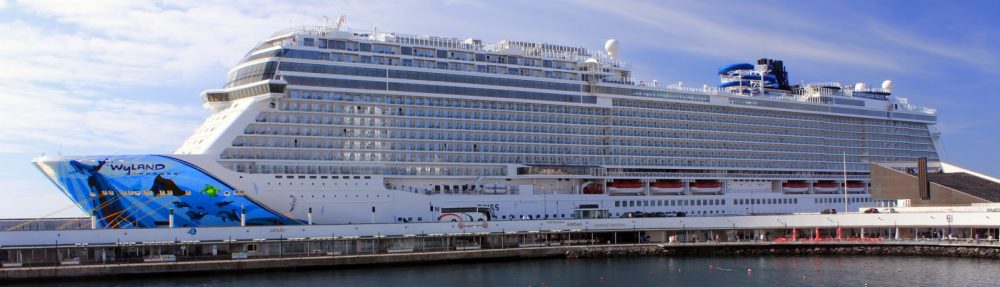
Norwegian Optimizes Sky Cruise Itinerary to Reduce Carbon Footprint

Norwegian Cruise Line is optimizing Apr. 17, 2023, sailing onboard the Norwegian Sky.

According to a statement sent to booked guests, the itinerary of the cruise was adjusted as part of the company’s commitment to driving a positive impact on society and the environment.

“We are continually seeking opportunities to reduce our overall carbon footprint, and recently committed to pursuing net zero greenhouse gas emissions across our operations and value chain by 2050,” Norwegian Cruise Line said.

“To support this mission, we have optimized our arrival and departure times for Norwegian Sky’s sailing on April 17, 2023,” the company added.

As part of the changes, the cruise saw part of its itinerary reversed and a reduction of the time docked in most of the ports of call.

Sailing to the Eastern Caribbean, the nine-night cruise includes visits to the Bahamas, Puerto Rico, St. Maarten, the U. S. Virgin Islands, Antigua, and the Dominican Republic.

Instead of visiting Great Stirrup Cay on Apr. 18, the Norwegian Sky is now spending the first day of the cruise sailing in the Caribbean.

On Apr. 19, the vessel replaces a sea day with an eight-hour visit to Puerto Plata. The length of stay at the Dominican port was increased by one hour.

The three subsequent ports of call – San Juan on Apr. 20, Philipsburg on Apr. 21 and St. John’s on Apr. 22 – remained unchanged but had their arrival and departure times adjusted, resulting in a total reduction of eight and a half hours in port.

On Apr. 23, instead of visiting Puerto Plata as originally planned, the Norwegian Sky is spending the day at sea to anchor at Great Stirrup Cay on Apr. 24.

The visit to Norwegian’s private island in the Bahamas replaces a sea day on the original cruise schedule.

“We appreciate your understanding and support on this important sustainability initiative,” Norwegian Cruise Line added.

Norwegian Cruise Line Holdings Completes Biofuel Trial

PRIO, a producer of biofuels in Portugal, and Norwegian Cruise Line Holdings in collaboration with World Fuel Services (WFS), have successfully completed the first trials with sustainable biofuels produced in Portugal, according to a press release.

Following the launch of ECO Bunkers B15 and taking the first step towards the decarbonization of maritime transport in the Iberian Peninsula, PRIO has announced a blend of Biofuels with 30 per cent renewable base material.

This milestone was achieved in collaboration with Norwegian Cruise Line Holdings and the Florida-based energy and services company World Fuel Services.

The new fuel, ECO Bunkers B30, contains a blend of 30 per cent of advanced biofuel from waste raw materials and it is produced at PRIO’s biodiesel plant in Aveiro. This enables the company to scale up production as demand increases and to adjust the percentage of Biodiesel blends (up to a 100 per cent renewable product).

Luis Nunes, a member of PRIO’s Executive Board said: “Advanced biofuels, produced from residual raw materials, i.e., the result of circular economy, are the solution of the present and that allows us to immediately meet the growing needs of our clients. They are “drop-in” solutions, meaning that they did not require any modifications to the engine or tank of Norwegian Cruise Line Holdings’ cruise ships and, in this way, allowed an immediate impact without any need for additional investment in these ships.

“We are at a crucial moment in the world’s response to climate and biodiversity emergencies, so PRIO believes we can already accelerate the energy transition if we increase the contribution of advanced biofuels in the maritime sector,” he added.

PRIO has established itself as the ideal partner for maritime companies on the road toward decarbonization of the sector.

With the help of World Fuel Services, two Norwegian Cruise Line Holdings ships were fueled with a total of 400 tons of B30 supplied by PRIO last year.

The Norwegian Star received 200 tons of ECO Bunkers B30 in Lisbon in November.

The following week, the Norwegian Epic, received another 200 tons of ECO Bunkers B30. This has enabled the cruise company to avoid approximately 440 tons of CO2 emissions.

Sticking to lockdown washing routines could cut Britain’s long-term carbon footprint

  • Changes to our daily routines as a result of lockdown could shrink the nation’s carbon footprint by reducing pressure on energy demand at peak times
  • EDF estimates that if a third of households continue to use their dishwasher and washing machines at non-peak times, annual CO2 emissions could reduce by half a million tonnes – equivalent to more than 750,000 cars switching to electric vehicles
  • 8 in 10 Brits keen to see lifestyle changes that have had a positive impact on the planet continue post-lockdown

Changes to our daily household routines could have a long-term positive impact on our carbon footprint – as data from EDF reveals households continuing to take care of chores throughout the day could reduce the need for fossil-fuelled generation at peak times once industries power up again.

Historically, households created additional demand for energy at peak times, typically between 4 and 7pm, as people returned home from work and started to tackle these day-to-day chores at the same time. However, since lockdown began, demand for energy throughout the day has smoothed.

The data, released as part of work by the low carbon electricity supplier to assess the impact of lockdown routines on energy efficiency, estimates that if just over a third of households continue to use their dishwasher and washing machines at non-peak times in the future, as they have been doing during the lockdown, annual CO2 emissions could reduce by half a million tonnes – the equivalent to more than 750,000 cars switching to electric vehicles (EVs)*.

The announcement comes as consumer research** undertaken by EDF reveals 8 in 10 of us are keen to see environmentally-friendly lifestyle changes continue after restrictions are lifted.

The study of 2,000 UK residents found that lockdown restrictions have caused the nation to reassess the impact of their daily habits on the environment, with 40% planning to take steps to reduce their carbon footprint post-lockdown, rising to 51% of those under the age of 34. The most popular steps were:

  • Walking more (67%)
  • Recycling more (52%)
  • Purchasing more locally produced products (47%)
  • Using the car less (46%)
  • Unplugging electronic devices when not in use (37%)

The reduced pollution levels resulting from dramatically fewer vehicles on the road have also sparked an increased interest in EVs, with 1 in 5 (19%) more likely to consider switching to a low emission EV in the future.

78% of people believe we can all do more to reduce our carbon footprint once restrictions are lifted. However, despite the potential impact on CO2 emissions, less than a third (31%) are aware that the time of day they do household chores, such as washing dishes and laundry, impacts their carbon footprint.

There is a strong demand for more advice on living greener, with nearly two thirds (62%) wanting information about how to reduce their carbon footprint.