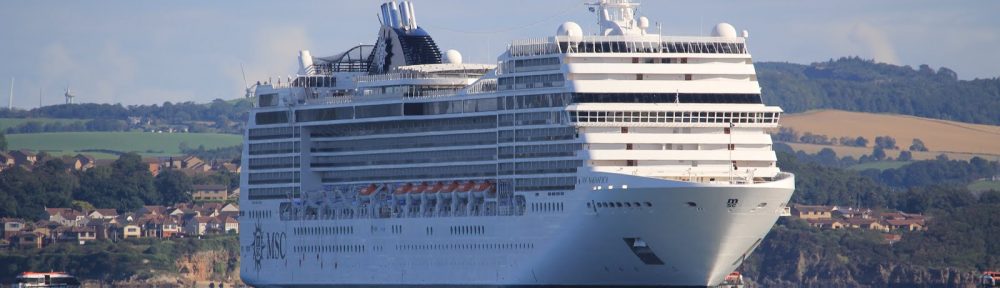

Carnival Corporation has provided its first-quarter 2022 business update.
Highlights:
- U.S. GAAP net loss of $1.9 billion and an adjusted net loss of $1.9 billion for the first quarter of 2022.
- First-quarter 2022 ended with $7.2 billion of liquidity, including cash, short-term investments and borrowings available under the company’s revolving credit facility.
- For the cruise segments, revenue per passenger cruise day (“PCD”) for the first quarter of 2022 increased approximately 7.5% compared to a strong 2019. This increase was driven by exceptionally strong onboard and other revenue.
- As of March 22, 2022, 75% of the company’s capacity had resumed guest cruise operations.
- The company expects to have each brand’s full fleet back in guest cruise operations for its respective summer season where it historically generates the largest share of its operating income.
- The company believes monthly adjusted EBITDA will turn positive at the beginning of its summer season.
- Since the middle of January, the company has seen an improving trend in weekly booking volumes for future sailings. Recent weekly booking volumes have been higher than at any point since the restart of guest cruise operations.
- The company announced that three additional ships are expected to leave the fleet in 2022 in connection with its ongoing fleet optimization strategy. In total, this represents the planned removal of 22 smaller-less efficient ships since the beginning of the pause in guest cruise operations.
- Building on the company’s strong governance framework and its continued commitment to sustainability, the Board of Directors appointed the company’s President and Chief Executive Officer Arnold Donald to the role of Chief Climate Officer.
First Quarter 2022 Results and Statistical Information
- For the cruise segments, revenue per PCD for the first quarter of 2022 increased approximately 7.5% compared to a strong 2019. This increase was driven by exceptionally strong onboard and other revenue.
- During the first quarter of 2022, as a result of the Omicron variant, the company experienced an impact on bookings for its near-term sailings, including higher cancellations resulting from an increase in pre-travel positive test results, challenges in the availability of timely pre-travel tests and the disruption Omicron caused on society overall during this time. Therefore, occupancy in the first quarter of 2022 was 54%, a 20% increase in guests carried over the prior quarter.
- Available lower berth days (“ALBD”) for the first quarter of 2022 were 13 million, which represents 60% of total fleet capacity, increasing from 47% in the fourth quarter of 2021.
Carnival Corporation & plc President, Chief Executive Officer and Chief Climate Officer Arnold Donald noted: “Despite the impact of Omicron, guests carried grew by nearly 20 per cent in the first quarter compared to the prior quarter, while simultaneously increasing revenue per passenger cruise day and driving an improvement in adjusted EBITDA. We expect monthly adjusted EBITDA to turn positive by the beginning of our summer season as we build occupancy and return more ships to service.”
Donald added: “We believe we have positioned the company well to withstand volatility on our path to profitability and have been working hard to resume operations as a stronger and more sustainable operating company, to maximize cash generation and to deliver double-digit returns on invested capital over time.”
Despite the impact resulting from the Omicron variant during the first quarter, the company’s adjusted EBITDA (see non-GAAP Financial Measures) improved due to its ongoing resumption of guest cruise operations. The company believes that adjusted EBITDA will continue to improve with the ongoing resumption of guest cruise operations and continues to expect improvement in occupancy throughout 2022 until it returns to historical levels in 2023. The company believes monthly adjusted EBITDA will turn positive at the beginning of its summer season.
The company ended the first quarter of 2022 with $7.2 billion of liquidity, including cash, short-term investments and borrowings available under the revolving credit facility. The company invested $400 million in capital expenditures (net of export credit facilities) during the first quarter of 2022, which included the delivery of three of the four larger-more efficient ships expected to be delivered in 2022. In addition, the Company repaid $500 million of debt principal and incurred $400 million of interest expense, net during the quarter.
Carnival Corporation & plc Chief Financial Officer David Bernstein noted, “We ended the first quarter of 2022 with $7.2 billion of liquidity. Looking forward, we believe we remain well-positioned given our liquidity and the continued improvement expected in adjusted EBITDA, along with the expected build in customer deposits, as we progress toward resuming full fleet operations.”
Resumption of Guest Cruise Operations
Donald said: “Since resuming guest cruise operations, we delivered more than 2.2 million exceptional vacations while achieving historically high guest satisfaction scores. With 75 per cent of our capacity having resumed guest cruise operations, we are well on our way back to full cruise operations and we are planning to return the balance of the fleet by our summer seasons. Achieving these operational milestones while facing headwinds including Delta and Omicron variants and changing regulations and protocols —particularly at our scale— makes the efforts of our team, ship and shore, all the more impressive.”
Donald continued, “In addition, we furthered our fleet optimization efforts by taking delivery of three larger-more efficient ships during the quarter, Costa Toscana and AIDAcosma, the company’s fifth and sixth ships powered by LNG and Discovery Princess. We also announced the removal of another three smaller-less efficient ships, bringing the total to 22 ships, significantly reducing our rate of capacity growth. Upon returning to full operations, nearly 25 per cent of our capacity will consist of newly delivered ships, which we believe will expedite our return to profitability and improve our return on invested capital.”
As of March 22, 2022, 75% of the company’s capacity had resumed guest cruise operations as part of its ongoing return to service. The company’s enhanced COVID-19 protocols have helped it become among the safest forms of socializing and travel, with far lower incidence rates than on land. The company expects to have each brand’s full fleet back in guest cruise operations for its respective summer season where it historically generates the largest share of its operating income.
Upon returning to full cruise operations, the company’s ongoing fleet optimization strategy combined with its LNG efforts and other innovative initiatives to drive energy efficiency is forecasted to deliver a 10% reduction in fuel consumption per ALBD and a 9% reduction in carbon emissions per ALBD on an annualized basis compared to 2019.
While the company will benefit from the removal of smaller-less efficient ships and the delivery of larger-more efficient ships, the company expects adjusted cruise costs excluding fuel per ALBD (see Non-GAAP Financial Measures) for the full year 2022, to be significantly higher than 2019. This is driven by a portion of its fleet being in pause status for part of the year, restart related expenses, an increase in the number of dry-dock days, the cost of maintaining enhanced health and safety protocols and inflation. The company anticipates that many of these costs and expenses will end in 2022 and will not reoccur in 2023. Additionally, the company expects to see a significant improvement in adjusted cruise costs excluding fuel per ALBD from the first half of 2022 to the second half of 2022 with a low double-digit increase for the full year 2022 compared to 2019.
The ongoing resumption of the company’s guest cruise operations and the increased uncertainty given the current invasion of Ukraine, including its effect on the price of fuel, are collectively having a material impact on its business, including the company’s liquidity, financial position and results of operations. The company continues to expect a net loss for the second quarter of 2022 on both a U.S. GAAP and adjusted basis. However, the company expects a profit for the third quarter of 2022. For the full year of 2022, the company expects a net loss.
Update on Bookings
Donald added: “Given the recent strengthening in booking volumes coupled with the closer-in booking patterns, we expect an extended wave season. In fact, we gained occupancy even in the month of March with fleetwide occupancy nearing 70 per cent and several sailings already exceeding 100 per cent.”
Since the middle of January, the company has seen an improving trend in weekly booking volumes for future sailings. Recent weekly booking volumes have been higher than at any point since the restart of guest cruise operations.
During the first quarter, the company increased its booked occupancy position for the second half of 2022, albeit not at the same pace as a typical wave season due to the Omicron variant. As a result, cumulative advance bookings for the second half of 2022 are at the lower end of the historical range. However, the company believes it is well situated with its current second half 2022 booked position given the recent improvements in booking volumes and its continued expectation that occupancy will build throughout 2022 and return to historical levels in 2023. Normalized for bundled packages, prices on bookings for the second half of 2022 continue to be higher, with or without future cruise credits (“FCCs”), as compared to 2019 sailings.
Cumulative advanced bookings for the first half of 2023 continues to be both at the higher end of the historical range and at higher prices, with or without FCCs, normalized for bundled packages, as compared to 2019 sailings. (Due to the ongoing resumption of guest cruise operations, the company’s current booking trends will be compared to booking trends for 2019 sailings.)
Total customer deposits increased to $3.7 billion as of February 28, 2022, from $3.5 billion as of November 30, 2021.


 Wetravel2u's Weblog