Coast Guard to propose cruise ship video surveillance rules

By Tom Stieghorst

CCTV - Cruise Ship - Cameras - Surveillance - Destructionof Evidence?Nearly four years after passage of a comprehensive cruise safety law, the U.S. Coast Guard is getting ready to propose a rule for three of the trickiest provisions in the legislation.

The proposed rule, expected out in June, will outline how cruise lines can comply with a requirement in the Cruise Vessel Safety and Security Act that they deploy technology for “capturing images of passengers or detecting passengers who have fallen overboard.”

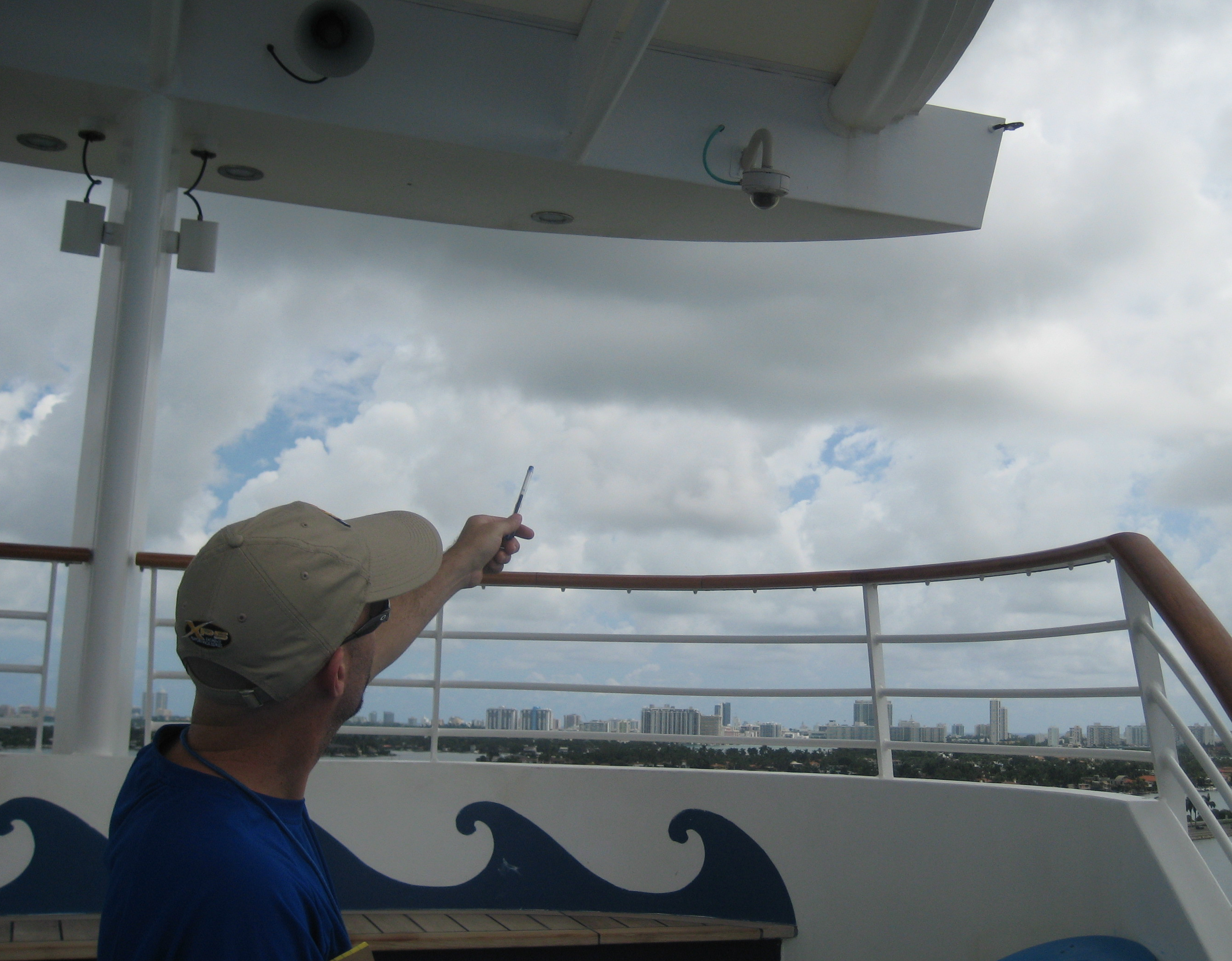
Also addressed in the rule will be how a cruise ship’s video surveillance system should be operated to document crimes on the ship and assist in their later prosecution.

Advocates of the law say the provisions will make passengers feel more secure about taking a cruise.

But the cruise industry has raised red flags about the cost and practicality of applying the law. In one instance, a cruise line told auditors at the Government Accountability Office (GAO) that just doubling the time it keeps video footage from 14 to 28 days would cost an extra $21.8 million.

Most of the 15 provisions in the 2010 act, such as peepholes in cabin doors and standard rail heights, had been translated into Coast Guard guidance by June 2011.

The remaining ones involved complex technologies and, in some cases, language in the law that didn’t set a clear benchmark for gauging compliance.

In the case of detecting when persons fall overboard, the law called for compliance “to the extent that such technology is available.”

The Coast Guard asked for input from cruise lines, CLIA and passenger advocacy groups to help formulate its rule.

A recent report by the Miami Herald found that at least 28 passengers went overboard on cruise ships between October 2010 and June 2013. Rapid detection of persons going overboard would clearly enhance safety, but cruise lines say the jury is still out on automated detection systems.

CLIA told the Coast Guard that the technology to capture images of overboard episodes exists, but not the ability to detect them in real time. CLIA said vessel movement, sun glare, salt spray encrustation and weather all make instruments unreliable.

If detectors either fail to report incidents, or report false incidents, that would raise the cost, liability and burden on passengers.

Still, several cruise lines are testing various technologies. One unidentified cruise executive told the GAO that if companies are required to go to the expense of installing detectors, they should not produce inaccurate results that would increase operating costs.

Video surveillance is another area where technology exists, but its application is open for debate. Victim advocacy groups say existing cameras should be monitored continuously for crime, and recorded images should be stored for up to 90 days.

CLIA recommended a risk-based approach that would take into account differences among vessels, cruise lines and itineraries and said video should be stored for a week, nearly matching the average cruise length of 7.2 days.

Coast Guard officials told GAO auditors that when the rule is issued in June, rather than being prescriptive it is likely to be performance-based — outlining what is to be achieved — to allow for some flexibility in implementation.

Cruise lines digest plans to limit Venice visits

Cruise lines digest plans to limit Venice visits

By Phil Davies

Cruise lines digest plans to limit Venice visitsGlobal cruise lines are digesting the implications of plans to limited the number of large ships allowed to pass through the centre of Venice.

The Italian government announced its intention to impose limitations from January with a 20% cut, while cruise ships of more than 96,000 tonnes will be banned from the centre of the historic city from November 2014.

Prime Minister Enrico Letta’s office also announced plans to open up a new canal to the city to allow big vessels to enter the city by an alternative route.

The Cruise Lines International Association (Clia) yesterday attempted to view the decision in a positive light despite the likely impact on member lines which see Venice as a highlight of many Mediterranean itineraries.

Clia said it viewed the announcement from Rome as a “positive on-going commitment of the representatives of the Italian institutions to find a sustainable and long-term solution for the city of Venice. This goal is shared by the cruise industry”.

However, the organisation added: “We are in the process of determining the impact of the decision, and any estimation or evaluation at this time is premature.

“Venice is consistently rated as the number one European cruise destination for our industry and we look forward to further strengthening our role as a key contributor to the economic vitality of Venice.”

Environmentalists have long protested against giant cruise ships passing through Venice, arguing that they damage the city’s fragile lagoon.

Lines roll out incentives for National Cruise Vacation Week

Lines roll out incentives for National Cruise Vacation Week

By Tom Stieghorst

Travel agents have a flood of special cruise offers to entice customers this week, the third annual National Cruise Vacation Week.

Organized by CLIA, the week generated some $55 million in cruise sales and $7 million in commissions for agents when it was launched two years ago.

This year’s National Cruise Vacation Week may benefit from a marketing tailwind created by Carnival Cruise Lines’ unusual $25 million fall advertising campaign that should raise awareness of cruising generally.

Cruise lines have minted scores of promotions for the week, offering reduced deposits, coupon books for onboard spending, free cabin upgrades and extra-low prices on select sailings.

Agent groups have jumped aboard with additional offers exclusive to their networks.

Cruise Planners, for example, has a $50 onboard credit for select Norwegian Cruise Line sailings, in addition to the cruise line’s more broadly available offers, such as a $250 credit and reduced deposit for summer 2014 cruises.

Many agents offer the specials by putting together a mini-website with the National Cruise Vacation template, which provides space for up to four cruise line promotions.

Or they can organize special events that draw people into their agency or other locations for more personal networking.

Rich Skinner, a Seattle-area Cruise Holidays franchisee, is holding an open house on Oct. 23 from 6 p.m. to 8 p.m. that will also serve as a wine tasting. Four or five wines will each carry the name of a different cruise line.

“Because we’re sitting out here in the middle of Washington wine country, it makes sense to do that,” Skinner said.

During the business part of the get-together, Skinner will highlight trends for 2014, including river cruise growth, new ocean-going ships and new itineraries. Skinner said he does eight to 10 in-store events a year at his agency, Cruise Holidays of Woodinville.

“That’s one of my most effective marketing tools,” he said.

The fall CLIA event has grown from a single night to a week in the past few years, and some agents and cruise lines extend their specials beyond that. Cruise Planners is taking the whole month of October to promote various specials.

The network expects to take in nearly $20 million in revenue for October, up 69% from two years ago, spokeswoman Caitlin Murphy said.

“We encourage our 800-plus franchise travel advisers to host ‘cruise nights’ or virtual, online events during this campaign, and we support our agents with digital, Web and traditional marketing tools with this year’s ‘Taste of Travel’ theme,” Murphy said.

This year, Cruise Planners is also offering something extra to pull customers into National Cruise Vacation Week. They can enter a drawing to win $1,000 for each cruise they book in October. Murphy said the incentive has no cost to the travel agent.

“Many of our travel advisers appreciate this perk, as the value doesn’t take away from their commissions,” she said.