Venice to reroute biggest ships but will maintain terminal

By Tom Stieghorst

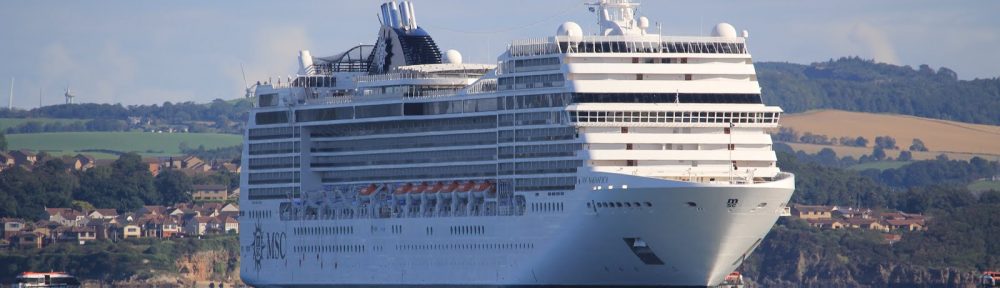
Changes afloat for Venice cruisesTo reduce the impact of big cruise ships in Venice, Italian ministers have decided to route the largest ships away from the center city, while still allowing them to dock there.

Cruise traffic would enter the Venetian lagoon on the southwest end, transiting the Malamocco channel, which is already used by cargo ships.

As a first step, an environmental study has been commissioned to evaluate the dredging of a cut-off canal leading from the cargo channel to the existing Venice cruise ship terminal.

Activists say that the dredging will harm the Venice lagoon by deepening it and creating more wave action, while at the same time disrupting sediments and water life in the area.

But a committee of Italian ministers said the plan mitigates the effects of increasingly large ships on Venice while preserving their positive contribution to the economy.

“It seems to me to be a balanced solution,” Transport Minister Maurizio Lupi said in announcing the decision.

Some parties had pushed for a more radical option, such as relocating the cruise terminal to the industrial port at Marghera, a plan favored by Venetian Mayor Giorgio Orsoni.

Venice hosted more than 1.8 million cruise passengers last year, making it the third-busiest cruise port in Europe, after Barcelona and Civitavecchia, near Rome.

An increasingly vocal group of activists has protested that modern cruise ships have grown out of scale with Venice and are causing damage to the city’s foundations, an assertion disputed by the cruise industry.

As part of the new plan, the committee of Italian ministers reinstated a ban on cruise ships of more than 96,000 gross tons from using the current route through the Lido and down the Giudecca Canal.

That route takes cruise ship passengers through the heart of Venice and past Piazza San Marco, its biggest attraction.

Cruise lines, through CLIA Europe, emphasized the importance of Venice and the Venice Passenger Terminal to the entire cruise industry.

“While we believe that the passage of cruises through the Giudecca Canal is safe, we agree that a sustainable solution for Venice requires a new alternative route for ships, and so we are pleased that the Italian government is working very hard to find a sustainable solution,” a CLIA statement said.

A study last year found that the cruise industry in Venice created an annual economic impact of 345 million euros (about $462 million).

Individual cruise lines have been planning for Venice’s mandated reduction in ship size. Celebrity Cruises, for example, next year will sail a 91,000-gross-ton, Millennium-class ship on Eastern Mediterranean itineraries from Venice, while moving its 122,000-gross-ton, Solstice-class ship to Baltic itineraries.

The Italian government had originally banned cruise ships of more than 96,000 gross tons from the current route effective Jan. 1, but that ban has been stayed by a regional Italian court, pending a decision on an alternative route into the city.

The decision to move forward on the environmental study of the back channel addresses the court’s objection.

The plan calls for deepening the Contorta Sant’ Angelo, a 4-kilometer channel between Marghera and Venice that was cut in the 1960s for fuel barges, from a depth of 1.5 meters to 9 meters.

Authorities estimate the dredging project will take about two years and cost about 115 million euros (about $154 million).

Rockefeller seeks to tie cruise reforms to Coast Guard bill

By Tom Stieghorst
Sen. Jay Rockefeller (D.-W.Va.) signaled his intent to attach his cruise industry consumer protection legislation to a bill to reauthorize the U.S. Coast Guard, strengthening its chances of consideration.

Rockefeller introduced his Cruise Passenger Protection Act last year, but despite co-sponsorship by several Democratic senators it has not been passed out of committee.

At a hearing of the U.S. Commerce Committee, Sen. Roger Wicker (R-Miss.) said in his opening remarks that he thought it would be best as a stand-alone bill and not in connection with the Coast Guard authorization act.

Later in the hearing, Rockefeller disagreed, saying, “Everybody knows that the Coast Guard reauthorization is a bill Congress has to pass. If you separate this, the Coast Guard bill will pass and the cruise ship bill will get flushed down the toilet.

“My job as chairman is to make sure we don’t play the game that way,” Rockefeller said.

The Coast Guard bill sets funding for the agency for the next two years and has numerous other provisions supported by various constituencies. It passed the House in April without the consumer measures, but a conference committee could adopt the Rockefeller provisions if they are included in the Senate’s bill.

The measures would make it easier for consumers to report crimes and make complaints about problems on cruise ships, according to Rockefeller, while simplifying ticket contracts and publishing more information about crimes and other problems on cruise ships.

“These aren’t crazy ideas,” Rockefeller said. “They are common-sense protections that consumers already have if they travel in airplanes or by rail.”

Cruise industry representatives who testified at hearings last year said the provisions were regulatory over-reach or problematic for other reasons.

No industry representatives appeared at this year’s hearings. Witnesses included passengers or their relatives who experienced crimes, medical emergencies or mechanical breakdowns on ships, plus a Miami lawyer who has sued cruise lines over such issues.

Comment: Cruise industry must take China’s rise on board

Comment: Cruise industry must take China's rise on boardFollowing the announcement of the deployment of Royal Caribbean’s newest ship year-round from Shanghai next year, David Selby assesses the significance of the decision and the impact on established markets

China is vast – it has a population over 20 times that of the UK and is the world’s second largest country by land mass.

Between 2007 and 2011, its economy grew at the rate of Canada, France, Germany, Italy, Japan, the United Kingdom and the United States combined – and while we dither in the UK about where the next commercial airport capacity will be situated, around two-thirds of the world’s airports are being built in China, with 55 planned between 2013 and 2015!

Shanghai is China’s biggest city, with a population of over 22 million, according to the last National Population Census in 2010. While a significant number of residents still have insufficient income or interest in cruising, it was perhaps only a matter of time before a major international cruise line would announce year-round deployment from the city, as Royal Caribbean has done.

The fact that it is its newest and “shiniest” ship, Quantum of the Seas, does make it interesting. It goes against the traditional idea of growing “new to cruise” markets typically using older tonnage, and keeping the key markets fresh with the newest innovation hardware.

During last week’s announcement, Adam Goldstein, Royal Caribbean’s president and chief operating officer, said: “Every trend we are seeing in China tells us we can achieve real long-term competitive advantage and appealing returns on our investments in this fast-growing market by accelerating our presence there. We will have to be nimble, but the ability to move fast is one of our strengths.”

I agree! It comes from having – in my view – the strongest single international cruise brand in the world.

Meanwhile, analysis commissioned last year by the Asia Cruise Association predicts a market size in Asia by 2020 of 3.8m, of which China will be 1.7m – just below what the UK is today. Cruises are typically of short duration and to serve 3.8m cruisers on 5 night voyages, the region will need the equivalent of eighteen 3,000 berth ships sailing in the region year round. It is unlikely to stop there.

Where will they come from, and what of traditional core markets?

Well, Royal Caribbean points out that the ports of Florida (with ships sailing to the Caribbean – the most popular cruising destination), will be operating with record levels, while from New York passengers will have the chance to cruise on ships not previously deployed from there.

In the UK of course, we look forward to seeing Anthem of the Seas – Quantum’s sister-ship – sailing from Southampton after she is launched next year. Longer term however, we could see a general shift away from current core markets unless there is an acceleration of new-build activity.

For the remainder of this year, apart from Quantum, there are just three ships over 2000 berths being launched worldwide – for Princess, Costa and Tui in Germany. Next year there are five, in 2016 there are six and in 2017 there are so far just three. While this may increase, it is barely enough to cover the Asian growth over the next six years.

Therefore, the challenge is on for the industry in traditional markets to keep the product and marketing fresh, to drive value and deliver exceptional levels of customer service – and the same goes for the destinations the ships visit.

Looking even further ahead – once the Chinese have tried cruising at a local level, they will without doubt be cruising further afield and coming to Europe.

So while we sort out the runway problem, it would be a good idea to sort out the UK Visa situation at the same time.