Mazatlan welcomes back cruise ships

Mazatlan welcomes back cruise ships

By Gay Nagle Myers
Mexico’s Pacific coast city of Mazatlan welcomed the arrival of 1,300 passengers aboard Holland America’s Veendam on Nov. 12, signaling a return of cruise ships to the port city.

Cruise lines pulled out of Mazatlan in 2011 due to concerns about safety and security in the port area.

The Veendam sailed out of San Diego on Nov. 9 on a seven-day Mexican Riviera cruise. Passenger disembarked at a new cruise terminal.

Next to arrive will be Norwegian Cruise Lines’ Norwegian Star. That ship will make five calls in Mazatlan on seven-day cruises departing Los Angeles on Dec. 22 and 29 and March 2, 9 and 16.

Azamara Club Cruises’ Quest will call in Mazatlan on Feb. 1 on a 12-day sailing out of Los Angeles on Dec. 29.

More than 18,000 cruise passengers will visit Mazatlan during the 2013-2014 cruise season, according to Frank Cordova, secretary of tourism for the state of Sinaloa.

Lines await effect of plan to slash Venice cruise ship traffic

Lines await effect of plan to slash Venice cruise ship traffic

By Tom Stieghorst

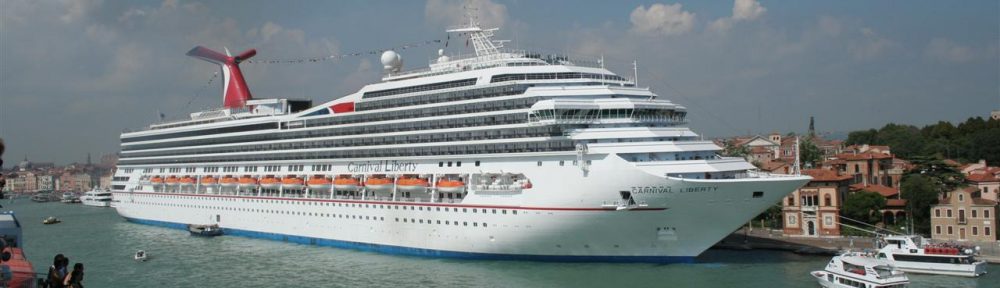
Italy’s decision to constrain cruise ship growth in Venice will likely change the way some cruise passengers enter and leave the city as it is phased in over the next few years.

Prime Minister Enrico Letta approved plans to limit or shut down cruise ship traffic in parts of the Venice lagoon.

His order is at least a partial victory for the No Grandi Navi (No Big Ships) movement that sprang up in Venice as megaships began to visit the city.

And it is a setback, at least for now, for cruise lines.

“This would certainly be a disappointing outcome from our perspective,” Carnival Corp. said in a statement, which went on to assert that “the cruise industry is an important economic driver for Venice and other communities around the world.”

The ruling does not ban cruise ships from docking in Venice, but it places restrictions on how many ships can transit the Guidecca Canal, which takes passengers past the city’s iconic St. Mark’s Plaza.

Starting in January, it requires a 20% reduction in the passage of ships larger than 40,000 gross tons. It limits the number of large ships that can dock at the city’s main cruise terminal, Venezia Terminal Passeggeri, to five per day, according to European press reports.

By November 2014, ships over 96,000 gross tons would no longer be permitted in the Guidecca canal.

In its statement, Carnival said that while no changes are currently being planned, “we will evaluate the ruling and see how it impacts our business in the long run.”

Royal Caribbean Cruises Ltd. also responded to the ruling, saying that it is reviewing its deployments for 2013 and 2014 to be sure they comply with the new regulations.

“We recognize visiting Venice during their cruise is a highlight of our guests’ vacation,” Royal stated. “We expect to continue with our scheduled port calls to Venice for our 2013 and 2014 itineraries.”

Last year, 661 cruise ships bearing 1.7 million passengers called at Venezia Terminal Passeggeri. No breakdown of ship size was immediately available.

For the industry, Venice has become a vital turnaround port, uniquely serving both western and eastern Mediterranean itineraries.

For the city, that means extra revenue. Cruise ship passengers and crews spend $255 million a year in Venice, according to a 2013 Cruise Market Watch study, ranking it eighth among world cruise ports and third in Europe, behind Barcelona and Rome (Civitavecchia).

Practically, the decision will first affect deployment decisions for 2015. Neither Carnival nor Royal has announced its 2015 itineraries. The squeeze would be most acute in the summer months when ships tend to migrate to the Med.

One solution is to develop a new channel to Venezia Terminal Passeggeri for large ships that bypasses the most historic part of Venice. Letta’s office said the order restricting ship size also authorized development of such a channel.

However, that would end the romantic entrance to the city past St. Mark’s Plaza, which is treasured by many cruise passengers.

Bahamas courting cruise passengers with Balmoral Beach in Nassau

Bahamas courting cruise passengers with Balmoral Beach in Nassau

By Tom Stieghorst
In the latest attempt to make a Caribbean port more attractive to return visitors, a group of investors in the Bahamas has redeveloped the former Blackbeard’s Cay and renamed it, providing more for cruise passengers to do when stopping in Nassau.

The attraction, which reopened last month as Balmoral Beach, is one response to the cruise industry’s call for destinations in the Caribbean and the Bahamas to refresh their appeal.

About $5 million has been invested to improve the beach on Balmoral, according to Bahamian press reports. The operator of the resort, Samir Andrawos, was unavailable for comment.

The redeveloped area, which is being used by Carnival Cruise Lines, includes a white-sand beach with lounge chairs and umbrellas, four bars, an indoor restaurant, cabanas and a gift shop.

Other cruise lines have fostered similar day excursions. Royal Caribbean International, for example, last year partnered with Jamaica’s best-known beer to open Red Stripe Beach near the port of Falmouth, where its Oasis and Allure of the Seas ships dock.

Such beaches provide a less expensive option for passengers than excursions to luxury hotels or waterpark resorts. An excursion to Red Stripe Beach, which has a bar and grill, showers and chairs for rent, costs $24.

Balmoral Beach occupies part of an island off Cable Beach, the other half of which is the site of Sandals Royal Bahamian Resort’s offshore island. Blackbeard’s Cay, which had a stingray attraction, closed in 2012, and Andrawos was hired to improve it.

Andrawos runs the destination management company St. Maarten Sightseeing Tours.

Balmoral Beach is hosting excursions from Carnival, which charges $49.99 per adult. It is reached via a launch from the cruise ship pier in downtown Nassau.

Reviews posted on Carnival’s website have praised the new beach and attentive staff but panned the boat ride as lengthy and crowded.

Balmoral costs less than a beach excursion to Atlantis, the mega-resort on Paradise Island, which is priced at $99 including lunch. Guests can pay for Balmoral products and services with the Carnival Sign and Sail card.

In Jamaica, Royal developed a beach that is exclusive to its guests, about 10 minutes by bus from the cruise port. It leased the property and entered a branding partnership with Red Stripe to develop it.

It has fewer facilities than Balmoral Beach, but it also provides a less expensive beach option than, for example, a more inclusive beach excursion to the Hilton Rose Hall Resort near Falmouth, which costs $139.

In Nassau, some merchants along downtown’s Bay Street fear that the Balmoral development will eventually hurt their businesses because passengers can visit the site without even leaving the cruise ship piers.

David Johnson, director general of the Bahamas Tourism Ministry, said that Carnival provides about 1.9 million of Nassau’s 4 million annual cruise ship arrivals. He also noted that those visitor numbers are up from 500,000 in 1995.

“Nassau is now the world’s largest transit cruise port,” Johnson asserted.

As the number of cruise visitors to Nassau grows, they need more things to do, Johnson said. In addition to the private development at Balmoral, the government is making improvements on Bay Street, he said.

“We’re really on a path to completely revamping what we know as downtown Nassau,” Johnson said.

Among other changes to Nassau, a new permanent Straw Market was opened last year to replace the one that burned a decade ago. Pompey Square, a green space in front of the Hilton British Colonial, was dedicated in June and has opened up Bay Street and made it more pedestrian-friendly, Johnson said.

Cargo traffic has been rerouted off Bay Street to Arawak Island, and there is a 10-year plan to extend a boardwalk east from the cruise pier almost to the bridge to Paradise Island, he said.

There are also plans to redo Festival Place, where cruise passengers enter Nassau, to increase its capacity from 5,000 to 25,000 a day, Johnson said.