Cruise Lines Leverage Drydocks to Add Capacity to Existing Ships
Cruise lines continue to add a significant number of staterooms to existing ships during routine drydocks, as highlighted in the new 2026 Drydock Report from Cruise Industry News.
The additional capacity generally fills in under utilized public areas, with revenue that flows right to the bottom line.
Among upcoming programs, the 2016-built Ovation of the Seas will see the addition of 40 new staterooms, which will take over space currently occupied by various public areas.
Also included in the company’s modernization effort, the Harmony of the Seas is set to enter drydock in April for a refit that will include the creation of 91 additional staterooms.
A third ship is also getting a significant capacity increase with 68 new staterooms: the Liberty of the Seas.
Silversea’s Silver Muse saw a seven percent increase in 2025.
After entering drydock in November, the 2017-built vessel returned to service with 18 smaller staterooms replacing its original larger suites.
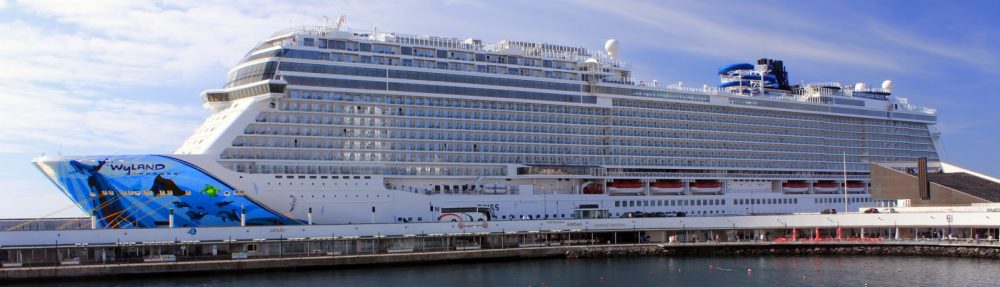
Norwegian Cruise Line continued to expand its ships’ capacities in 2025 by adding 26 additional staterooms to the Norwegian Bliss. The increase followed similar projects carried out onboard the Norwegian Joy and the Norwegian Encore in 2024.
A second ship, the Pride of America, saw the addition of 26 new staterooms during a drydock on the West Coast in May.
Margaritaville at Sea Paradise Resumes Service with New Features
The Margaritaville at Sea Paradise resumed service with new and enhanced features after undergoing a drydock in Grand Bahama.
In a social media video update, Margaritaville at Sea shared a behind-the-scenes look at the work carried out onboard the 1991-built vessel.
According to Taylor Karr, the company’s senior director for strategy and operations, significant work was carried out in areas such as the Euphoria Lounge.
The space was refreshed with new carpets, new upholstery, new wall coverings, and new light fixtures, he explained.
“We removed the flooring all the way down to the bare steel, laid some incredible-quality underlay and added a really incredible woolen carpet that looks good and feels really nice to walk on,” Karr added.
The ship’s Margaritaville Casino was also updated with a new look and updated features, he continued.
“In the casino, we’ve done a tremendous amount of work. All of our tables have been freshly refinished including new upholstery and new felts,” Karr said.
Other changes to the casino included a black-painted ceiling, as well as a new tropical-themed vinyl wrap across the lights.
“(We also added) new carpets throughout the whole venue and tons of new games for our guests to enjoy,” Karr continued.
One of the highlights of the drydock was the addition of the new High Tide Market, which replaces Paradise’s traditional self-service buffet.
Karr described the venue as Margaritaville at Sea’s new food hall concept, noting that the restaurant offers a range of stations serving different kinds of cuisine.
“We painted the entire thing in the most beautiful shade of blue, we took all of the floors down to nothing and we laid brand new carpet,” he said. The venue was also equipped with new lighting and a new ceiling.
The ship’s main pool deck now offers new cabanas with what Karr described as “high-quality furniture.”
Paradise’s 12-Volt Pool underwent a major update with a new synthetic flooring replacing the original deck floor, as well as new pool loungers and new paint.
“We took the tiles around the pool, we took it all out, and replaced it with a material called Life Floor,” Karr said.
The Margaritaville at Sea Paradise also got a Permanent Reminder Tattoo Studio as part of its refurbishment.
After first debuting onboard the Margaritaville at Sea Islander, the space was added to Paradise’s Deck 8.
Nippon Paint Marine announced that its application of AQUATERRAS, an advanced polymer technology, on the AIDAdiva has resulted in lower costs and downtime, as the need for planned in-water hull cleaning was removed for over three years.
John Drew, director at Nippon Paint Marine, Europe, told Cruise Industry News the patented structure, paired with a hydrolysis-driven self-polishing mechanism, optimises hull smoothness over time and delivers a reduction in fuel consumption and greenhouse gas emissions.
“Our team of experts has a detailed understanding of the challenging itineraries that cruise vessels must operate under, often spending extended periods within regions in which the impact of biofouling is keenly felt, as well as managing stakeholder pressure from consumers where sustainability is a priority,” Drew explained.
Meeting the Industry Where It Is
According to Drew, the industry is adapting to an increasingly complex regulatory environment designed to support the reduction of carbon emissions and increase sustainability.
“Our clients are focused on balancing the need to mitigate emissions from their fleets through enhanced operational efficiencies and the integration of clean technologies while remaining commercially competitive,” he added.
To meet these requirements, the company launched AQUATERRAS, which combines hydrophilic and hydrophobic micro-domains to resist biological adhesion.
Drew added that, while delivering a speed loss of 1 per cent over 60 months, compared to the 5.9 per cent industry average, the attributes enable vessels to generate up to 14.7 per cent in fuel savings and associated emissions reduction.
“Hull performance directly affects both operating costs and environmental impact, so maintaining a clean hull across such varied conditions is critical,” he said. “AQUATERRAS has demonstrated its ability to meet these challenges.”
“For example, following its application to the AIDAdiva in 2022, the vessel operated for three years without the need for any in-water hull cleaning, maintaining a fouling-free vertical bottom despite extensive service in high-biofouling regions such as the Caribbean and Mediterranean,” he explained.
The performance supported sustained fuel efficiency gains and eliminated the environmental risks associated with traditional coatings due to its biocide-free characteristics.
Drew added that the solution, for both drydock and newbuild projects, does not require specialist application equipment and can be applied at any yard.
The Focus for the Future
“Looking ahead, innovation in marine coatings will be shaped by three priorities: advancing sustainability, maximising operational efficiency and ensuring compliance with increasingly stringent and fragmented environmental regulations,” said Drew.
“We expect to see a continued shift away from biocidal systems toward alternative technologies that deliver long-term fouling prevention without environmental trade-offs, as well as a focus on developing low-volatile organic compounds solutions that are designed to minimise the release of harmful organic chemicals into the surrounding environment during application and drying,” he added.
Nippon Paint Marine will invest heavily into research and development leading into 2026, as innovation means looking well beyond the next 12 months, Drew said. Innovations and materials need to be tested over a number of years in varied operating conditions before being launched to market.
Collaboration is the Way Forward
“Working closely with shipowners, operators, shipyards, and research partners is imperative for us, as it ensures our innovations align with the operational challenges our customers face,” Drew said.
“Through working together, we can help our partners meet their various commercial and environmental targets, today and in the long term. This means continuing to innovate while ensuring our products support the highest levels of performance, are cost-effective and support ongoing regulatory compliance.”


 Wetravel2u's Weblog