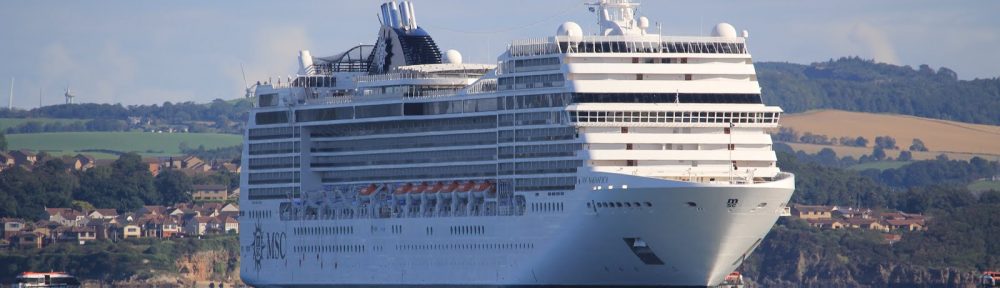
The task of expanding cruising globally

The task of expanding cruising globally

By Tom Stieghorst

*InsightThe biggest challenge for the cruise industry over the next decade may be the cultural one.

As cruise lines peer into the future, their prospects more than ever depend on countries where cruising is unfamiliar as a vacation option. The good news is that few people outside of North America have been on a cruise, meaning there’s plenty of potential for growth. But in many countries it’s still too early to tell if cruising is going to be a long-term hit with vacationers.

Cruising is largely an Anglo-American vacation. When the number of people who have cruised is measured against total population in various countries, the top four markets are the U.S., the United Kingdom, Australia and Canada. In all of these countries, more than 2% of the population has cruised.

*TomStieghorstGermans also appear to love to cruise.  Some of Carnival Corp.’s best performing ships sail for German brands.  The number of cruisers from Germany could overtake the total from the U.K. within five years, CLIA President Christine Duffy recently forecast.

Next comes Italy, home to Costa Cruises and MSC Cruises, but it produces only 4% of the world’s passengers, notes a report from Stivel Nicholas analyst Steven Wieczynski. By comparison, according to Stivel Nicholas, Germany accounts for 6% of global passengers, and North America accounts for 75%.

“While passenger counts from the other major European markets, including Italy, Spain and France, continue to grow, overall market penetration remains subdued,” he wrote in a recent report.

In Asia, many Japanese travel abroad, but relatively few go cruising. Although Princess Cruises is taking another stab at developing the market in Japan, some cruise executives say the idea of a cruise hasn’t taken root in that country.At a recent cruise conference in Hong Kong, Carnival Asia CEO Pier Luigi Foschi said the penetration rate for cruises in Japan is 0.08%, compared with about 3.4% in the U.S. In China, it is even lower, at 0.04%.

To their credit, Carnival and other cruise companies are investing significant sums to experiment in Asia to figure out what kind of cruise might appeal to residents there.

The potential for gaining even a small part of the 80 million Chinese who traveled abroad last year is too tempting for the cruise lines to pass up. The challenge will be creating a cruise for the non-Anglo world that translates well into the local vacation culture.

Viking plans eight-ship order for 2014

Viking plans eight-ship order for 2014

By Michelle Baran
As part of a newbuild order that appears to be growing without end, Viking River Cruises said it plans to launch eight Longships in 2014 in addition to the 10 ships it will launch next year.

When the first two 190-passenger Longships, Viking’s newest class of river cruise vessel, launched in March, the company revealed plans to launch six Longships each in 2012 and 2013 with the option for six more in 2014. Those plans have grown to 10 in 2013, and now eight in 2014, for a total of 24 new ships in three years.

“The river cruise segment is rapidly growing, as more travelers are inspired to experience old destinations in a new way,” Viking Chairman Torstein Hagen said in a release.

He added that Viking has had an “overwhelmingly positive response” during the first season for the new Longships, and stated that “we are pleased to continue our expansion to meet that demand.”

Viking will simultaneously inaugurate eight Longships in a christening ceremony in late March in Amsterdam. The two additional Longships ordered for 2013, the Viking Baldur and the Viking Magni, will join the fleet in late August and September, respectively.

The ships are all being built at the Neptun Werft shipyard in Germany, part of the Meyer Neptun group.

Tui claims to have outperformed the market in January

Tui claims to have outperformed the market in January

Tui Travel claims to have “significantly outperformed” the market in the peak January selling period for summer holidays.

Sales volumes are now ahead of the company’s 9% capacity reduction, and is 35% sold to date, described as in line with the previous year.

Capacity has been cut for North Africa and the Eastern Mediterranean, with some of this reduction offset by increased capacity in the Canary Islands.

“Turn of year trading has been ahead of expectations and we are particularly pleased with our online performance,” Tui said.

The average selling price is up 8%, reflecting cost base inflation of approximately 5% and the continued increase in differentiated content.

“We have continued to increase the proportion of holidays sold online with 42% booked online for summer 2012, up six percentage points versus the prior year.”

All inclusive bookings are up by seven percentage points to make up 55% of bookings to date for the first summer that First Choice becomes exclusively all inclusive.

The ‘all in’ holiday concept is proving attractive, particularly in the current economic environment.

“As we continue to expand our differentiated offering, which traditionally books earlier, these products have accounted for 64% of bookings to date, up seven percentage points on the prior year,” Tui said.

UK bookings for this winter have improved since early December, with volumes continuing to move towards a capacity reduction of 9% and there is less left to sell against this time last year.

The booked load factor is currently 71%, described as being broadly in line with last year.

“We are pleased with our price performance, with average selling prices up 5% in light of inflationary cost increases and increased differentiated sales,” Tui said.

“Demand for differentiated products continues to be strong with volumes up 15%. These products now account for 62% of our sales, up 12 percentage points on prior year.

“As anticipated, North Africa remains challenging with volumes down 23%. Across our programme strong demand in the lates booking period has resulted in improved load factors for November, December and January.”