Destination will be the “dominant influence” for customers in 2023

Celebrity Eclipse at the Hubbard Glacia photo credit Spacejunkie2 (Flickr)

A poll of 1,000 people carried out by cruise.co.uk found almost half (44%) of respondents describe destination as the “main factor” in their holiday decision-making process.

A quarter of respondents said the price tag was most influential, while a fifth indicated it was the cruise brand which swayed their choice. The specific ship and departure date were the lowest-ranking, with 5% of responses each.

The survey also revealed more than 50% of respondents had travelled on three or more cruise lines, and less than 20% stayed loyal to one brand, choosing instead to holiday based on destination and cost.

Tony Andrews, deputy managing director of cruise.co.uk, said: “Cruising is such a great way to see the world, so it’s easy to see why destination came up trumps in our survey.

“The ability to reach all corners of the globe from the comfort of a ship, combined with the value for money a holiday at sea offers, means we’re seeing customers coming back time and time again to discover new destinations or revisit firm favourites.”

Experience the ultimate getaway with Norwegian Cruise Line

Experience the ultimate getaway with Norwegian Cruise Line


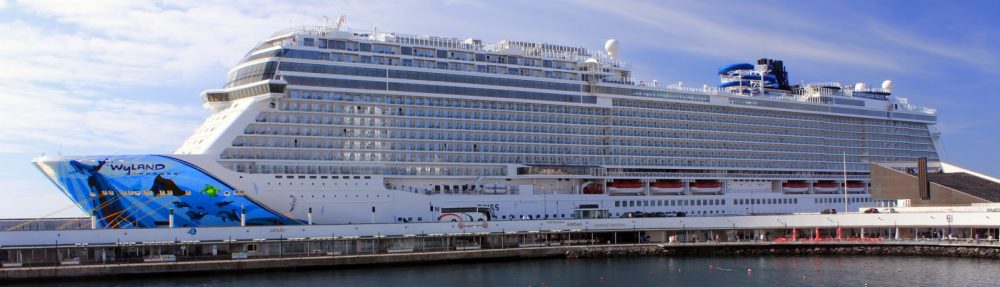
Norwegian Cruise Line’s latest ship boasts contemporary design and extra touches that make it ideal for cruising the Caribbean.

It’s 9.30pm, we’re somewhere in the middle of the Caribbean sea and on stage in the Illusionarium a magician’s assistant has just disappeared. There isn’t any smoke and there aren’t any mirrors, or at least none that any of us can see, and we all have a good look. When she reappears a minute later from the box she vanished from there are gasps of genuine amazement and rapturous applause. Now that’s the way to grab attention.

The Norwegian Getaway experience is full of surprises like this. From simple touches like the coffee maker, thoughtfully provided in the staterooms, to the excellent entertainment and huge range of dining options, there is extraordinary attention to detail throughout.

Our Caribbean cruise from Miami included calls at Saint Martin/Sint Maarten (two islands in one) and St Thomas, but we started off with two full days at sea, which gave us a chance to discover all that the ship has to offer.

The beautiful, colourful livery decorating Norwegian Getaway’s hull gives you a taste of what’s to come on board. This is a glamorous but laidback cruise ship, with lots of cool bars (not including the Ice Bar), and plenty of spaces to hang out on sea days. There’s an impressive pool deck, and the ambience is friendly and relaxed; no unseemly battles for the buffet or towel wars on the sunbeds here.

For me, though, the biggest revelation was The Waterfront, the open-air promenade that wraps most of one deck. The chance to sit outside on a balmy Caribbean evening and enjoy first cocktails and then dinner al fresco, lulled by the warm ocean breeze, is an absolute joy. At a quarter-of-a-mile long The Waterfront is also ideal for strolling round first thing in the morning with a cup of coffee and admiring the ocean views (who needs to go to the gym?)

If you’re travelling without kids then it’s worth paying the $79 a week to enjoy the relative seclusion of The Vibe, where you’ll find hot tubs, an assortment of sun beds and a bar; you’re also served complimentary fruit on sticks and cold towels, very welcome in the Caribbean heat.

For those who want an even more exclusive experience, The Haven is a ship-within-a-ship, with its own restaurant, swimming pool and suites. In fact, you could probably stay in The Haven and never see any of the other passengers.

My ocean-view balcony stateroom had plenty of space, a good-sized balcony and was tastefully furnished in turquoise and glossy mahogany-coloured wood. The bathroom was roomy, too (shampoo and body wash provided); my room was cleaned almost as soon as I left it to go out in the morning and at night the turndown service included a satisfying succession of hilarious towel animals and chocolates.

We were all intrigued by the Studios – single cruisers even get their own two-storey hangout with drinks available so they can mingle freely (although they’re not allowed in each other’s staterooms, apparently).

Of course we tried the Ice Bar (for about 10 minutes – you’re given furry ponchos and gloves to put on but it is seriously freezing in there) but preferred Sugar Cane Mojito on The Waterfront, where we could enjoy being outside while sampling the mojito menu.

Norwegian Getaway Cruise Video

Norwegian Getaway Cruise Video

My friends, braver than I, ventured on to the ropes course and The Plank, which juts out to sea, and declared it the most terrifying thing they’d done in their lives (they loved every minute, of course). They also hit the gym, where they joined in with the various yoga and spinning classes on offer. I preferred lounging in The Vibe and watching the waves, but that’s the beauty of Norwegian’s freestyle cruising concept: you never feel pressured to do anything you don’t want to do (or don’t want to be photographed doing).

The room service menu is fine, if a little limited: for breakfast you’re better off getting dressed and heading toSavor or Taste where you can choose from delicious pancakes with fresh berries, waffles, bacon, and omelettes made to order, with table service at no extra charge; or simply helping yourself in The Garden Restaurant. The Flamingo Bar and Grill rapidly became my favourite lunch venue. It offers Cuban/Miami-inspired food; excellent empanadas (stuffed pastries), plantain and yucca chips, and again you can sit outside.

There are several speciality restaurants (booking with Virgin Holidays Cruises gives you complimentary dinner in one of these), including Geoffrey Zakarian’s Ocean Blue, which serves excellent seafood including moreish calamari, and the French-themed Le Bistro. The food in the complimentary Tropicana Room is less impressive, but with 28 onboard restaurants you’re never going to run out of places to eat.

Kids’ clubs are spacious and well thought-out, while for grown-ups, the spa has restorative sea views, a pool and whirlpools, and a good menu of treatments.

Entertainment on board is of a high standard. Apart from the magic of the Illusionarium (there’s a $29.99 cover charge for this, which includes dinner), we saw Burn the Floor, a Latin American dance extravaganza which will have you signing up to the onboard salsa dancing classes first thing the next day. There’s also the Grammy Experience, a nightclub and a slightly bizarre duelling piano bar (held in the comedy club).

But even with all the attractions, it was a great feeling to disembark and get out and about on St Martin/Sint Maarten, where we joined a visit to a rum ‘factory’ (more shop, less factory, a lot of tasting) followed by a cookery class from a local chef at a restaurant on Grand Case beach, and then swimming in the clear warm water.

On our final evening we enjoyed the fireworks at sea. Norwegian is one of only two cruise lines currently offering these and for sheer spectacle, there’s nothing quite like watching bursts of gold, ruby, emerald and silver glittering against the night sky while you’re in the middle of the ocean.

The next morning we were able to enjoy an excursion to the beach at St Thomas, before catching our flight back to Miami. We were sad to say goodbye to Norwegian Getaway – our stay had been as short and sweet as a passion fruit mojito, but it gave us a real taste of what this fabulous ship has to offer.

Top psych tips to sell more online

Guest Post: Top psych tips to sell more online

By Travolution
By Travolution

By Nathalie Nahai, web psychologist and author of “Webs of Influence: The Psychology of Online Persuasion”Have you psychologically optimised your website to maximise your sales?

If like me you rely on the web to reach out to prospective customers, there are several psychological techniques you need to know to get ahead of the competition.

I’ll be discussing ways that psychology can be applied to ecommerce at the Chinwag Psych Conference on 15th May, but in the meantime, here are five top tips to help lift your conversions and make your website work for you.

1. Make it easy

Let’s start at the beginning. Have you checked your analytics lately to see which page(s) your customers are landing on the most often when they arrive at your site?

We tend to assume that the homepage is the main point of entry (and therefore the most important), but if you don’t actually know where people are entering, it’s going to be nigh on impossible to optimise their experience and boost your conversion rate.

So, first thing’s first – check your analytics account to see which are the main points of entry, and then make sure that on each of these pages you make the following three elements really clear:

  1. Your logo – this should be bold and will usually sit in the top left hand corner;
  2. Your offer – this should articulate how your service or product benefits your customer, you need to make this concrete;
  3. The call-to-action – make it obvious what you want your customer to do next.

A great example of a website that does all three of these things really well, is Eyequant.com – they’ve made their homepage easy for you to understand who they are, how they can help you, and what action you should take next.

2. Give a choice of three

We like to think that if we’re given a wide range of choices, we’ll make better decisions. However research has found time and again that if we’re offered too many choices, what we actually end up with is a state of ‘choice paralysis’ – an inability to choose. So it is online.

Have you ever wondered why so many SaaS websites offer a choice of three price plans, and highlight the one in the middle? LinkedIn and Hootsuite are great examples of this principle in action, and they work because they rely on this heuristic: when faced with several options, you’ll tend to go for the one in the middle. Why? Because we seem to be hard-wired to avoid extremes.

Research from the field of behavioural economics has found that we dislike losses more than we enjoy similar gains (a principle known as loss aversion), so in order to lower our risk of loss, we hedge our bets and instead opt for the middle ground.

That’s why, if you’re selling a range of products or services to your customers, it may serve you best to select your top three items, and place in the middle the one you’d most like to sell.

3. Use ticks

Now this one is super simple. Some friends of mine over at Online Dialogue in the Netherlands recently conducted an experiment to see if they could increase conversions by changing the way in which they displayed a product’s USPs.

They tried three different conditions: listing the top rated benefits, the lowest rated benefits, and then a mix of both. But contrary to what you might expect, when they only showed users the top rated list, it didn’t have much of an impact on conversions – so they decided to change tack.

Instead of using straightforward, simple bullet points to list their benefits, they decided to try green ticks instead. The results were phenomenal. By changing this one small, seemingly insignificant visualcue, they were able to dramatically increase conversions where they had failed before.

These results confirm what we’re finding in wider research – that the decisions we make are far from rational, and that by applying and testing these (often subconscious) psychological design elements, we can make a huge impact on our bottom line.

4. Leverage scarcity

Now, if you’ve read around the subject, you’ll have no doubt heard of the principle of scarcity: that which is rare, is also perceived as valuable. The same applies online.

If you want to boost your sales by inducing a sense of urgency in your customers (remember, you should only try this if it fits with the tone of your brand), you can invoke this principle by running limited time sales (“24 hour flash sale!”) and highlighting when an item is in low stock (“hurry, only a few rooms left!”).

5. The peak end rule

Last but not least, there’s the peak end rule. Originally coined by Kahneman and his colleagues in an experiment exploring pain, this term describes how we hedonically evaluate our past experiences.

In a nutshell, we tend to judge an experience by its most intense point and its end, as opposed to the average of the whole experience. Online, this means that if your users are going through your website’s sales process and they encounter a moment of intense frustration (which often ironically happens at checkout), you may be losing customers unnecessarily.

In my experience, the biggest, most common mistake that businesses make here is to create ‘required’ or ‘mandatory’ form fields that are asterisked with aggressive red marks, and that pop up red, unhelpful messages when completed incorrectly.

Instead of punishing your customers for trying to give you their money, try this instead: for every field they complete correctly,give them a green tick. I know it sounds simple, but by offering this culturally relevant, positive mark of affirmation, you’re essentially rewarding them for taking the positive action you want them to take.

So, now that you know these principles, it’s up to you to go and apply them. Experiment with them – you may just be surprised at how a few small changes can make a huge impact on yoursales.