Norwegian Plans Phased Return to Service

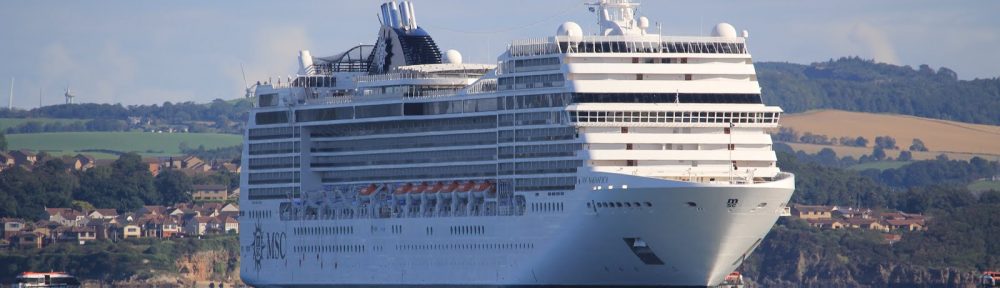
Norwegian Dawn
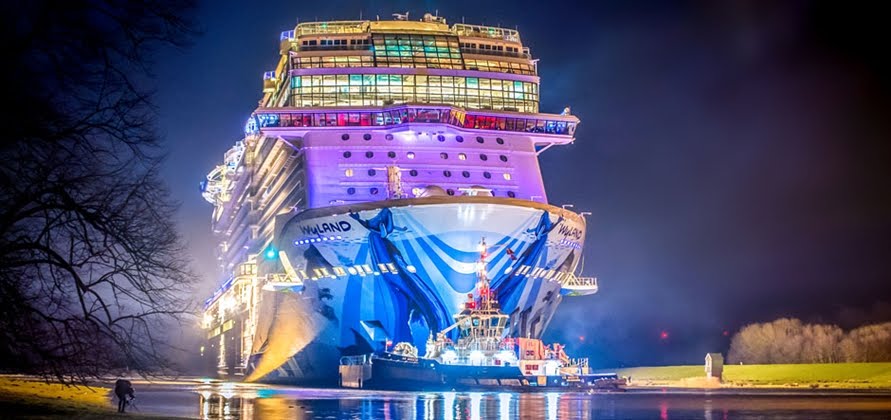
Norwegian Dawn

“I will do everything humanly possible to be able to look my own family in the eyes and say they will be safe on our cruise ships,” said Frank Del Rio, chairman and CEO of Norwegian Cruise Line Holdings (NCLH), on the company’s first-quarter earnings call.

Del Rio said NCLH is working with experts to develop health protocols that will be robust to gain CDC approval and generate confidence among the public. The same process must be replicated around the world.

When the no-sail order is lifted by the CDC, Del Rio said he expects that the company’s brands will return to service in a phased order of roughly five vessels a month, assuming ports are open and they can sail their designated itineraries.

Norwegian Bliss

With 28 vessels, it will take roughly six months to bring the whole fleet back into service. It is also unknown at this point whether they will be allowed to sail at 100 per cent capacity.

Consumer demand is still there, according to Del Rio, despite all the negative press. He noted that bookings are still coming in, despite the suspension of marketing activities, and expects that cash coming in will overtake the net cash outflow (refunds) in the next 60 days.

“There is pent up demand; people want to cruise again,” he added, noting that world cruise segments for the Regent and Oceania brands were sold out, with customers flying to embarkation points in Japan and Dubai.

However, with a booking curve from six to eight months out, it will take time before the pipeline is full or nearly full, he said.

Mark Kempa, CFO and executive vice president, commented that he sees 2021 as a transition year and that NCLH may be able to rebuild in earnest in 2022, bringing the company back on the track it was prior to COVID-19.

Newbuild deliveries may be delayed 12 to 18 months, added Del Rio.

Norwegian Cruise Line reports $1.9bn loss

NCL's CEO Frank Del Rio Collected Over $17,800,000 in 2019 - 1,052 ...

Norwegian Cruise Line reported a first-quarter loss of $1.9 billion, with the impact of a coronavirus-enforced suspension of sailings exacerbated by a $1.6 billion write-down in goodwill.

However, Norwegian Cruise Line insisted it is now “well-positioned” to withstand even 18 months of suspended operations after raising $2.4 billion in funds in early May.

Norwegian Cruise Line president and chief executive officer Frank Del Rio said: “We’ve taken decisive action to strengthen our financial position, including our highly successful and oversubscribed $2.4 billion capital raise announced last week.

“We believe this, coupled with other liquidity-enhancing initiatives, makes us well-positioned to weather an unlikely scenario of over 18 months of suspended voyages.”

Del Rio added: “We continue to experience demand for voyages in the future across our three brands.

“As we prepare to resume sailings, we’re working alongside the US and global public health agencies and governments to develop and implement enhanced cruise health and safety standards.”

He reported, “demand for cruise vacations particularly beginning in the fourth quarter of 2020, accelerating through 2021”.

Norwegian described overall bookings and pricing for 2021 as “within historical ranges”.

The cruise line noted all three of its brands had begun the year “in a record booked position and at higher prices” than last year despite a 7% increase in capacity.

However, it reported “slightly over half of the guests” had declined to rebook or accept cruise credits in place of cash refunds for cancelled cruises despite being offered “typically 125% of the cruise fare paid.

The company’s credits are valid through to the end of December 2022.

Norwegian revealed it had $1.8 billion of advance ticket sales at the end March, of which $800 million were for cancelled voyages to the end of June and $370 million for voyages scheduled for the second half of this year.

Norwegian Cruise Line Breakaway Ship Review | Kelsie Lou's Blog

The company said it continues to take bookings for later this year, 2021 and 2022, and to receive new deposits and final payments.

Norwegian reported it has pared its operating costs to between $70 million and $110 million per month while voyages are suspended, following a series of cost-cutting measures.

Additional capital-spending reductions and deferred debt payments mean its monthly cash burn has been reduced to between $120 million and $160 million per month.

However, this excludes cash refunds to customers.

Norwegian noted it had debts totalling $8.6 billion at the end of March, with available cash and cash equivalents of just $1.4 billion.

However, a series of capital markets transactions launched on May 5 had raised $2.4 billion, including a $400 million investment by US private equity firm L Catterton.

Norwegian Cruise Line chief financial officer Mark Kempa said: “Our swift actions to preserve cash and secure additional liquidity provide a strong foundation to withstand the operational and financial impact of Covid-19.

“We are confident the company can navigate through an unlikely extended zero-revenue scenario and emerge in a strong position.”

Frank Del Rio on travel advisors: ‘I know what they’re going through’

Frank Del Rio at CruiseWorld in 2016.
Frank Del Rio at CruiseWorld in 2016. Photo Credit: Ed McDonald Photography

In the second of two parts of a wide-ranging interview with Travel Weekly editor in chief Arnie Weissmann, Norwegian Cruise Line Holdings CEO Frank Del Rio talked about relaunching operations and the importance of travel advisors in the cruise industry’s recovery. Part 1: Del Rio on closing a $2.4 billion round in tough times.

Remarking that the Covid-19 crisis has put travel advisors under “tremendous stress,” Norwegian Cruise Line Holdings CEO Frank Del Rio said he speaks with at least two or three agents every day.

“We believe in a strong agency distribution system,” Del Rio said. “Before the pandemic, our company had the highest yield in the industry, which meant that travel agents were earning the most by selling our three brands [Norwegian Cruise Line, Oceania Cruises and Regent Seven Seas Cruises].

“I know what they’re going through, and we’ve got to be able to do the things we need to do to make sure they survive. The cruise industry without travel agents would be like pancakes without maple syrup. It just doesn’t work.

“Yesterday, I got an email from a travel agent who I’m very close to, and she says, ‘Frank, I’ve got dozens of people who want to book — when are you going to reopen?’

“So, I picked up the phone and I called Jan [Fishbein, of Cruzunlimited]. Jan is in her early 80s. She has been a travel agent for the last 30 years. I know Jan well because she was the first travel agent to make a booking in 2003 when we opened Oceania.
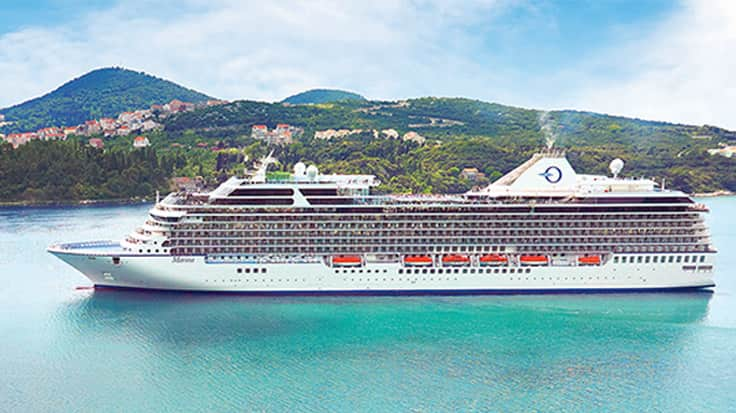
Best Cruise Ships & Luxury Experiences | Oceania Cruises
Oceana cruise ship Marina.

“I called her and the first question I asked was, ‘Jan, how old are these customers that you claim to want to cruise?’ She said, ‘Frank, they’re my normal customers, they’re senior citizens, they’re in their 70s.’ I go, ‘Really, Jan? And they want to cruise?’ ‘Yeah. Why not?’

“I said, ‘Where do they want to cruise?’ ‘Well, they want to cruise in August and September; some want to go in the Caribbean, some want to go to Alaska, there’s a few that want to go through the Panama Canal.’

“She’s pushing me — ‘When are you going to open? When are you going to open?’ — and I say, ‘Jan, I’m working on it! I’m working on it! It’s not just up to me.’

“But it gave me such encouragement. When you combine those types of conversations with the numbers that we’re seeing, if that doesn’t give you a reason to have hope and be encouraged, I don’t know what does.”

The numbers that Del Rio is seeing that give him encouragement go backwards and forward in time, and reflect, he believes, strong pent-up demand.

“2021 bookings are only slightly behind where 2020 bookings were a year ago,” he said. “Prior to coronavirus, 2020 was going to be, by far, the best year ever. And now, with travel agents not working at full strength, with our sales and marketing teams shut down, with the terrible news cycle that we’ve gone through, we can still say that we’re only slightly behind, and at modest reduction — mid-single digits — in price. This is a testimony to the resiliency of the customer and the efforts of the travel agents to preserve those customers.”
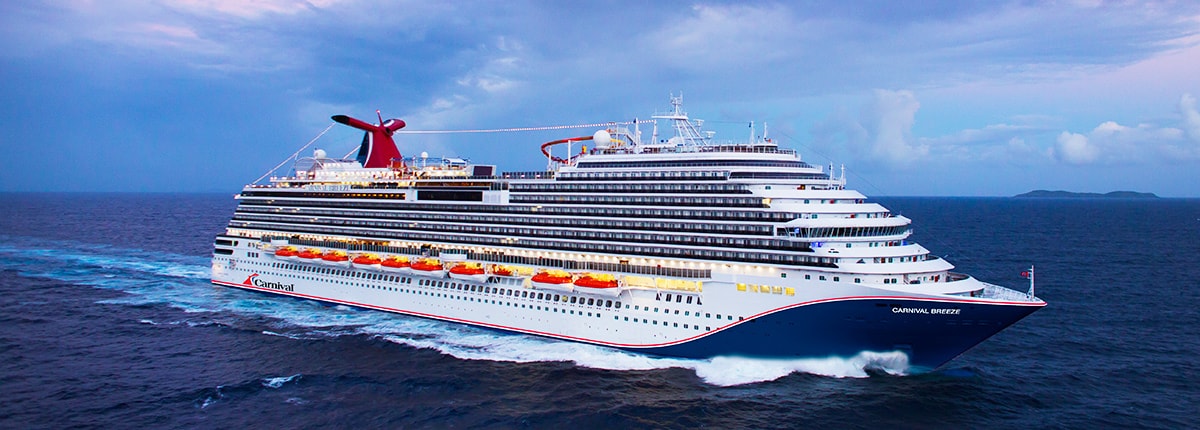
Carnival Breeze | Deck Plans, Activities & Sailings | Carnival ...
Carnival Breez

And when Del Rio’s longtime travel agent friend Jan Fishbein gets her wish and sailing resumes, Del Rio also plans a gradual resumption, but with a different approach from that of Carnival Corp., which has announced an Aug. 1 relaunch for Carnival Cruise Line.

“We’re not looking at it like that at all,” Del Rio said. “We’re looking at a gradual start; we’re not certain when that date is, because everything depends on the [Centers for Disease Control and Prevention] lifting the no-sail order. Whenever we do start, we’ll begin with a handful of ships across the three brands. So, let’s say in month one, we open up with five ships; it could be three Norwegian, one Oceania and one Regent. I don’t understand the concept of how one brand could be completely open and multiple brands can be completely closed. That’s mind-boggling to me. We will start across all three brands, and whenever month two is, we’ll bring alongside another four, five, six ships. We think it will take roughly six months from whenever we start until when all 28 ships across the three brands are back in full service.”

Del Rio said he was unconcerned that some ports might not be welcoming visitors when sailing resumes. “We visit over 500 ports around the world. And cruise lines put forth their itineraries more than two years in advance. Today, we’re selling itineraries through the fall of 2022, and we don’t know at this point which ports are going to be open, which ports are going to be closed. I’m not going to prejudge changing itineraries. We’ll have to play it by ear; it may be that when we open a certain itinerary, a port or two on that itinerary may not be operational and we’ll have to make changes. We’ll go to another port in the neighbourhood. We have flexibility because, especially in Europe, it’s condensed geography. There’s always an alternative port to go to nearby. The good news is we’re flexible, we’re nimble, and ships have propellers and rudders. We can move them around as necessary.”