Meyer Turku at the Forefront of Cruise Newbuilds

Meyer Turku has always been at the forefront of new technologies, Tim Meyer, CEO, said to Cruise Industry News, noting that the yard built the first LNG-fueled passenger vessel, the Viking Grace and that its sister yard in Papenburg delivered the first LNG-fueled cruise ship.

“It is important to understand that every time we build a prototype, we set very ambitious targets for GHG emissions and fuel consumption so that the new ship becomes more efficient. That becomes part of our building contract with most customers and, of course, by reducing the fuel consumption, we also lower our customers’ operating costs.

“Over the years, we have been introducing new technologies in our newbuilds, such as, for example, podded propulsion; air lubrication to reduce the hull’s resistance in the water; advanced wastewater treatment, ballast water treatment, and more, which eventually have become building standards for the cruise industry.

“Now, we are focusing on HVAC, which is a large energy consumer,” Meyer continued. “It is not necessary to cool down all the public rooms all the time, when there are no people present, for example, or staterooms when people leave.

“There is also the ventilation and exhaust from the galleys that used to run around the clock. We are now optimizing this, so it is only running when there is cooking going on.”

In addition, Meyer Turku is looking to develop a carbon-neutral cruise ship concept by 2025, working with suppliers, universities and research organizations, as well as the state of Finland.

“This is a very important effort and will be key to our success going forward,” Meyer said. “On one hand you have the ship itself, on the other hand, you have the shipyard, and then we have our network and supply chain that can be optimized.

“A cruise ship is like a small city; you have everything from water production to wastewater treatment and so on. The goal is to have all these systems working together as efficiently as possible, and with AI (artificial intelligence) we will be able to do just that.

“Another pillar is our people, so we are also focused on creating new competencies within the yard, looking at how we are working and developing new ideas for methods and procedures.”

As a shipbuilder, Meyer said the company can literally build anything. However, the key is that it must make sense.

“When you have a ship such as the Viking Grace running between Stockholm and Turku, then it makes sense to operate on LNG, as long as you have a fixed route. But if you have a cruise ship sailing all over the world that may not work if LNG cannot be bunkered. So, you have to adapt the product.

“The big question is what fuels will be available and where they will be available,” Meyer continued.

“Another factor that plays in is the energy density of marine fuels. Diesel oil has the most energy per litre; methanol has only half as much, LNG a little less than methanol; liquefied ammonia, liquid organic hydrogen carriers and liquefied hydrogen even less.”

Thus, future fuels could impact the design and general arrangement of future ships, tank space and bunkering frequency.

“What do zero emissions mean,” Meyer asked rhetorically. “Does it mean no exhaust only or does it also mean no sound and no vibrations? What is important for us is to look at different aspects, not only the cruise ships themselves but also the supply chain. Germany, for example, is studying how to make steel production more sustainable. As a shipyard, we cannot do all of this but work as partners with our suppliers.

“We have to look at the whole picture, and if you compare to what people do on land, let’s say they drive their car, heat their homes, prepare food, go to the theatre and so forth. If you add all that up on a per capita basis, I think cruise ships will come out quite well.”

Contrary to land-based hotels and resorts, there is no waste of energy on a cruise ship, according to Meyer, who said that is a challenge the shipbuilder has been tackling for years and continues to look for new solutions.

Excerpt from Cruise Industry News Quarterly Magazine: Fall 2022 

Virgin Goes with Bipolar Ionization

Scarlet Lady.

“HVAC is one of the most important systems aboard a cruise ship. To that end, we designed our ship based on industry best practices, working with Fincantieri and HVAC engineers. We are trading off energy consumption for passenger comfort, quality, and safety,” Andy Schwalb, chief marine and technology for Virgin Voyages, told Cruise Industry News.

“So, instead of building the most efficient air-conditioning system possible, we built the best air circulation system possible for the comfort of our guests and crew,” he added.

Aboard the Scarlet Lady, each public space has its own air-handling system, designed and optimized for each space.

“We are constantly putting fresh air into public spaces and cabins. While other ships may pump in the fresh air too, the question is how often that air is exchanged. Our system is smart and adjusts according to how many people are in the room. So, the air may be exchanged every couple of minutes or every five to seven minutes. It can go faster or slower.

“Some large spaces also have cooling coils that help keep the air cool, but we are not recirculating air.

“We also change the air in every cabin every few minutes. Each cabin has its own cooling unit, and there is no cross-contamination between cabins.”

“There are many ways to clean the air,” Schwalb said. “The most basic is to move fresh air through a filter and suck out the old air. That works up to a point, depending on how often the air is exchanged and how big or small the particles are that go into the filters. Some companies have gone to MERV 13 filters, which have a finer mesh, and some are putting UV lamps in their air handlers.

“We have chosen a different route, covering 100 per cent of the ship with bipolar ionization.”

Schwalb explained how it works: “The fresh air comes into the space ionized with positively and negatively charged ions. They are attracted to particulate matter – pathogens, allergens, bacteria dust – and attach themselves. By doing sothey destroy the pathogens by stripping the hydrogen atom and make them bigger and heavier, which means the filters can better trap them, they are no longer able to attach themselves to people’s lungs, and they also fall to the floor.

“99.92 per cent of viruses are killed instantaneously.”

In-door air quality, in general, is a problem, according to Schwalb, not just on cruise ships. Any building, any enclosed space, has challenges such as norovirus and influenza, for example, and the ionization takes care of all of that.

“In addition, we are also upping our filtration to MERV 13 where it makes sense,” he added. “We are doing absolutely everything that is possible. First of all, we want to keep everybody safe and healthyand secondly, we think this will improve the (cruise) experience over the long run.”

Excerpt from Cruise Industry News Quarterly Magazine: Winter 2020-2021

MSC Readying Two Ships for Cruising; Unveils Health Plan

MSC Grandiosa
MSC Grandiosa is ready to resume sailings.
Thanks to https://www.cruiseindustrynews.com/ for the article.

MSC Cruises is preparing for a potential restart this summer in the Mediterranean and is waiting on final approvals to have the Grandiosa and Magnifica start seven-day cruises.

The MSC Grandiosa will offer seven-night cruises in the Western Mediterranean and MSC Magnifica will serve the East Mediterranean, according to a press release.

Their actual departure dates will be determined in accordance with the guidelines received by the relevant authorities.

The itineraries that are being planned include Greece and Malta where the authorities have not only re-opened their ports to cruising but also have approved the health and safety protocol to support MSC Cruises’ restart of operations, according to a statement.

Speaking today at a press conference held in Italy, MSC Cruises’ CEO Gianni Onorato revealed the full details of the company’s comprehensive health and safety protocol that has been developed to support the restart of operations in the Mediterranean, designed to protect the health and safety of guests and crew as well as the local communities, according to MSC.

A dedicated task force, with the input and support of leading external medical experts, developed a robust protocol with new MSC Cruises’ specific operating procedures that go beyond the actual regional and national guidelines and effectively set a new standard.

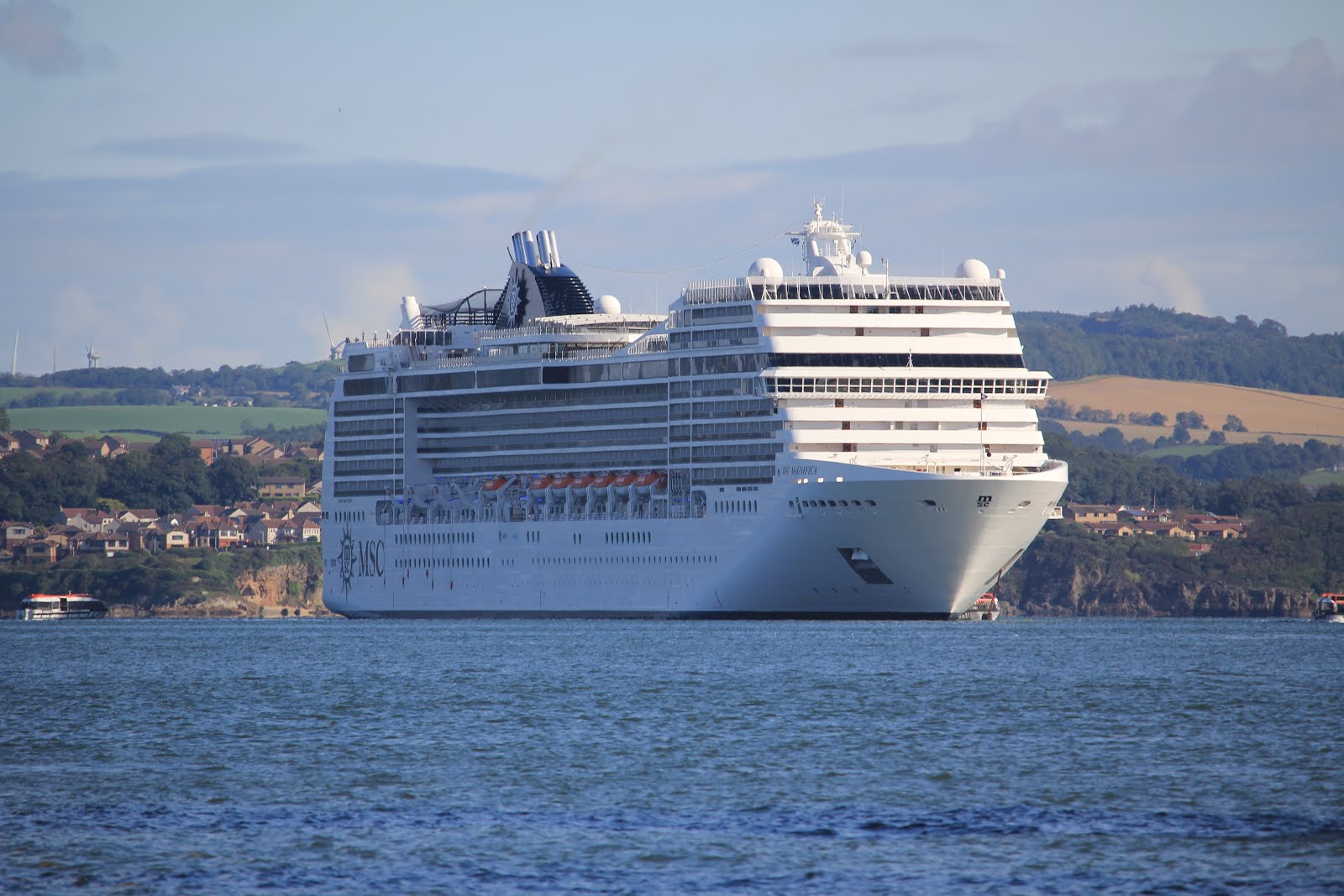
MSC Magnifica in the Firth of Forth photo credit Dave Jones

For this initial phase of the restart of operations, the two ships will initially only welcome guests who are residents in Schengen countries. Additionally, their itineraries have been designed according to the accessibility of the ports, reducing — where possible — the need for guests to make use of public transport or flights, MSC announced.

In the U.S., MSC ships will only return to service once the necessary approvals have been received from the relevant local and national authorities, including the CDC, as well as across the regions where the ships will operate.

MSC said it had set up a cross-functional task force comprised of in-house experts in the areas of Medical Services, Public Health and Sanitation, Hotel Services, HVAC and other Shipboard Engineering Systems, Information Technology and Logistics. It also hired Aspen Medical to further assist with the development of the protocol and operating procedures. In addition, MSC established a blue-ribbon COVID Expert Group.

New Health Protocols:

1. Universal health screening of guests prior to embarkation that comprises three comprehensive steps: a temperature check, a health questionnaire and a COVID-19 swab test. Depending on the screening results and according to the guest’s medical or travel history, a secondary health screening or testing will take place. Any guest who tests positive displays symptoms or temperature will be denied boarding. Following guidelines from the European Centre for Disease Prevention and Control, guests travelling from countries categorised as high risk will be required to take a molecular RT-PCR test, to be done within 72 hours prior to joining the ship. All crew members will be tested for COVID-19 prior to embarkation as well as regularly during their contract.

2. Elevated sanitation and cleaning measures supported by the introduction of new cleaning methods, the use of hospital-grade disinfectant products and the sanitation of the air on board with UV-C light technology that kills 99.97% of microbes.

3. Social distancing will be enabled through the reduction of the overall capacity of guests onboard, allowing for more space for guests, approximately 10 m² (about 108 sq. ft) per person based on 70% overall capacity. Venue capacity will be reduced, activities will be modified to allow for smaller groups and guests should pre-book services and activities to manage guest numbers. When social distancing is not possible, guests will be asked to wear a face mask, for instance in lifts. Face masks will be provided daily to guests in their cabins and will be available around the ship.

4. Enhanced medical facilities and services with highly qualified staff trained, the necessary equipment to test, evaluate and treat suspected COVID-19 patients and the availability of free treatment at the onboard Medical Centre for any guest with symptoms. Dedicated isolation cabins will be available to enable isolation of any suspected cases and close contacts.

5. Ongoing health monitoring will be conducted throughout the cruise. Guests and crew will have their temperature checked daily either when they return from ashore or at dedicated stations around the ship to monitor the health status of every guest and crew member. During this initial phase of operations, as a further enhanced measure of protection and to avoid risks to the health of guests and their fellow cruisers, guests will only go ashore as part of an organised MSC Cruises’ excursion. This means that MSC Cruises can protect their health while ashore with excursions that will be delivered with the same high standards of health and safety as on board. We will ensure that transfers are properly sanitised and that there is adequate space. Tour guides and drivers will also undergo health screening and will wear appropriate personal protective equipment (PPE).

6. A contingency response plan will be activated if a suspected case is identified, in close cooperation with the national health authorities. The suspected case and close contacts will follow isolation measures and may be disembarked according to local and national regulations.

The MSC COVID-19 Protection Plan will provide guests with additional peace of mind for the summer cruises. This will cover the guest if they become infected prior to their departure if they are not able to travel, during the cruise for medical expenses and after the cruise if the guest falls sick. The MSC COVID-19 Protection Plan is currently available only to guests from Schengen countries.

A redesigned embarkation procedure with digital check-in processes has been implemented to make the process more seamless and contactless with arrival time slots to manage guest flow.  Guests will undergo a COVID-19 swab test, a temperature check and an in-person check of the health questionnaire to ensure that they are healthy and eligible to cruise. If further checks are needed, these will be carried out by medical staff and, if needed, a further COVID-19 test could be carried out.

For guests, onboard both ships, the MSC for Me app will support and facilitate the new health and safety measures. The app can be used to book services as well as to manage their daily activities onboard and source information.

Additionally, onboard MSC Grandiosa every guest and crew member will be provided with a complimentary MSC for Me wristband, which facilitates contactless transactions around the ship as well as providing contact and proximity tracing.