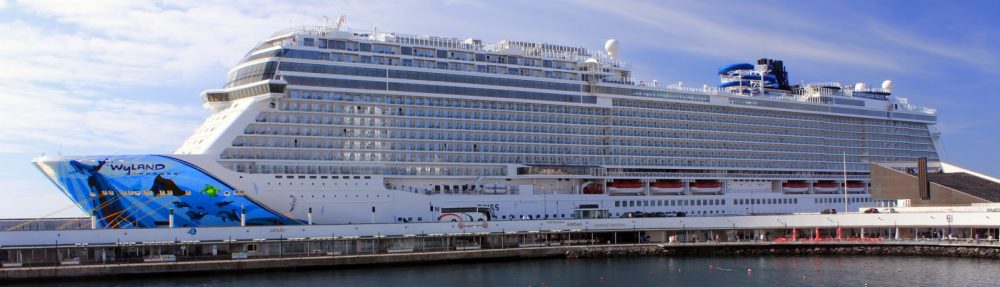
Meyer Turku at the Forefront of Cruise Newbuilds

Meyer Turku has always been at the forefront of new technologies, Tim Meyer, CEO, said to Cruise Industry News, noting that the yard built the first LNG-fueled passenger vessel, the Viking Grace and that its sister yard in Papenburg delivered the first LNG-fueled cruise ship.

“It is important to understand that every time we build a prototype, we set very ambitious targets for GHG emissions and fuel consumption so that the new ship becomes more efficient. That becomes part of our building contract with most customers and, of course, by reducing the fuel consumption, we also lower our customers’ operating costs.

“Over the years, we have been introducing new technologies in our newbuilds, such as, for example, podded propulsion; air lubrication to reduce the hull’s resistance in the water; advanced wastewater treatment, ballast water treatment, and more, which eventually have become building standards for the cruise industry.

“Now, we are focusing on HVAC, which is a large energy consumer,” Meyer continued. “It is not necessary to cool down all the public rooms all the time, when there are no people present, for example, or staterooms when people leave.

“There is also the ventilation and exhaust from the galleys that used to run around the clock. We are now optimizing this, so it is only running when there is cooking going on.”

In addition, Meyer Turku is looking to develop a carbon-neutral cruise ship concept by 2025, working with suppliers, universities and research organizations, as well as the state of Finland.

“This is a very important effort and will be key to our success going forward,” Meyer said. “On one hand you have the ship itself, on the other hand, you have the shipyard, and then we have our network and supply chain that can be optimized.

“A cruise ship is like a small city; you have everything from water production to wastewater treatment and so on. The goal is to have all these systems working together as efficiently as possible, and with AI (artificial intelligence) we will be able to do just that.

“Another pillar is our people, so we are also focused on creating new competencies within the yard, looking at how we are working and developing new ideas for methods and procedures.”

As a shipbuilder, Meyer said the company can literally build anything. However, the key is that it must make sense.

“When you have a ship such as the Viking Grace running between Stockholm and Turku, then it makes sense to operate on LNG, as long as you have a fixed route. But if you have a cruise ship sailing all over the world that may not work if LNG cannot be bunkered. So, you have to adapt the product.

“The big question is what fuels will be available and where they will be available,” Meyer continued.

“Another factor that plays in is the energy density of marine fuels. Diesel oil has the most energy per litre; methanol has only half as much, LNG a little less than methanol; liquefied ammonia, liquid organic hydrogen carriers and liquefied hydrogen even less.”

Thus, future fuels could impact the design and general arrangement of future ships, tank space and bunkering frequency.

“What do zero emissions mean,” Meyer asked rhetorically. “Does it mean no exhaust only or does it also mean no sound and no vibrations? What is important for us is to look at different aspects, not only the cruise ships themselves but also the supply chain. Germany, for example, is studying how to make steel production more sustainable. As a shipyard, we cannot do all of this but work as partners with our suppliers.

“We have to look at the whole picture, and if you compare to what people do on land, let’s say they drive their car, heat their homes, prepare food, go to the theatre and so forth. If you add all that up on a per capita basis, I think cruise ships will come out quite well.”

Contrary to land-based hotels and resorts, there is no waste of energy on a cruise ship, according to Meyer, who said that is a challenge the shipbuilder has been tackling for years and continues to look for new solutions.

Excerpt from Cruise Industry News Quarterly Magazine: Fall 2022 

First Look as New P&O Iona Sails into Southampton

The new 5,200 guests P&O Iona sailed into Southampton on Sunday ahead of her naming ceremony.

Dame Irene Hays, chair of Hays Travel, Britain’s largest independent travel agency, will name the LNG-fueled ship and a specially produced Nebuchadnezzar (equivalent to 20x 750ml bottles) of Alex James’s Britpop cider will smash against the hull of the ship to bring it a good fortune in the future.

P&O Cruises president Paul Ludlow said “It is a landmark day for both P&O Cruises and for the travel industry as a whole.

“We are on the cusp of a bright new beginning and Iona’s arrival into Southampton this morning is very visible evidence of this much-anticipated future.

“Our guests are longing to get back to sea and Iona’s summer season of UK coastal cruises, including her maiden voyage on August 7 up to her namesake island of Iona, has seen overwhelming demand.”

Princess and Fincantieri Sign Contracts For Two Ships

Sky Princess at Fincantieri

Princess Cruises and Fincantieri announced today the signing of the final contracts for the construction of two next-generation LNG-fueled 175,000-ton cruise ships, which will be the largest ships ever built so far in Italy, with deliveries scheduled in Monfalcone in late 2023 and in spring 2025.

This announcement follows the initial signing of a memorandum of agreement between the two parties in July 2018.

The vessels will each accommodate approximately 4,300 guests and will be based on next-generation platform design, being the first Princess Cruises ships to be dual-fuel powered primarily by LNG, Princess said.

“Princess Cruises continues to grow globally — adding new ships to our fleet built by our long-time trusted shipbuilding partner, Fincantieri, who brings decades of expertise to these next-generation cruise ships,” said Jan Swartz, Princess Cruises President. “Even more exciting is that these two ships are being designed to include our MedallionClass platform, powered by OceanMedallion, the most advanced wearable device available within the global hospitality industry.”

Giuseppe Bono, CEO of Fincantieri, commented on the announcement: “This result proves, once again, the trust we receive from the market, which allows us to look to the future with ambition. It honours our great work focused on innovation thanks to which we have been able to offer to the client a record-breaking proposal not only in terms of size. Besides, we firmly believe that a new class of Princess Cruises’ ships, one of Carnival Group’s top brands, can stem from this promising project. In fact, for Princess Cruises, we have received orders for 21 ships, another unprecedented result in this industry.”