Covid delays debut of start-up Norwegian cruise line

Covid delays debut of start-up Norwegian cruise line

The first two of start-up Norwegian cruise line Havila Voyages’ four new coastal ships have taken to the water following construction delays due to Covid-19.

The twin launch of the 6,200-ton vessels took place at the Tersan shipyard in Turkey on Saturday.

But the first two ships will not be ready for the new year as originally planned as the coronavirus pandemic has affected the shipyard over the last six months.

Delivery may now take place during the first quarter of 2021,” based on current knowledge,” according to Havila Voyages’ chief executive Arild Myrvoll.

In anticipation of the new 179-cabin ships, the firm has received approval for two replacement vessels.

But demand for the coastal route between Bergen and Kirkenes is currently “very uncertain”, and the need for capacity at the start of the new contract on January 1 is under evaluation, the company disclosed.

The coronavirus pandemic and travel restrictions are affecting the entire travel industry and are also making it difficult for Havila Voyages to be specific about what will happen next year.

“But we are pleased to note that there is a lot of interest in Havila Voyages from travel agencies and tour operators. We are in great demand and are looking forward to getting going,” Myrvoll added.

The ships have been on land for longer than usual to expedite the construction process as much as possible, with several tasks streamlined.

Myrvoll added: “This means that the work on the ships that have been launched is well underway with regard to plumbing, machinery, electricity and fixtures and fittings.

“It will be good to start providing people living along the coast, and tourists, with safe transport and environmentally friendly sailing on the world’s most beautiful coastal voyage.”

Havila Castor and Havila Capella will be powered by liquified natural gas (LNG) supported by giant battery packs.

They will be the most environmentally friendly ships on the coastal route between Bergen and Kirkenes from 2021, the company claims.

The batteries will enable them to run for four hours without creating noise or emissions.

Havila Voyages has an agreement with the Norwegian transport ministry to operate four of the 11 ships that sail the coastal voyage between Bergen and Kirkenes from 2021 to 2030.

Coin ceremony held for MSC Cruises’ first LNG-powered ship

Construction Begins on 205,700 Gross Ton MSC Europa

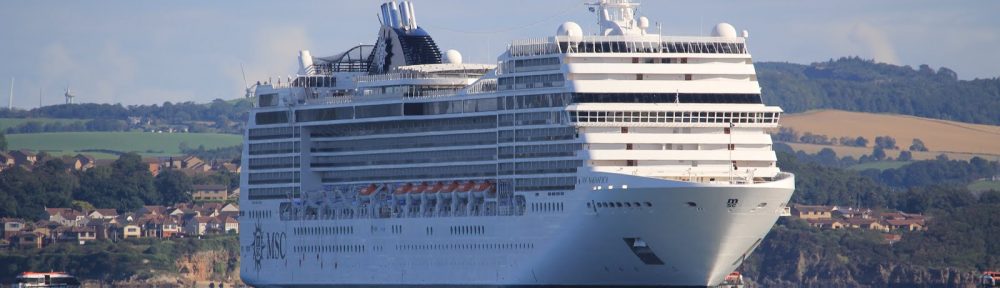
The traditional coin ceremony has taken place for MSC Cruises’ first liquified natural gas-powered ship, MSC World Europa.

The ceremony, which is a historical sign of blessing at the start of a ship-building process, took place at the Chantiers de l’Atlantique shipyard in Saint-Nazaire on Monday.

The 200,000-plus gross ton MSC World Europa is scheduled to enter service in 2022 and will be “one of most technologically- and environmentally-advanced LNG-powered cruise vessels in its class”, the line said.

Pierfrancesco Vago, executive chairman of MSC Cruises, said: “MSC World Europa is further proof of our commitment to environmental stewardship as she is set to reduce carbon emissions even further than many other existing cruise ships powered by LNG, which is currently the most environmentally-friendly fuel for commercial maritime operations.

“With this vessel, we also reconfirm our belief in investing in advanced environmental technology to meet our long-term goal of zero emissions from operations.”

Laurent Castaing, general manager of Chantiers de l’Atlantique, added: “We are proud to start the building of a ship which will set the standards for the cruise of the future. This is a major milestone in the history of our 20-year cooperation with MSC Cruises, which has already resulted in some of the most innovative cruise ships ever built.”

MSC Europa Itinerary, Current Position, Ship Review | CruiseMapper

MSC World Europa will feature a new 50-kilowatt demonstrator system that incorporates solid oxide fuel cell (SOFC) technology and uses LNG to produce electricity and heat onboard, the first time an LNG-powered fuel cell has been used on a cruise ship.

The line says the system will reduce emissions of greenhouse gases by about 30% compared with a conventional LNG engine, with no emissions of nitrogen oxides, sulphur oxides or fine particles.

MSC World Europa will also feature a new generation wastewater treatment system and other “cutting-edge environmental technology”.

MSC Cruises’ new flagship MSC Virtuosa is currently under construction in Saint-Nazaire and is due for delivery in 2020. The company also has firm orders with Chantiers de l’Atlantique for two additional LNG-powered ships, once each for the MSC World and Meraviglia classes of ships.

Port Canaveral: Diversified Offering

Six Ships, Port Canaveral

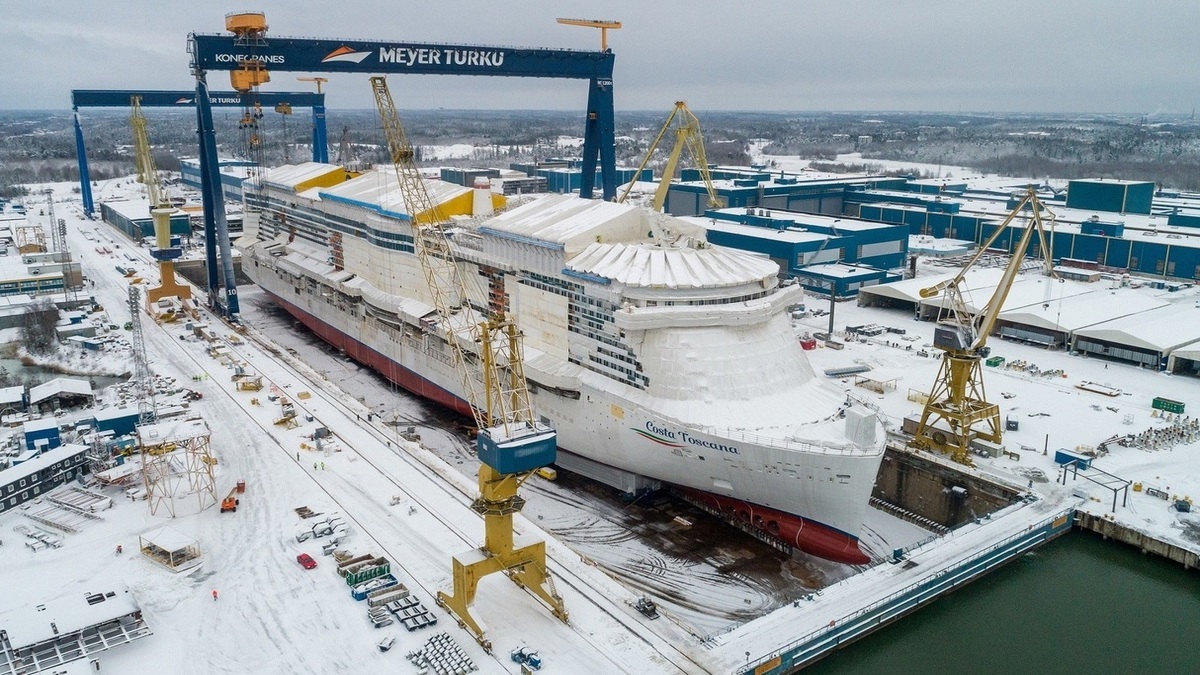
A brand-new Terminal 3 is nearing the final stages of construction for Carnival Cruise Line at Port Canaveral, along with a 1,800-spot parking garage, all in preparation for the new Mardi Gras which will become the first LNG-fueled ship in North America.


Projections call for just under five million cruise guests in the fiscal year 2020, and over 5.6 million by 2024.


For port CEO Captain John Murray, the planning started years ago, wanting to be ready for LNG-fueled ships. The effort has paid off as Port Canaveral will host the Mardi Gras year-round and is expected to be home to Disney’s LNG-fueled ships as well.

“We are growing consistently,” Murray said. “All our cruise lines are very strong and over the next few years they plan to add additional ships.


A rendering of the new Cruise Terminal 3

“We are going to become the Florida port that can expand as the tonnage will be on the market and there won’t be as many berthing options in Florida as there have been in the past.”

Other big news at Port Canaveral includes the summer arrival of Marella Cruises in 2021, a deployment move announced late last year that had been in the works since 2017, said Robert “Bobby G” Giangrisostomi, vice president, cruise business development.

“They were looking for an American product,” he said, adding that the port’s proximity to Orlando was key.


Long term, the big homeport customers have major deals with Port Canaveral, including Carnival, Royal Caribbean and Disney, and Murray said in November he was negotiating a new deal with Norwegian.


With options, Carnival’s latest arrangement could extend to 45 years. For the port, terminal infrastructure is about building smart. “Flexible terminals,” commented Giangrisostomi. “A 1,200-foot ship can have up to 7,000 passengers. You have to be flexible. LNG ships, big ships, medium ships and Port Canaveral can handle them all.”

Deals also include more parking infrastructure, which may not be as long term.

“We have to look at what the concept of parking could be in 10 years,” Murray said, noting autonomous vehicles and an 83 per cent jump in Uber and Lyft usage at the port year-over-year.


Shorter cruises? Plan for more drive-in passengers. Estimates suggest that 40 to 60 per cent of guests embarking at Port Canaveral are drive-in customers.

“We are 200 miles closer to the entire Southeast,” explained Giangrisostomi

Another metric that is up is port-of-call business. With an expected 83 transit calls this year, that number jumps to just over 100 next year with more visits from the Oasis of the Seas sailing from Bayonne.


“Our port-of-call business is substantial,” added David German, director, cruise business development. “It’s good for the local community, with 6,000-plus passengers.”

The out-island arms race has paid dividends to all the Florida ports, Murray added. With cruise lines spending big developing their own destinations in the Bahamas, they have a reason to keep ships in nearby homeports.


New facial recognition has sped up clearing ships with U.S. Customs and Border Protection, which can now happen in as little as two hours for 5,000 disembarking guests.

“They clear the ship very quickly. It helps the cruise lines get to zero counts much sooner,” Murray said.


“Being ready and out front for our cruise customers,” Murray answered when asked about how to run a cruise port successfully. “The guests are the most important part of our operation … easy in, easy off, easy on the ship, easy off the ship. We want to be number one in customer service … It boils down to the end-user.”