Asuka III Arrives in Japan Ahead of Maiden Season

Asuka III Arrives in Japan Ahead of Maiden Season
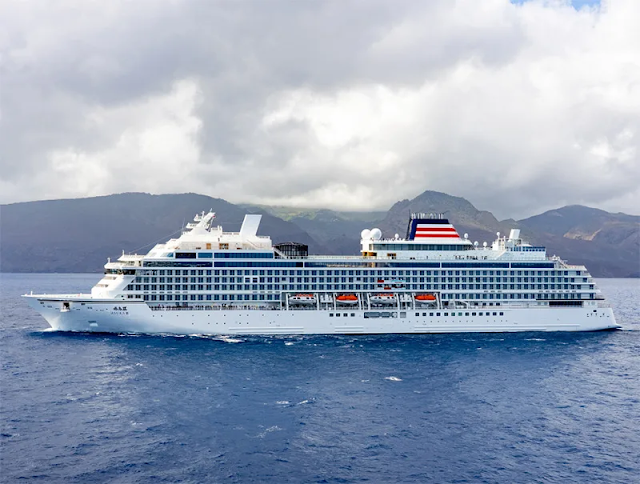
The new Asuka III arrived in Japan earlier this week after her long journey from Europe to Asia.

Built by the Meyer Werft shipyard in Germany, the new Asuka Cruise ship arrived at the port of Yokohama on June 2, 2025.

The LNG-powered vessel is now getting ready to embark on its inaugural season in late July, kicking off a series of cruises departing from ports in Japan.

Upon being delivered, the Asuka III sailed from Northern Europe in mid-April, embarking on a journey that included technical stops in Africa and Asia.

With no guests onboard, the ship sailed to the Canary Islands, South Africa and Singapore before arriving in the Far East.

In an update on its website, Asuka Cruise highlighted the ship’s rendezvous with the previous Asuka ships.

According to the company, in late April, the ship met at sea with the original Asuka off the Canary Islands.

Currently operated by Phoenix Reisen, the 1991-built vessel, which now sails as the Amadea, sailed for the brand until 2006.

Asuka also arranged a meeting of the new ship with its fleetmate, the Asuka II, which is currently offering a world cruise.

The two vessels sailed alongside near the coast of the island of St. Helena, a British overseas territory in the South Atlantic.

To mark the occasion, special ceremonies were held onboard the vessels, with crew and guests taking part in a themed celebration.

According to Asuka III’s Chief Engineer Takaaki Nakano, the ship’s delivery voyage was key to evaluating and testing various systems onboard.

“We inspected the operating conditions of various equipment, striving to provide a comfortable cruise experience for the future passengers of the Asuka III,” he said.

“We did our utmost to deliver the Asuka III safely to Yokohama so that everyone can see its beautiful sight,” he added.

AIDA Orders Two New Ships From Fincantieri

Carnival Corporation today announced an order for two new ships for AIDA Cruises, a new class of mid-sized vessels.

The agreement with Italian shipbuilder Fincantieri provides for the design, engineering, and construction of these multi-fuel-capable ships, which will be delivered in the first quarter of the fiscal years 2030 and 2032, respectively.

“With approximately 2,100 cabins each, these remarkable new ships give our guests a completely new class of ship which slot in perfectly between our 1,600 cabin Hyperion Class vessels and our more than 2,600 cabin Helios Class vessels,” said Felix Eichhorn, President of AIDA Cruises. “Our next generation of ships will delight our guests with amazing new features and experiences that we will reveal over time. Its innovative technology with multi-fuel propulsion systems, including LNG, will future-proof our operations into the coming decades.”

Eichorn added that once the second ship is delivered, AIDA will have a total of 13 ships in its fleet, further expanding its leadership position in the German cruise market.

“The introduction of these next-generation ships, when combined with the AIDA Evolution program modernizing much of the existing fleet’s décor, features and technologies, will drive even more demand for our AIDA brand, which is synonymous with cruising in Germany,” said Josh Weinstein, chief executive officer of Carnival Corporation.

According to Weinstein, with today’s order, Carnival Corporation’s newbuild pipeline includes eight new ships scheduled to enter service between now and 2033, including Star Princess this year and one each from 2027 to 2033.

“We’re maintaining our disciplined approach to growth and strategically directing new capacity to the highest-performing brands in our world-class portfolio like AIDA Cruises and its sister brand Carnival Cruise Line, which now account for seven of our eight ships on order. This growth plan will maximize our returns and allow us to use our strong free cash flow to continue lowering our debt balance and transferring value from debt holders back to shareholders,” he said.

“We are honored that our long-standing partner Carnival Corporation has selected Fincantieri to build ships for AIDA Cruises for the first time in our history. This milestone confirms our ability to serve the entire Carnival Corporation portfolio while ensuring long-term visibility for our shipyards. These new ships will embody the most advanced technologies for sustainability and efficiency, further strengthening Fincantieri’s and Carnival Corporation’s roles as leaders in cruise industry innovation,” said Pierroberto Folgiero, CEO of Fincantieri.

Fincantieri Delivers Mein Schiff Relax in Monfalcone

Fincantieri has delivered the new Mein Schiff Relax to TUI Cruises, with the ship being handed over on Friday in Monfalcone.

Fincantieri said in a press release that the vessel is the first of two InTUltion class new concept cruise ships that are dual fuel powered (Liquid Natural Gas and Marine Gas Oil) that Fincantieri is building for TUI Cruises. The sister ship will set sail in mid-2026.

According to the press release, the Italian Minister for Relations with Parliament, Luca Ciriani, attended the ceremony, welcomed by Biagio Mazzotta, and Pierroberto Folgiero, chairman, CEO and managing director of Fincantieri.

The event was also attended by Luigi Matarazzo, general manager of the Fincantieri Merchant Ships Division, as well as Wybcke Meier, CEO of TUI Cruises, Frank Kuhlmann, chief financial officer of TUI Cruises and Captain Tom Roth.

The company said that this unit forms the backbone of TUI Cruises’ new fleet, based on a first-in-class project developed by Fincantieri.

The project focuses on energy efficiency and aims to reduce operational consumption and minimize environmental impact in compliance with the latest regulations. According to Fincantieri, the ship’s ability to use low-emission fuels marks a step towards climate-neutral cruising.

The ship also features catalytic converters meeting Euro 6 standards, a generative turbine using the residual heat from the diesel generators and an electrical shore-power connection. This ensures almost emission-free operations while in port (about 40 per cent of operating time).

The ship also has a waste treatment system that can transform organic materials into recyclable components.