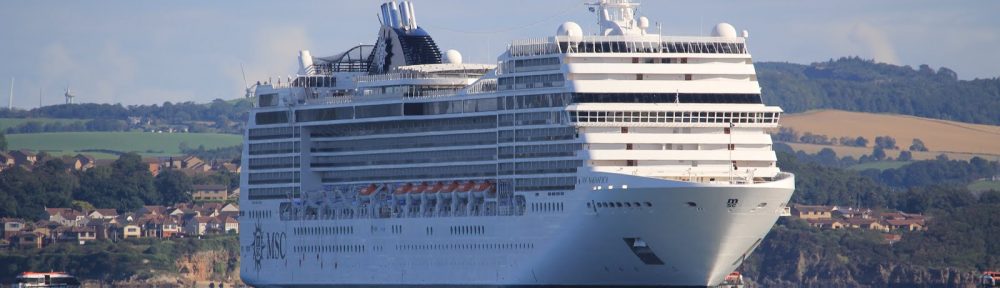
The MSC World America recently returned to St. Nazaire, France, after completing a second set of sea trials.
Set to be delivered to MSC Cruises in late March, the vessel is currently in the final stages of construction at the Chantiers de l’Atlantique shipyard.
After embarking on its first sea trials in December, the World America sailed from St. Nazaire on Jan. 18, 2025, for a new series of tests.
During the trials, various systems and aspects of the ship’s operations are tested, including its manoeuvrability, speed and safety equipment.
As the second ship in the company’s World Class series, the MSC World America is scheduled to enter service for MSC Cruises in April.
After being delivered by the Chantiers de l’Atlantique shipyard, the LNG-powered vessel will cross the Atlantic with no guests onboard.
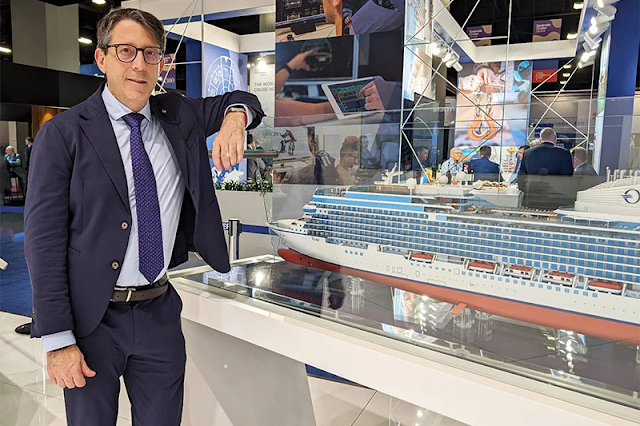
Coming off a big newbuild order from Norwegian Cruise Line Holdings, Daniele Fanara, director of new building and after-sales at Fincantieri, is positive about the future.
“We are serving all segments of the market, from small luxury vessels to mega-size vessels to upper premium,” said Fanara, speaking to Cruise Industry News. “This covers all the brands in the cruise industry.”
Fanara said Fincantieri was very proud to be working with a variety of operators and being able to serve each of them in a tailored customized way.
“We have cross-fertilization with our technology, including the capacity to design the vessel,” he added.
NCLH Order
The new Norwegian Cruise Line Holdings order for eight ships includes orders for all three company brands, with new classes of ships for each of them. Norwegian, Oceania and Regent will all get new bigger ships, with orders for the Norwegian brand stretching to 2036.
“We are proud of the trust that Norwegian gave us to develop such an important program,” said Fanara.
Looking at future technologies, Fanara said the ships were being developed.
“Our attention is focused on three main fuels,” he said. “One is LNG, one is methanol, and one is hydrogen. Hydrogen is the most innovative one. We are developing new ideas on how and when we can implement hydrogen onboard the vessels.”
New ships for Oceania and Regent are being developed to be methanol-ready.
“Today there is no real answer on the fuel of the future,” Fanara continued. “It’s a matter of availability. What’s important from our side is that we are always studying the latest technology available. We are also exploring CO2 capture technology.”
Fanara said among the alternative fuels, LNG was notable in the fact it was being used today.
“Ships are sailing on LNG. The other technology is in a different phase of development. We need to monitor them so we are ready to implement them if necessary,” he explained.
Questions are coming in from cruise lines on alternative fuel practicalities, Fanara said, but with the most questions on hydrogen.
“It is the most innovative, it is the most unknown.”
Industry
Fanara called the cruise industry resilient.
“Soon after Covid, the speed at which the industry recovered and came back to strong booking and revenue levels is incredible,” he said.
Fanara expects other orders to follow, citing market demand and the value gap between cruise- and land-based vacations.
Shipbuilding Costs
Costs are up to build ships.
“A greener vessel is for sure more expensive to build,” Fanara noted. “But is the value of this additional cost worth it for the industry?
“The owners can say the ships are more expensive. We had Covid, we had wars and the result of this has been inflation. If you mix inflation and the technology transition, the result is not less expensive ships.”
Carnival Corporation announced it has signed an agreement with Meyer Werft shipyard for a fifth Excel Class cruise ship for its Carnival Cruise Line brand, set to be delivered in 2028.
This announcement confirms the addition of the 11th Excel Class ship to the corporation’s fleet across four brands, with Carnival Cruise Line operating the fifth vessel. This follows a February announcement for a newbuild for Carnival with a 2027 delivery date.
“Carnival’s Excel-class fleet will soon be a quintet of these very popular ships that provide outstanding guest amenities and tremendous operating efficiencies,” said Christine Duffy, president of Carnival Cruise Line.
“Since the introduction of Mardi Gras in 2021 and the subsequent expansion with Carnival Celebration in 2022 and Carnival Jubilee in 2023, these Excel-class ships are driving excitement, demand, and strong guest satisfaction ratings. With the arrival of Carnival Firenze in April, we are completing the addition of five ships to our fleet in less than 20 months, and then we will pivot to another phase of growth with these two Excel ships.”
Like its sister ships, the new vessel will be powered by liquefied natural gas (LNG) and designed to carry over 6,400 guests and 1,800 crew.
“This new order continues to balance our commitment to growth with our responsible capital approach to utilize strong free cash flow over the next several years to strategically improve our balance sheet, significantly reduce our leverage levels and continue to transfer value from debt holders to shareholders,” said Josh Weinstein, CEO of Carnival Corporation.
“Carnival Cruise Line continues to perform at an outstanding level, and we are focused on adding capacity across the company where it aligns with demand and our position in the marketplace,” added Weinstein.
This measured capacity growth strategy will result in our adding one to two ships per year beginning in 2027, and we will be identifying additional fleet plans over the coming months for our cruise lines to meet capacity demand and improve execution across all aspects of our operation, with the benefit of yielding higher return on invested capital.”
“We are proud of the role the Excel Class from Meyer Werft and Meyer Turku has played in contributing to the success of Carnival Corporation for many years now. We look forward to continuing this success story together,” said Bernd Eikens, CEO of Meyer Group.


 Wetravel2u's Weblog