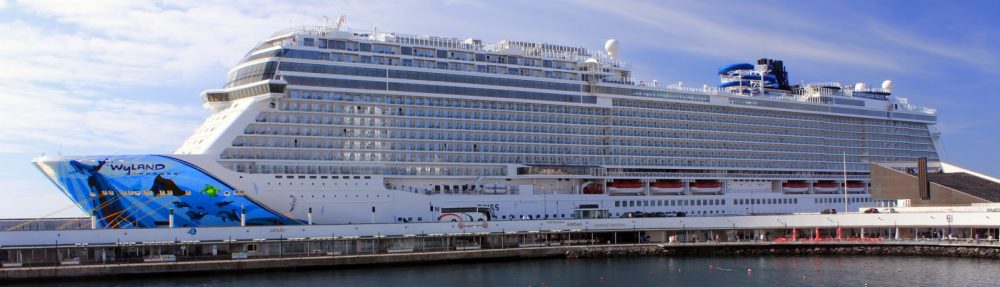
Holland America’s Koningsdam to feature wine-blending experience


MS Koningsdam

When the ship enters service next April, Holland America Line’s Koningsdam will feature a venue where passengers can blend their own bottle of wine to take to dinner.

The venue, called Blend by Chateau Ste. Michelle, is an expansion of the cruise line’s partnership with the winery.

The two Seattle-area companies announced the partnership at a luncheon on Monday at the Chateau Set Michelle headquarters in Woodinville, Wash.

Guests will choose to blend their wines from five vintages: two cabernet sauvignons, two merlots and a cabernet franc.

“I have to say, it is one of the most exciting, engaging activities that people can do,” said HAL President Orlando Ashford. “All of you who have a competitive streak, you’re going to love it.”

There will be a facility for wine blending on Deck 2, the first at sea, according to HAL. It will be a piano-shaped room enclosed by floor-to-ceiling glass on two sides, with a table for 10 guests.

A package that includes a lecture about how to blend the wines, and a bottle to take to dinner, will cost in the $90 range, said Michael Smith, HAL’s senior vice president of guest experience and product development. Once guests have created a blend, they can have a bottle blended for them at dinner for a reduced price.

Lisa Anciaux, director of travel products at AAA Washington, said the idea plays into heightened interest in food and wine. “People are looking for that experience. It’s a perfect fit for HAL. It’s going to go gangbusters for them,” she said.

MSC Cruises also has a wine blending experience on some of its ships, but not in a purpose-built room.

Ashford said the idea is “taking something guests already enjoy and adding a personal touch.”

MSC Announces Grand Voyage to Shanghai

MSC Cruises has officially announced plans to make its first sailing to China, with the newly-renovated MSC Lirica calling in Shanghai on May 1, 2016 after having traveled across continents.

The 65,000-ton ship will make the company’s maiden call in China’s biggest megalopolis after a 60-day round-the-world Grand Voyage which departs on March 3, 2016 from Rio de Janeiro, Brazil.

“We are delighted to once more be able to offer our guests a brand new itinerary – from Brazil to China via Europe – which offers the chance to visit some of the most appealing places on earth, certainly across a huge array of people and cultures,” said MSC Cruises CEO, Gianni Onorato.

Onorato added: “This new Grand Voyage offering is proof of our steadfast commitment to offer our guests innovative and sought-after destinations. As MSC Cruises continues to expand the destinations it calls – such as Cuba which we recently announced – we are further enhancing our global offering while providing travelers best-in-class experiences and service.”

MSC Cruises is offering travelers the opportunity to choose from three different versions of the Grand Voyage, with the ability to embark in either Rio de Janeiro in Brazil (60 nights), Genoa in Italy (41 nights) or Dubai in the United Arab Emirates (26 nights), before arriving in Shanghai.


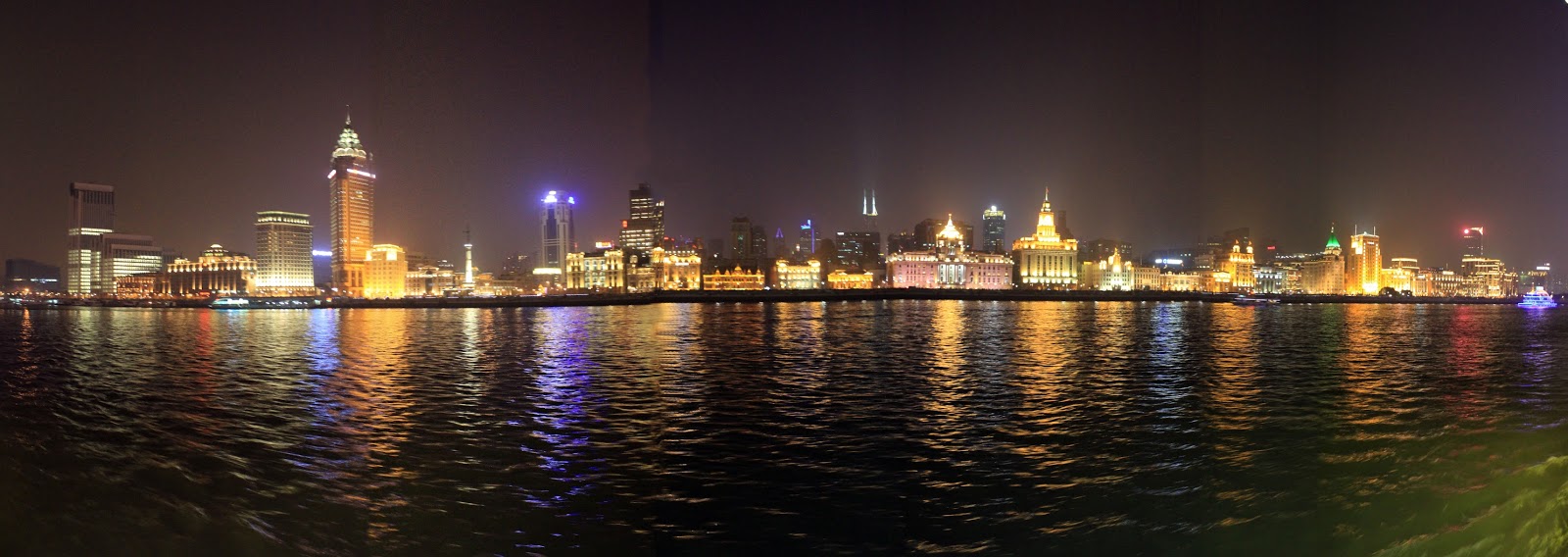
Shanghai at night taken by Dave Jones

Before setting sail, MSC Lirica will be fully renovated and enlarged under MSC Cruises’ Renaissance Program, which entails a comprehensive overhaul of the ship due to be completed in November 2015.

Prices for the full 60-day Grand Voyage on MSC Lirica will start at $4,799 per person. Included in the price are beverage and laundry packages as well as 8 shore excursions.

During the first leg of MSC Lirica’s 60-day journey, the ship will depart on March 3, 2016 from Guanabara Bay in Rio de Janeiro and sail north along the coast of Brazil – with calls in Buzios, Salvador, Maceio and Fortaleza. The ship  will then cross the Atlantic on a northeast course towards the Canary Islands – with a stop in the city of Santa Cruz de Tenerife – before reaching mainland Europe and visiting Cadiz, Spain.

From there, MSC Lirica will call the three largest ports in the Mediterranean – Barcelona, Spain; Marseille, France; and Genoa, Italy – providing travelers an opportunity to embark in any of these ports in Europe and providing maximum flexibility as guests journey towards Asia.

After leaving Genoa, MSC Lirica will call Naples, Italy and the island of Crete with Heraklion in Greece. The ship then heads south to Aqaba in Jordan; Muscat, Oman; and Khor Al Fakhan and Dubai in the United Arab Emirates.  The ship is scheduled to stay in Dubai overnight and travelers interested in sailing from Dubai to Shanghai will have the ability to embark.

During the last leg of the journey, MSC Lirica sets sail towards the East and the Indian cities of Goa and Cochin, prior to calling Colombo, the capital city of Sri Lanka. She then heads to Phuket, Thailand, and Penang and Port Kelang/Kuala Lumpur in Malaysia, before reaching Singapore.

After an overnight stay in Singapore, the ship will bring its guests to Ho Chi Minh City in Vietnam and then to visit Hong Kong. Shanghai is the next call and includes an overnight stay before sailing across the China sea to Fukuoka in Japan. From the Land of the Rising Sun, MSC Lirica heads back to the high seas one more time, returning to Shanghai on May 1, 2016.

Virgin Cruises tasked with offering distinctive experience on smaller ships


Virgin Cruise Concept Drawing.

Virgin Cruises’ decision to order ships that are smaller than those commissioned recently by its future competitors has prompted questions about whether it will have enough room to fashion a distinctive onboard experience.

The line, part of Richard Branson’s Virgin Group business empire, in June ordered three ships from the Fincantieri shipyard for delivery after 2020, when it plans to launch weekly Caribbean cruises.

The ships will each be about 110,000 gross tons and carry 2,860 passengers at double capacity, Branson revealed at an appearance in Miami last month along with Virgin executives.

That capacity is far less than recent orders, for example, for as much as 6,000 passengers for Carnival Corp.’s Aida Cruises brand in Germany, 5,400 for Royal Caribbean International, 4,500 for MSC Cruises, 4,200 for Norwegian Cruise Line and 3,954 for Carnival Cruise Line.

All those lines sail at least one ship from Miami, the homeport where Branson said Virgin will launch its line.

When it comes to setting prices, larger ships provide economies of scale that can help reduce fares while still generating profits.

“Virgin is in a very difficult position to differentiate themselves from everybody else. The key for their success is how they differentiate their onboard product.” — Art Rodney, Crystal Cruises founder

Tom McAlpin, president and CEO of Virgin Cruises, said that while pricing has not been disclosed, it will likely be above the cheapest fares advertised for seven-day itineraries.

“We’re not going to be a budget brand,” McAlpin said in an interview. “What Virgin has done in the past has been to give you a better experience at the same price point.”

To do that, it helps to have a generous amount of public space to work with. Virgin has not disclosed its onboard activities or designs yet but has emphasized that it will stand apart from the pack.

A key measure for new ships is the space ratio, which divides gross tonnage into the number of passengers carried. The higher the ratio, the more room for larger cabins and public spaces.

Mark Conroy, who helped design several ships as president of Regent Seven Seas Cruises in the 1990s, said the key question is how big the cabins will be on Virgin Cruises.

“There is only so much square footage, particularly outside space, that needs to be divided between technical space, public spaces and staterooms,” Conroy said. “The technical space is pretty standardized, so then it becomes a balancing act between public space and suites and cabins. The larger you make the suites/cabins, the less space you have for public room.”

Art Rodney, one of the founders of Crystal Cruises, said that at 38.5, the Virgin ship’s space ratio is “no better than and in some cases worse than other large ships,” such as the MSC Divina or Royal Princess, both of which have space ratios of 40.

“Virgin is in a very difficult position to differentiate themselves from everybody else,” Rodney said. “The key for their success is how they differentiate their onboard product.”

McAlpin agreed, saying the “different programmatic elements” will set Virgin apart.

He said the ships are still in the design phase and urged potential passengers to weigh in on Virgin’s website to say what they would want to see and do on a Virgin vessel.

But McAlpin also said that if the ship is smaller than its competitors, that will make it different too.

“If everyone out there is building ships of one size and you have a different size, it does provide a level of differentiation,” he said.

McAlpin cited consumer research as the main factor in deciding how big to build. He said those surveyed expressed concerns about being on a mega ship with thousands of fellow passengers.

“We believe a slightly smaller ship gives us a good platform,” McAlpin said. “It’s big enough to provide us with a variety of experiences but small enough to provide a more intimate atmosphere.”