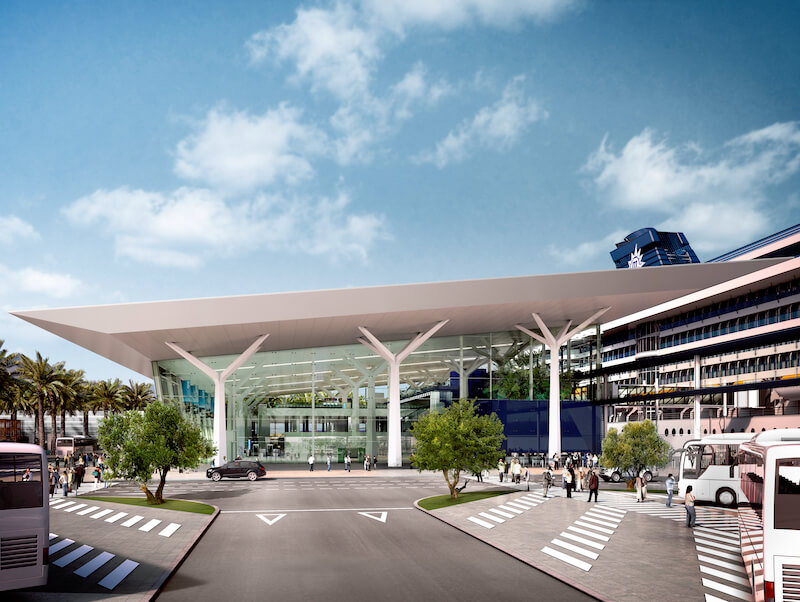
MSC Cruises has announced that it obtained the final approval by the Port of Barcelona’s Board of Directors to build and operate an exclusive cruise terminal. This multi-year concession will see the construction of an innovative terminal of 11,670 square meters that MSC Cruises will operate and manage for a 31-year period.
The project is estimated to represent a 33-million-euro investment by MSC Cruises. With construction work set to start shortly, the new terminal is expected to enter service in 2024.
“We are particularly pleased with the award of this multi-year new terminal concession. Barcelona is not only an important homeport for the cruises division, but also for the entire group and its shipping business. As such, the new terminal is further proof of MSC Group’s longstanding commitment to the city of Barcelona and the entire Catalonia region,” said MSC Cruises’ Executive Chairman Pierfrancesco Vago.
For the project, MSC Cruises is partnering with the renowned Catalan architect Ricardo Bofill.
“I am also honoured that for this project we will able to partner with the impressive Ricardo Bofill and his firm. Together, we will build a state-of-the-art new terminal that is bound to become another landmark for the beautiful city of Barcelona,” Vago said.
According to him, the new terminal will allow MSC to operate “expanded homeport operations, resulting in added direct and indirect economic benefit for the city and the overall region.”
“This will come from higher spent locally by our international guests either flying into or out of Barcelona airport and likely to spend additional days in the city and its hotels together with their travelling parties. Homeport operations will also allow us to dedicate to Barcelona more of our new ships – including the LNG-powered MSC World Europa which is currently under construction and is shaping up to become one of the most environmentally friendly ships at sea when she comes into service,” noted Vago.
“Finally, the new terminal allows us to further demonstrate our commitment to environmental sustainability as it will feature both shore power facilities as well as LNG bunkering operations,” he concluded.
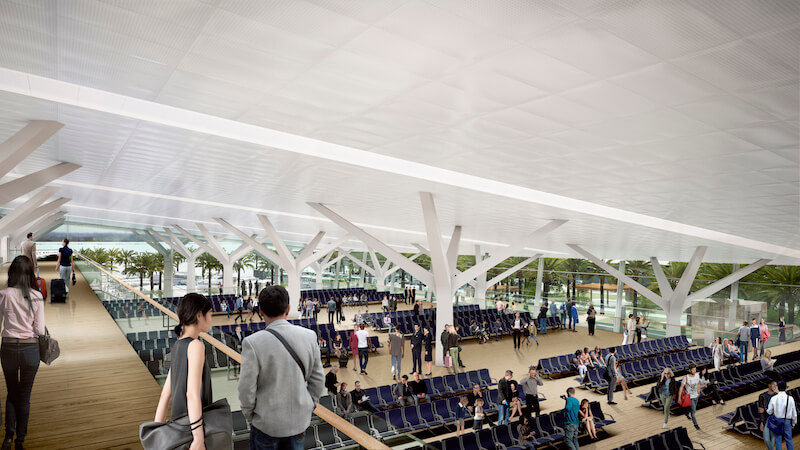
According to a press release, this project will allow MSC Cruises to “consolidate its presence in Barcelona,” which is one of the brand’s most important ports in the Western Med and to expand its homeporting operations out of the city.
This will result in added direct and indirect economic benefit for the city and region as more international guests will transit through Barcelona, likely spending additional days in the city either before or after their cruise, the cruise line wrote.
The new terminal will feature shore power facilities and be ready for LNG bunkering operations, allowing MSC Cruises to deploy more next-generation, environmentally-friendly ships in Barcelona, including the MSC World Europa. The World Europa is the brand’s first LNG-powered cruise ship, currently under construction and due to enter service in 2022.
Both cargo operator MSC Mediterranean Shipping Company and ferry operator GNV have a solid presence in the Port of Barcelona, the cruise line said.
“As such, the new terminal is a further proof of MSC Group’s longstanding commitment to Barcelona, Catalonia and the whole of Spain,” MSC stated.


 Wetravel2u's Weblog