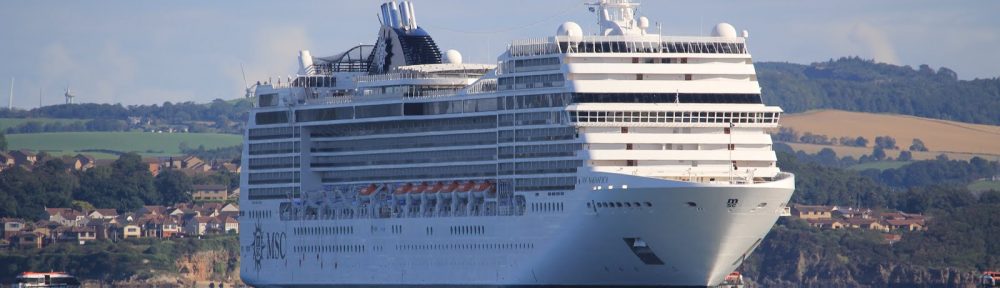
MSC Cruises Flexes Environmental Commitment with Green Tech

2021 will see two new MSC Cruises vessels enter the market, the MSC Virtuosa and MSC Seashore, and both ships will be equipped with a wide range of the latest-generation environmental technologies and equipment, according to the cruise line. 

Both newbuilds will feature hybrid exhaust gas cleaning systems (EGCS) and selective catalytic reduction systems (SCR), achieving a 98% reduction of sulphur oxide (SOx) emissions and reducing nitrogen oxide (NOx) emissions by 90%.

Their wastewater treatment systems have been designed in line with the International Maritime Organization’s MEPC 227(64) Resolution and achieve purification standards that are higher than most wastewater treatment facilities ashore, MSC announced, in a press release. 

As all MSC Cruises’ newbuilds, they will also be equipped with shore power, allowing them to connect to local power grids where infrastructure is available.

Pierfrancesco Vago, MSC Cruises’ Executive Chairman said: “Our long-term goal is to achieve a zero-impact cruise operation and this is the journey we are on today. As we work with our partners to identify new technologies that will bring us closer to this goal with each new ship that we build and bring into service, we continue to equip our ships with the latest and most effective technologies in the market.”

In addition, MSC has also announced that it is partnering with several industry players in a research project that promotes low-carbon shipping by combining progressive energy technologies and innovative ship design. Led by the University of Vaasa, the CHEK Consortium – deCarbonising sHipping by enabling Key Technology symbiosis on real vessels concept designs project – involves, in addition to MSC Cruises, the World Maritime University, Wärtsilä, Cargill, Lloyds Register, Silverstream Technologies, Hasytec, Deltamarin, Climeon and BAR Technologies.

The consortium is in line to receive significant funding from Horizon 2020 – the European Union’s framework programme for research and innovation.

According to MSC, the project will seek to demonstrate the synergistic benefits of innovative technologies including hydrogen propulsion, ultrasound antifouling, hull air-lubrication, waste to energy systems and digitalized optimization software, fully integrated to maximize efficiency across all aspects of ship operation. 

Looking ahead, in 2022 MSC World Europa, the company’s first LNG-powered vessel will be delivered.

The first LNG ship for MSC will also get a 50-kilowatt, LNG-powered solid oxide fuel cell technology project that offers a potential to reduce greenhouse gas emissions by a further 25% compared to a conventional LNG engine.

Linden Coppell, MSC Cruises’ Director of Sustainability, noted: “Every new ship that joins our fleet incorporates solutions to minimise our environmental footprint. MSC Virtuosa and MSC Seashore will be no exception. As new technologies are identified, we also work to improve the existing fleet, investigating retrofit opportunities, incorporating new energy reduction measures, working extensively with industry experts and seeking out drop-in alternative fuels to achieve the ambitious carbon intensity reduction goals of our industry.”

Hamburg Offers Port Discount to Green Ships

AIDAstella in Hamburg

The Port of Hamburg announced that it is offering a 10 percent discount on port fees for cruise ships registered with the Environmental Ship Index (ESI) of the International Association for Ports and Harbours (IAPH) and performing well.

The announcement said well performing vessels would receive a 10 percent discount on port fees in the German city.

The ESI evaluates the quantity of nitrogen oxide (NOX) and sulphur oxide (SOX) released by ships as well as CO2 emissions and accounts for the potential to use shore power as well.

This data is then presented in a score from zero to 100.

Ports with an ESI-based port fee reduction scheme attract more environmentally friendly vessels and hence reduce the environmental impact of shipping in the port, said the port, in a statement.

About 100 cruise vessels are voluntarily registered in the ESI currently.

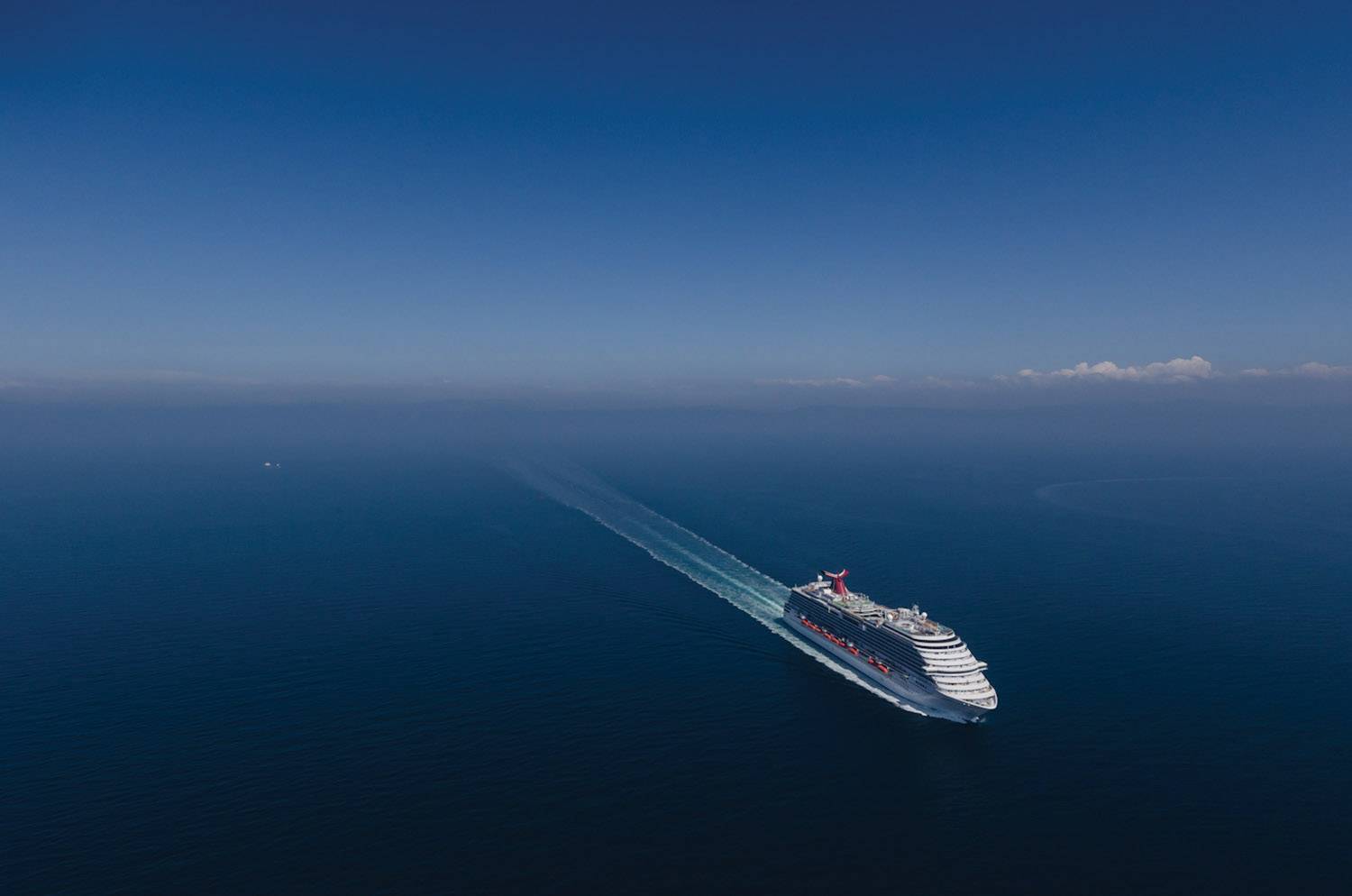
Carnival to Drydock 32 Ships by 1H 2016

Carnival to Drydock 32 Ships by 1H 2016

By Greg Trauthwein
File (Photo: Carnival)
(Photo: Carnival)

In the quest meet stringent new emissions regulations, cruise industry major Carnival Corp. earlier this month reached an agreement in principle with the U.S. Environmental Protection Agency (EPA) and Coast Guard to develop its own advanced emission control technology to be used in waters surrounding U.S. coasts. The plan calls for the cruise major to drydock 32 ships between now and the first half of 2016.

According to the EPA, Carnival will develop and deploy a new exhaust gas cleaning system on up to 32 ships over the next three years to be used in Emission Control Areas (ECA’s), the area around U.S. and Canadian coasts where ships must reduce air pollution emissions.
The new controls to be developed and deployed combine the use of sulfur oxide (SOx) scrubbers with diesel particulate filters, which essentially combines technologies well known in the power plant and automotive sectors, but not previously used together on a marine vessel.
The technology can also provide additional benefits in the reduction of particulate matter and black carbon, and according to the release from the government, will provide an opportunity for ECA compliance at a significant (50% or greater) reduction in cost and may yield emission reductions beyond those required by current requirements.

The ECAs were developed by the U.S. and Canada through an agreement with the International Maritime Organization  (IMO) in order to protect human health and the environment by significantly reducing air pollution from ocean-going vessels. By 2020, ECA limits will reduce nitrogen oxide (NOx) emissions by 320,000 tons, particulate matter (PM) emissions by 90,000 tons, and SOx by 920,000 tons. Each year, the standard will also result in the prevention of tens of thousands of premature deaths while relieving respiratory symptoms for nearly five million people.
This announcement follows a growing trend, as in late 2012 U.S. containership owner TOTE announced its plans to build a series of high-spec ships at NASSCO that incorporated MAN Diesel & Turbo engines capable of burning LNG as fuel.
A joint letter from the Coast Guard and the U.S. EPA to Michael Kaczmarck, Carnival’s VP of Shipbuilding, said: “Under the proposed trial program, Carnival will install exhaust gas cleaning systems for engines on 32 vessels that operate in the ECAs, and those systems will help enable the vessels to meet or exceed the sulfur emission levels required within the ECAs. We understand that Carnival will install sufficient exhaust gas cleaning capacity on each of the ships to meet or exceed the 2015 ECA fuel sulfur requirements. Additionally, these exhaust gas cleaning systems will be installed during vessel drydocks on the following schedule: 9 ships in 2014; 16 ships in 2015 and 7 ships in the first half of 2016.”