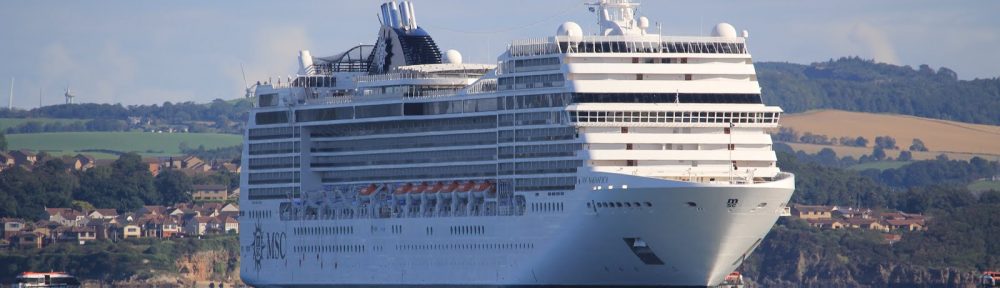
MSC Cruises Details Results of World’s First Net Zero Cruise

MSC Cruises has shared details of the world’s first net zero greenhouse gas (GHG) emissions cruise operated in June by its newest ship, the LNG-powered MSC Euribia.

The four-day voyage from Saint-Nazaire in France to Copenhagen in Denmark resulted in a saving of 43 tons of fuel, the company said, and enabled the ship to perform 11 per cent better than the vessel’s digital twin – an ashore virtual ship that reproduced the optimum energy flow and mirrored the fuel utilization onboard.

This was thanks to various optimization and energy efficiency measures, including optimal speed profiles, routing, trim and engine configuration and strict management of the hotel`s energy consumption, according to a press release. 

All the required heat for galleys, heating and ventilation systems as well as production of hot water onboard was recovered from the ship’s engines, which eliminated the need to use the boilers during the voyage.

The ship used bio-LNG as a fuel, which is the most cost-effective and environmentally friendly method recognized under the European Union’s Renewable Energy Directive known as RED II.  Each batch of bio-LNG produced was certified by the International Sustainability and Carbon Certification.

Linden Coppell, vice president of sustainability and ESG at MSC Cruises, said: “The MSC Euribia’s pioneering voyage was a significant achievement and proved that net zero GHG emissions cruising is possible today and well ahead of the 2050 target for the industry.  We are eager for the appropriate regulatory and financial incentives for fuel producers to provide the fuels needed, at the scale that is needed, which, alongside technology, will power the industry’s journey towards decarbonization.”

MSC Cruises said will use the data collected during MSC Euribia’s net zero emissions sailing to drive down further the emissions intensity across the fleet.

MSC Euribia completes sea trials ahead of launch in June

MSC Cruises’ upcoming ship MSC Euribia has successfully completed its four-day sea trial in the Atlantic Ocean. 

The cruise line tested the performance of the ship’s four LNG-powered engines, manoeuvrability, fuel consumption, safety systems, speed and stopping distances. 

MSC Euribia is now undergoing finishing touches at Chantiers de l’Atlantique’s shipyard in Saint-Nazaire, France, before its naming ceremony on 8 June in Copenhagen, Denmark. It will then embark on its maiden season in Northern Europe from its homeport in Kiel, Germany. 

The ship, which is the 22nd to join the MSC Cruises fleet, will accommodate up to 6,327 passengers and will host seven different live productions per week to entertain guests. 

The LNG-powered vessel will feature shore power plug-in connectivity to reduce carbon emissions in port as well as advanced wastewater treatment, recycling and underwater noise management systems to protect marine life. 

MSC Cruises’ commitment to sustainability will also be reflected on the ship’s exterior via a fresco designed and painted by German graphic artist Alex Flaemig.  

MSC Cruises Flexes Environmental Commitment with Green Tech

2021 will see two new MSC Cruises vessels enter the market, the MSC Virtuosa and MSC Seashore, and both ships will be equipped with a wide range of the latest-generation environmental technologies and equipment, according to the cruise line. 

Both newbuilds will feature hybrid exhaust gas cleaning systems (EGCS) and selective catalytic reduction systems (SCR), achieving a 98% reduction of sulphur oxide (SOx) emissions and reducing nitrogen oxide (NOx) emissions by 90%.

Their wastewater treatment systems have been designed in line with the International Maritime Organization’s MEPC 227(64) Resolution and achieve purification standards that are higher than most wastewater treatment facilities ashore, MSC announced, in a press release. 

As all MSC Cruises’ newbuilds, they will also be equipped with shore power, allowing them to connect to local power grids where infrastructure is available.

Pierfrancesco Vago, MSC Cruises’ Executive Chairman said: “Our long-term goal is to achieve a zero-impact cruise operation and this is the journey we are on today. As we work with our partners to identify new technologies that will bring us closer to this goal with each new ship that we build and bring into service, we continue to equip our ships with the latest and most effective technologies in the market.”

In addition, MSC has also announced that it is partnering with several industry players in a research project that promotes low-carbon shipping by combining progressive energy technologies and innovative ship design. Led by the University of Vaasa, the CHEK Consortium – deCarbonising sHipping by enabling Key Technology symbiosis on real vessels concept designs project – involves, in addition to MSC Cruises, the World Maritime University, Wärtsilä, Cargill, Lloyds Register, Silverstream Technologies, Hasytec, Deltamarin, Climeon and BAR Technologies.

The consortium is in line to receive significant funding from Horizon 2020 – the European Union’s framework programme for research and innovation.

According to MSC, the project will seek to demonstrate the synergistic benefits of innovative technologies including hydrogen propulsion, ultrasound antifouling, hull air-lubrication, waste to energy systems and digitalized optimization software, fully integrated to maximize efficiency across all aspects of ship operation. 

Looking ahead, in 2022 MSC World Europa, the company’s first LNG-powered vessel will be delivered.

The first LNG ship for MSC will also get a 50-kilowatt, LNG-powered solid oxide fuel cell technology project that offers a potential to reduce greenhouse gas emissions by a further 25% compared to a conventional LNG engine.

Linden Coppell, MSC Cruises’ Director of Sustainability, noted: “Every new ship that joins our fleet incorporates solutions to minimise our environmental footprint. MSC Virtuosa and MSC Seashore will be no exception. As new technologies are identified, we also work to improve the existing fleet, investigating retrofit opportunities, incorporating new energy reduction measures, working extensively with industry experts and seeking out drop-in alternative fuels to achieve the ambitious carbon intensity reduction goals of our industry.”