MSC, Fincantieri and Snam Partner for ‘World’s First Oceangoing Hydrogen-Powered Cruise Ship’

MSC Cruises, Fincantieri and Snam have announced the signing of a Memorandum of Understanding to jointly determine the conditions for the design and construction of what would become the world’s first oceangoing hydrogen-powered cruise ship.

According to a press release, MSC Group, Fincantieri and Snam have joined forces to initially carry out a study that will assess the feasibility of designing and building “the world’s first ocean-going cruise ship powered by hydrogen.” MSC Group said that the ship would allow zero-emissions operations in certain areas and the development of the related hydrogen bunkering infrastructure.

Green hydrogen can be produced without fossil fuels, using renewable energy to split water in a process called electrolysis and can therefore be emissions-free on a full lifecycle basis, MSC said. It can be used to generate electrical power through a fuel cell, emitting only water vapour and heat. This type of ‘green’ hydrogen holds great potential to contribute to the decarbonization of the shipping industry, including cruising, whether in its pure form or as a hydrogen-derived fuel.

“As a company that has long made environmental sustainability its focus, we want to put ourselves at the forefront of the energy revolution for our sector and hydrogen can greatly contribute to this. However, today production levels remain low and hydrogen fuel is still far from being available at scale. With this project, we’re taking the lead to bring this promising technology to our fleet and the industry while sending the strongest possible signal to the market about how seriously we take our environmental commitments. As we advance with the development of the maritime technology required, we will also see that energy providers take note and ramp up production to unlock this and that governments and the public sector step in to provide the necessary support for a project that is critical to the decarbonization of cruising and shipping,” said MSC Group’s Executive Chairman of the Cruise Division, Pierfrancesco Vago.

The CEO of shipbuilding group Fincantieri, Giuseppe Bono, said that “every opportunity for new solutions and technologies is a source of growth for us.”

“This one allows us to offer our customers the best of innovation to help minimize the environmental impact,” he noted.

The CEO of international energy infrastructure operator Snam, Marco Alverà, said that the company was “strongly committed” to concrete initiatives for sustainable heavy transport – on the road, rail and by the sea – promoting the use of renewable gases such hydrogen and bio LNG.

“This agreement for us is part of a wider strategy to leverage on our experience, competencies and technologies in green gases and energy efficiency in order to contribute to the full decarbonization of the shipping value chain, including ports and logistics, which will be increasingly crucial in our economies,” Alverà explained.

“Hydrogen could be a key enabler in achieving the target of net-zero emissions in shipping, accounting for approximately 3 per cent of global CO2 emissions, as well as in all the hard to abate sectors,” he added.

As per the terms of the Memorandum of Understanding, during the next 12 months, the three companies will study key factors related to the development of oceangoing hydrogen-powered cruise ships.

These include arranging ship spaces to accommodate H2 technologies and fuel cells, technical parameters of onboard systems, calculating the potential greenhouse gas emissions savings, and technical and economic analysis of hydrogen supply and infrastructure.

MSC Cruises said that it was committed to achieving net carbon neutral operations by 2050.

“To accomplish this objective, the company is working in partnership with a wide range of shipyards, suppliers, manufacturers and other organizations as well as investing in different upcoming technologies and solutions for its fleet,” MSC Group wrote. “The implementation of the cooperation above described will possibly be an object of future binding agreements to be discussed by the parties in relation thereto.”
MSC Cruises Publishes 2020 Sustainability Report

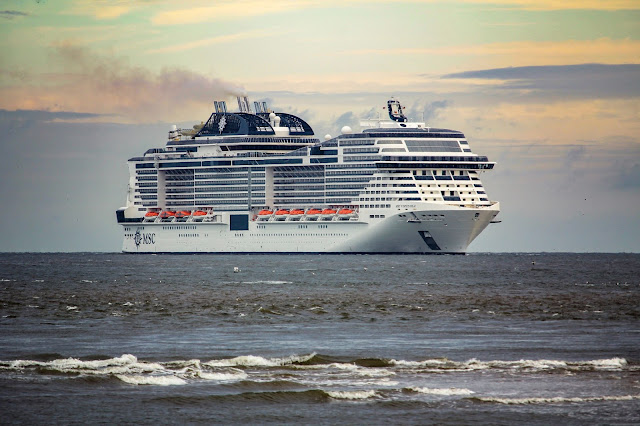
MSC Virtuosa photo credit David Jones© 

MSC Cruises has published its 2020 Sustainability Report. Due to the pandemic-induced cruise industry operation halt, this year’s report focuses on the steps that MSC Cruises took to secure the sustainability of its business, adapt its operation and prepare for a safe return of guests and crew alongside the key longer-term targets including decarbonization.

“During 2020 we achieved a huge amount and MSC Cruises rose to the challenges posed by the pandemic. We got all our guests and crew home safely early on, and we were then the first to launch our industry-leading health and safety operating protocol that has redefined cruising and made it one of the safest options for a holiday now, and in the future. And during all this, we did not lose sight of our commitments to be an ethical as well as a sustainable company,” said MSC Cruises’ Executive Chairman Pierfrancesco Vago.

“We made significant progress in protecting our planet by reducing emissions through investment in new technologies like LNG, which are bringing us closer to achieving net carbon neutral operations by 2050, as well as other major accomplishments in looking after our people, caring for the places we visit, improving procurement and providing emergency support through the MSC Foundation. This year’s report is another important milestone in our journey towards fully sustainable and zero climate impact operations,” he added.

Having abruptly halted all sailings fleet-wide in March 2020, MSC Cruises said that it had to see tens of thousands of guests safely home in a matter of days, establish a warm layup regime for the fleet, and start repatriating the vast majority of nearly twenty thousand crew members in an increasingly closed border environment.

Due to this halt, MSC Cruises said that it saw the number of commercially operational days for the year drop by 75 per cent and the number of passengers carried decreased by 78 per cent.

For the crew, closed borders and isolation periods meant that some of them were unable to return home for many months. They were looked after while they remained on board, given guest cabins for individual use, and provided additional emotional support services. While the cruise line looked for viable ways to safely repatriate them, MSC Cruises said that its specialized team ashore offered crew members ongoing group and one-to-one psychological support and assistance to help combat loneliness.

With the start of the pandemic, MSC Cruises said that it also rapidly set up the infrastructure required to enable a smooth transition to remote working for shoreside employees. A global communication platform was introduced to keep the business connected and allow “effective smart working.”

The human resources teams worked rapidly with MSC’s IT team to ensure a “smooth transition for employees,” with online training being provided on its use and application. Over 700 shore-based staff attended these sessions, supporting an effective transition to remote working, MSC said.

In parallel to dealing with the immediate challenges brought by the pandemic, MSC Cruises worked on a Health & Safety Protocol in partnership with a specially convened Blue Ribbon COVID-19 Expert Group of public health experts.

MSC Cruises said that it “redesigned the entire cruise experience to provide guests with a safety bubble from the moment of embarkation to their return home.” Thanks to this, MSC said, it became the first cruise line to get approval from the relevant national and regional authorities to resume cruise operations in the Mediterranean region.

On Aug. 16, MSC Grandiosa departed from Genoa, Italy on a seven-night sailing having tested all guests and crew prior to embarkation, periodically screening everyone on board, and with robust contingency plans to manage suspected cases with the local health authorities.

MSC Cruises also developed a shore bubble excursion concept that ensures the safety of guests and the local communities during port calls.

According to a press release about the report, MSC also continued to make significant achievements in sustainability in 2020, which included the following: 

  • Continued commitment to decarbonization: Remain on track to meet, or likely exceed, the target for 40-per cent improvement in emissions intensity by 2030 compared to 2008 as part of MSC’s journey to achieve net carbon neutral operations by 2050. Whilst true comparisons in 2020 compared to previous years are not possible with the long layups, a 2.5-per cent improvement was seen prior to lay up in 2020 compared to the previous year, which would bring efficiency improvements since 2008 to over 30 per cent.
  • Optimizing energy use: In 2020, the MSC Grandiosa’s crew supported the implementation of Ecorizon, a process of ship energy optimization that collects data using onboard automation systems and sensors, allowing a very precise status report on the energy profile of the ship. The information collected is then compared with a dynamic digital twin to guide onboard operators, improve operational profiles and voyage management.
  • Preparing for LNG operations: 2020 saw work advance on the MSC World Europa, MSC Cruises’ first LNG-powered ship. The ship is due to enter service in 2022, enabling a lower carbon footprint and significant reductions of SOx and NOx emissions compared to conventional propulsion. Two additional LNG-powered ships are due to enter service in 2023 and 2025.
  • Promoting innovation: MSC Cruises continued to collaborate with other industry leaders in their fields to research and develop new solutions that will help the decarbonization of shipping. At the end of 2020, the EU Horizon 2020 fund awarded funding to the CHEK Consortium, a collaborative effort focusing on combining progressive energy technologies and forward-thinking ship design to promote low-carbon maritime operations including hydrogen propulsion and onboard waste to energy systems.

Additionally, teams across the business continued to work collaboratively to further reduce plastic use and creation of waste as well as lessen MSC’s impact on marine life and biodiversity.

“This report recognizes the immediate challenges that COVID-19 brought to us, and despite this, our continued focus on our environmental and social obligations and actions, not least the growing demand for decarbonization. At present, our industry is almost wholly reliant on fossil fuels. To achieve our zero-emissions goal, we will need to switch to new fuels and require the support of governments and regulators to enable this major transition in the cruise industry,” MSC Cruises’ Sustainability Director Linden Coppell said.

“In the meantime, we are committed to improving the energy efficiency of our existing fleet and are considering how best to prepare for the future. This includes investigating the use of low carbon fuels that, if available at scale, can replace existing fuels without significant modification of current machinery and systems,” she added.

MSC Group debuts new luxury cruise brand named Explora Journeys

A glimpse of the new Explora I, which will start being delivered in 2023 (Images: MSC Cruises)

The MSC Group is to enter the luxury cruise market for the first time with the new brand Explora Journeys, which will comprise four luxury ships built by Fincantieri and scheduled for delivery in 2023, 2024, 2025 and 2026.


Fincantieri cut the steel for the first ship Explora I at its yard in Monfalcone, Italy on 10 June during a ceremony attended by representatives from MSC Group, Explora Journeys and Fincantieri’s management team.


“Building a luxury brand that will redefine the cruise experience and create a category of its own has been a long-held vision of mine and my family,” said Pierfrancesco Vago, executive chairman of MSC Group’s cruise business and broader passenger division. “Inspired by our personal travel wishes, Explora Journeys will be an ocean escape like no other, allowing guests to relax, make memories, and cherish the time at sea with their loved ones. After all, time is the ultimate luxury.”


Created in partnership with renowned superyacht and luxury hospitality designers, Explora I will “blend elegant Swiss precision with modern European craftsmanship” and feature onboard spaces designed with water as a focal point to “put guests in an ocean state of mind”. The ship will span 14 decks and boast 461 oceanfront suites and residences with floor-to-ceiling windows and a private terrace. The suites will start at 35 square metres, making them among the most spacious for the category in the industry.


Explora I will feature a promenade deck with indoor and outdoor whirlpool baths, a pool with a retractable glass roof and more than 2,500 square metres of outdoor decks with three outdoor pools and 64 private cabanas. Other onboard highlights will include nine distinct restaurants offering flexible dining times, several indoor and outdoor bars and lounges, and an indoor/outdoor spa and fitness area where guests will be able to enjoy group classes, personal training sessions and bespoke wellness experiences.


“Explora Journeys was designed for guests who want to stay longer, leave later, and travel deeper,” said Michael Ungerer, CEO of Explora Journeys. “Customer centricity is at the core of everything we do. We’ve commissioned research, organised focus groups, and hosted roundtable discussions with global specialists in luxury to design the perfect ship for our guests. Explora Journeys will bring a new perspective to the travel industry, reinventing the classic cruise experience for the next generation of luxury travellers.”


All four Explora Journeys vessels will be equipped with the latest green technologies and will be designed to adapt to alternative energy solutions as they become available. Initially, they will be powered by marine gas oil, but the design incorporates provision for battery storage, which will facilitate hybrid power generation in the future. They will also be built with ship-to-shore power capabilities to eliminate carbon dioxide emissions at berth, as well as selective catalytic reduction technology to decrease nitrogen oxide emissions by 90 per cent.


In addition, all four ships will be RINA Dolphin-certified for reduced underwater noise and single-use plastics will be banned – both on the ship and during land-based experiences.
“The MSC Family knows the sea like few others, and with that knowledge comes passion, love and most of all, a deep respect,” said Vago. “Our ships will utilise state of the art technology to ensure we are leading the movement towards a more sustainable future. Together with our partners, we’re currently developing groundbreaking technologies that will elevate the status quo, not just for this generation but also beyond.”


Explora Journeys will offer voyages starting at seven nights in length, which will include overnight stays, as well as non-conventional arrival and departure times. Destinations will include well-known destinations such as Reykjavik in Iceland, Saint Tropez and Bordeaux in France, and lesser-known ports such as Kastellorizo in Greece, Bozcaada in Turkey, and Norway’s Lofoten Islands. Bookings for inaugural cruises will open in autumn 2021.