Lines ponder retirement plans for old ships

By Tom Stieghorst

*InsightHow and when to dispose of older ships is one question quietly being studied by the management teams of North American cruise lines.
There is a wide gap in revenue potential between the newest, most modern ships now being delivered and the industry’s oldest vessels, which in some cases date to the early 1990s.
Those ships are typically deployed on short cruise itineraries out of South Florida or southern California, where the guest expectations of the hardware aren’t that high but neither is the cost of the cruise.*TomStieghorst
A decade ago when ships were past their prime, they were sent overseas to sail for brands in the U.K. and southern Europe, but that strategy faltered after the 2008 economic downturn. Until very recently, demand for cruises in some European countries was moribund and new capacity wasn’t needed.


The recent decision to deploy Quantum of the Seas to Shanghai, China full time signals that Asia isn’t likely to be a region where older tonnage goes to find new life either.


Lines have tried to retrofit some of their newest features onto older ships during drydock. This has been partially successful, and marketing slogans such as Royal Caribbean International’s “Every Ship Is Our Best Ship” have helped to position those ships as improved, if not new.
But the pace of innovation, particularly at lines such as Royal Caribbean, has been gaining speed. And as fleets get bigger, it takes longer and longer to bring a new feature to every ship.
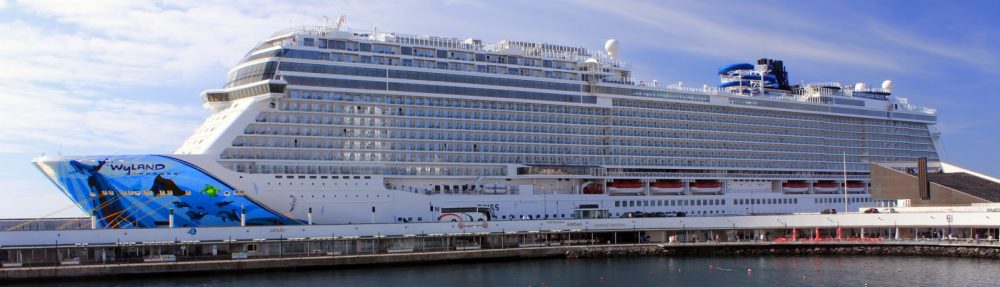
Charters are another solution for older ships. Norwegian Pearl has sailed the Caribbean for much of the winter on charter, Norwegian Cruise Line officials have said. So Norwegian didn’t have to push agents to sell Pearl against the more attractive Norwegian Breakaway or Getaway, which carry double-digit fare premiums to Norwegian’s older ships.


But Norwegian has more new builds in the pipeline. Where are its older ships going to go? And if they don’t exit the fleet, will the gap between fares on newer and older ships continue to widen?
Older tonnage can be a good solution for some cruise lines. Windstar Cruises has acquired three ships from Seabourn, a more luxurious line, and is adapting them to Windstar’s casually elegant style. The ships are close to 30 years old, their useful lifespan for accounting purposes. But they are still in pretty good shape.
Windstar guests sailing last week on the Star Pride, the first of the three ships to be converted, didn’t spend much time talking about the age of the ships.
My guess, though, is that the Windstar-Seabourn deal is more a one-off transaction than a model for other lines. It should be very interesting to see what other creative solutions cruise lines come up with for their older tonnage in the years to come.

China and the cruise industry’s ongoing globalization

By Tom Stieghorst
*InsightThe news that Royal Caribbean International is putting its new ship in China made a big splash. But sometimes it takes a surprising development to show an underlying trend that has been slowly taking shape for years.

The North American share of the world cruise passenger base has been declining, even though in absolute terms it is growing and it still remains far larger than any other source market.

Cruise lines are hungry for new growth, and China is the current gravy train that everyone is hoping to ride. But it isn’t only China. While the Quantum of the Seas is headed for Shanghai, Royal’s Voyager and Rhapsody of the Seas are spending a good part of the year taking Australians on vacations from Sydney.

And Royal is hardly alone. Carnival Cruise Lines is sending its Legend of the Seas to Australia later this year too.*TomStieghorst

Some higher-end cruise lines, such as Azamara Club Cruises, draw more than 50% of their passengers from outside North America.

The international sourcing of passengers is drawing industry attention and resources away from its historical roots in the U.S. and Canada. Cruise officials take pains to assert that North America remains a vital interest for the cruise industry and takes a back seat to no region.

It is obviously true, and yet there is a shift going on that can’t be ignored. It has implications for passengers, for travel agents, suppliers and employees of the cruise lines.

Driving the decision to diversify internationally is the public ownership of the big North American lines. The loyalties of the management of those companies isn’t to country, region or tradition as much as it is to the shareholders that they work for. As Royal Caribbean Cruises Ltd. President Adam Goldstein told me, it is the shareholder’s interest in long-term profit growth that was the primary factor in deploying the Quantum full time to China.

Ironically, as Royal and other U.S.-based cruise lines are looking abroad, privately owned MSC Cruises is knocking on the door, trying to gain more purchase in North America.

MSC is the line adding to its sales force, making its pitch to travel agents here to funnel clients to its small but growing North American capacity. So even as the U.S. loses a new ship (after a short season in New York) it may soon gain a new ship from a Swiss company with an Italian product.

Call it two faces of the same coin, both manifesting the further globalization of the cruise industry.

Gaining perspective with a look back at RCCL, Carnival Corp.

Gaining perspective with a look back at RCCL, Carnival Corp.

By Tom Stieghorst
*InsightLooking back 10 years at the two biggest cruise companies is one way to gauge how far the industry has progressed and gain some perspective on the problems of the day.

In 2003, the problems included terrorism, war, flu and the SARS respiratory virus. “A perfect storm,” Royal Caribbean Cruises Ltd. Chairman Richard Fain called it in his annual letter to shareholders that year.

On the shipbuilding front, RCCL made its first new order in 3½ years, for an “Ultra Voyager” class ship that would evolve into the Freedom of the Seas. The letter mentioned short cruises from Los Angeles had been restored, and a brand-new terminal in New Jersey called Cape Liberty was inaugurated.*TomStieghorst

Celebrity Cruises had launched a marketing campaign with the theme of ordinary people being treated like celebrities, the Serenade and Mariner of the Seas were added to the fleet and RCCL’s joint venture with First Choice Holidays, Island Cruises, had just turned profitable.

RCCL was hoping to regain the investment ratings on its debt that it had lost after the 9/11 terror attacks.

Flash-forward to 2013. Terrorism, war, flu and SARS, while not vanquished, were not hot-button issues. In his letter to shareholders, Fain says RCCL ordered no new ships for 2017 to keep capacity growth modest.

Royal isn’t sailing from Los Angeles anymore, but its Cape Liberty terminal in New York Harbor is more important than ever. Royal built six ships after Serenade and Mariner, with a seventh, Quantum of the Seas, due in November.

RCCL’s stake in Island Cruises was sold to Germany’s TUI, which is a 50-50 partner with RCCL in TUI Cruises. And the company is still trying to earn back its investment grade rating.

For Carnival Corp., 2003 was the year it finalized its landmark merger with P&O Princess Cruises. It was preparing to take delivery of seven ships in a nine-month stretch, including Cunard Line’s Queen Mary 2.

“I have never, in my 35 years in this business, been more excited and enthusiastic about the future of our company,” Carnival Corp. Chairman and CEO Micky Arison wrote.

Ten years later, the mood is less ebullient. Arison’s letter in the annual report is a bit retrospective; it notes his retirement as CEO of the company he has steered for three decades and salutes Carnival veterans Howard Frank and Pier Luigi Foschi, who also stepped down from executive roles in 2013, leaving the company’s day-to-day direction in the hands of a relative newcomer, Arnold Donald.

Arison’s letter says Donald brought “a fresh perspective and a new energy to our company. … His skills are ideally suited to lead the next stage of Carnival Corp. and PLC.”