We’re apparently making progress.
Interviews with CEOs about the coming year for our Preview issue have, over the past five years, moved from characterizing economic conditions as “bouncing along the bottom” to “uncertain” to, finally, “cautiously optimistic.”
This year, we decided to focus on the outlook of three rookie CEOs, all of whom have been in their position for a year or less. But each comes to their position with ample industry experience, and while their outlook is more buoyant than what we’ve become accustomed to since the recession began, their expectations about 2014 appear to be tempered by the hard-earned knowledge that negative events can descend with great swiftness. Here’s the viewpoint from those CEOs, operating in very different aspects of the industry.
 Arnold Donald
CEO, Carnival Corp.
Overall, consumer spending is trending up a bit. We certainly see some strengthening in terms of demand for cruising, and we’re going to be investing heavily to drive that further. The whole employment situation, which is the real rock, the foundation, is trending up a bit, but it’s still challenging, and we have to pay really close attention to that because people having good-paying jobs is what will drive sustainable economic advance. Right now, businesses are growing a bit, but they aren’t necessarily adding a lot of people.
It clearly feels more positive on a global basis than we have experienced over the last few years. There are still going to be significant challenges in the European economy next year, continued pressures, especially in Spain and, to some degree, Italy. Those economies still face significant uphill battles, and I think things could improve somewhat in the U.K. But Germany continues to be strong, and if you cut across all of Europe, you would have to say yes, things are improving somewhat.
Asia is, on balance, positive. There’s always the risk of a sudden shock from mainland China. It’s sort of like the United States — it’s become such an important economy for the global business climate that any little shocks have serious reverberations. Their government has, in my opinion, done a better-than-reasonable job managing a complex economy, but having said that, things can turn pretty quickly. I think you always have to be a little cautious in China.
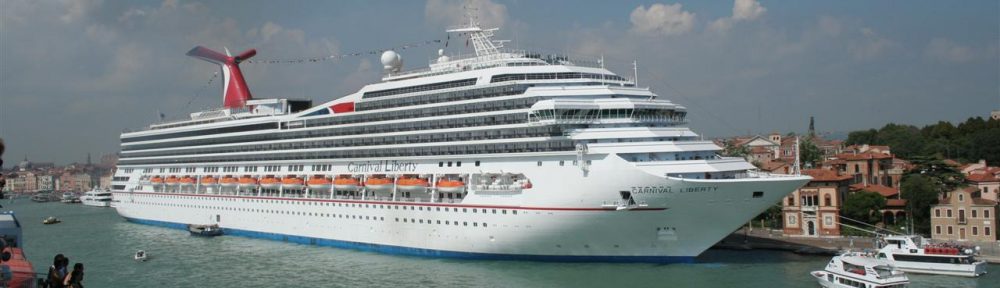
What I’m excited about in 2014 is that we can put incidents [like the stranding of the Carnival Triumph] behind us as an industry. I think the media is beginning to put things in proper perspective and realize that these types of incidents are rare, and we’ll get increasingly fairer play around events that can happen when you have so many pieces of equipment operating and so many people at sea.
The Triumph [incident] was, ultimately, a mechanical failure, and because the media put so much attention on it, they’ve now begun to learn a lot about the cruise industry and that the vast, vast, vast majority of guests don’t experience anything other than a great vacation. I’m optimistic [we’ll get] much more of what we would consider appropriate treatment by the media.
But we have to be prepared from an industry standpoint, and certainly from a company standpoint, to expect that there’ll be some negative things next year. We try to factor that into our planning and try to develop contingencies and make certain that we’re still able to reposition ships, redirect resources, time, expenditures, all those things you do in managing a business.
My real opinion is that we should do well in a good economy, and we should do even better in a poor economy, the reason being we are far and away the best vacation value. And I think our task as an industry, and certainly ours as Carnival Corp., is to effectively convey that over time to the consuming public. Because even in bad times, people still need a break, and in tougher times, we’re an even better value than we are in great times because we’re economical and such a rich vacation experience.
[In terms of noneconomic consumer trends], there continues to be increasingly rapid adoption of electronic behaviors, whether that’s online communications or mobile apps and online transaction activities. How people consume information, how much information they consume, how quickly information gets transferred, how quickly misinformation gets transferred — those are the dominant trends of our current age, and I see that just becoming even more pronounced in 2014.
It affects all aspects of our business. In basic product design, we have to be really in tune to the needs of our guests if we want to exceed their expectations, [including] onboard access to WiFi and access to activities that are more digital. [It affects] how people book through travel professionals and how they provide information, how [the company] shows up on websites and [the ways we] effectively convey each of our brands, whether through YouTube or conventional media. How we utilize our guests’ experiences and how they communicate with their friends and colleagues and loved ones, both from a promotional standpoint for us with testimonials of the great experience they’re having on board and from what they’re seeing around the world if they travel on our vessels.
We also saw the impact of this from the negative incidents that happened earlier this year and in previous years, where one little thing happens and somebody can Instagram it or YouTube it. And that becomes the image, even though it may have been just a single cabin that had a 15-minute temporary kind of thing, and [it can] affect the psychology of potentially millions of people about cruising. It’s just a dramatic effect, and affects every aspect of what we do.
[As regards potential cruise industry consolidation], I can’t say that for 2014 I see specific consolidation, but what I can tell you is that scale matters. You’re constantly trying to optimize your fleet, and I think every company in the industry will be looking for which ships, if any, to move out of their fleet, so in that regard there could be some consolidation. And there are newbuilds coming on, of course.
In terms of companies acquiring other companies, or brands acquiring other brands, that’s always an ongoing activity. I don’t see any reason why that would stop. But it’s unpredictable.
Finally, travel agents will play an increasingly important role in 2014 and beyond, especially as Carnival and the industry work to reach new cruisers. The value that travel agents bring to this equation is immense in our efforts to grow the overall market.
 Alex Sharpe
CEO, Signature Travel Network
In my years at Regent Seven Seas Cruises, we could map everything to the Dow [Jones Industrial Average]. I’m not sure that that’s the same anymore, because it’s more about customer confidence, and consumers don’t have the same confidence in the Dow numbers that they once did.
Hitting 10,000 used to mean a whole lot. Now, whether that new norm is 12,000 or 13,000, it doesn’t give the boomer generation, or even the older generation, the same confidence. They look for other indicators.
In the past, when we were heading into a year like we are now, with forward-booking trends up, we were crazy optimistic. But now we’re cautiously optimistic, because I think we’ve had the wind taken out of our sails on more than one occasion, whether from an economic change, hangover from elections or things completely out of left field, like the tragedies with Concordia and the Carnival ships. And so I think everybody now is a little bit more of a grinder, keeping things close to their vest and pushing forward.
I don’t think we’ll take anything for granted. We’ll just market hard and be smart with the way we’re targeting our customers. Every customer has to continue to be touched, continually sold and provided more information, building excitement toward their trip, or you run the risk of losing them at the first sign of insecurity or drop in confidence. We try to address that through technology and marketing initiatives, but sometimes it’s just customer service and Sales 101. Keep that contact going on throughout, because even if we’re ahead now, we have a long way to go.
As far as actual travel trends go, the idea of active adventure and family travel have been really important to consumers. We have members that solely focus on those for the majority of their business — you know, the bucket-list stuff. Not an overwhelming carpe diem, but it’s what’s important to people: family and adventure. Even more so in the luxury segment.
I think our relationships with the suppliers are more strategic than ever. One of the things we preach is that bigger isn’t necessarily better. They all want more revenue, no doubt about it, but how are they getting the revenue? What kind of customers are we sending to them? Are we growing on a per-office basis?
Frankly, the number of travel agencies is going down, so they need to get more from the ones that are there. It’s not in our model to go out and find 20 to 30 new members every year and then say, “Look how we grew.” So we’ve dug in much, much deeper from a database perspective so that our 214 members put the right offers, the right product, in front of our millions of households. Suppliers see the value in our database; we have that rich data on our customers that not everyone has, and that’s really strengthened the relationship with supplier partners over the last few years.
 Alex Zozaya
CEO, Apple Leisure Group
There are significant global trends occurring that, in a sense, communicate with each other. The situation in Egypt — a lot of Europeans who used to go to North Africa are looking for beaches and sun and value, and as a result, there has been a short-term benefit for Spain, and also Greece and Croatia. We also see a big increase in the long-haul Russian market. These changing geographic and market trends particularly affect Europe.
Within Asia, the most noticeable trend is with the Chinese market. It’s not necessarily affecting our operations in the U.S., but it clearly will have an important impact on our operations in Mexico and the Caribbean. Even though they’re not yet coming in big numbers, absolute numbers, the percentage of growth is very impressive.
Our destination management company, Amstar, now has Chinese staff — not only people who speak Chinese, but Chinese who understand the culture.
They have different needs and expectations. For example, the way they approach beaches is completely different from Europeans or Americans. The Chinese don’t like to tan. They go to the beach very early in the morning and return at sunset. So that changes everything, from the time they have breakfast to their approach to entertainment. They tend to spend a lot more time outside of the hotel touring. Then the king-size bed — that’s an issue. They tend to enjoy double beds, even for couples, even for honeymooners.
They have different preferences for what and when they eat, and it affects everything, including the room service menus. We receive many in small social groups, so we need to be prepared. Rather than having the typical setting and tables for two, we need to be ready to have larger groups of eight and 12 and 14 people at the same time, all eating together.
The other thing is the length of stay. You would think the length of stay would be very long. It is a longer stay, but not in a specific hotel; they tend to stay only two or three nights and then move. Sometimes they move from Cancun to the Riviera Maya, as if two completely different destinations.
We’ll add things, like a TV channel in Chinese, but not to every hotel. Some [properties] seem to be more conducive for them, so we’re focusing on two or three.
Don’t get me wrong, our main focus is still the U.S., by far. We believe there are some states that should be able to give us more guests than the whole of China.
From a macro aspect, I believe 2014 is going to be a better year than 2013. In fact, I think we’ve seen better numbers than in the last eight years. For Apple Leisure Group, it’s going to be the first full 12-month year that we operate with our current six companies. Integrating Travel Impressions and CheapCaribbean in, that’s obviously one of our priorities.
The big challenge is to keep them as separate companies with completely independent marketing strategies, price and product. For instance, Travel Impressions will continue to be a travel agent brand only, and the main focus will continue to be service and knowledge, particularly luxury products.
But at the same time, we need to find strong synergies in the back-of-house operations, to run the businesses more efficiently and deliver more value. That’s the opportunity. If we look at the numbers as if we had owned everything in 2013, the growth in 2014 will be 30% to 35%.
That isn’t a wish list number; it’s already happening. About 55% to 60% of our profitability happens in the first months of the year, and we already have it on the books, with over 27% more bookings than this time last year.
The challenge is in markups, because the consolidation of the airlines has raised the average price per ticket substantially. We’re facing higher taxes in Jamaica, Quintana Roo, Los Cabos.
Partly as a result, we’ve seen that consumers are finding more value in packaging than buying the pieces individually. Growth in 2013 in packaging was a lot stronger than land-only. I see this as a great opportunity for travel agents who can really deliver more value and knowledge.
In fact, the total number of passengers we have as a group is going to be double from the year before, going from almost a million to a little bit over 2 million. That opens up an opportunity for us on the charter side. We’ll increase the number of charters more than 20% year over year because we can sell seats on the same charter for Apple Vacations, Travel Impressions and CheapCaribbean.
And the fact that we have now three distribution companies with heavy traffic to Mexico and the Caribbean obviously also helps the hotel company, AMResorts, to grow faster and to grow to destinations that weren’t feasible before the acquisitions.
And it opens tremendous opportunities for new properties from existing brands, even within currently served destinations, as well as new brands that may appeal to customers who are not staying today at the five-star AMResorts because of the price point. We have an opportunity to develop a new hotel product that is more appealing to consumers who are more into the value, four-star category.
For example, Puerto Plata in Dominican Republic. Apple Vacations sold there, Travel Impressions barely sold there, but CheapCaribbean is the No. 1 seller of the destination. That opens a possibility for us, but if CheapCaribbean is going to be the main distributor, we’re not going to go in with a five-star, high end product.
Curacao is another one. We have one hotel, an [AMResorts] Sunscape. With Travel Impressions and CheapCaribbean, we can have two or three more hotels with different price points and different brands. Apple Vacations was never very strong in the Bahamas, particularly Nassau, but we now have No. 1, Travel Impressions, so with strong distribution, it opens opportunities for higher-end products.
And there are areas where we have strong distribution from all three — Cancun, Riviera Maya, Puerto Vallarta, Dominican Republic, Jamaica — and we have more than a million passengers who are not staying in our hotels, because they’re in the four-star categories. We can customize a product for them at the four-star level while continuing to support key business partners, because 50% of them, particularly in the Caribbean, are going to independent hotels. It’s a very, very fragmented product base.
The success of our brands and the awareness of our brands on the hotel side, on AMResorts, are mainly with travel agents, and that’s where our marketing dollars go, and that’s where most of our marketing and sales efforts go. Our strategy will continue to be to stay very focused with the travel agents.
It’s not a matter of shifting business from competitors or cruise ships, but we can generate new traffic, passengers who never had a passport before or had not considered traveling internationally. Now, because of convenience, price point, value for money, perception of reliability and the recommendation from expert travel agents, it’s an option. That’s what keeps us very, very optimistic.
We’re not particularly looking to acquire companies in 2014. After Bain Capital invested in us, one of the key growth strategies was not only to find upside by performing better organically but also by looking at the possibility of acquiring some strategic companies that would add value to the overall group. And that’s when we found Travel Impressions and then CheapCaribbean. But right now, we have to focus more on the correct integration of these businesses.
Still, we’re open to some type of opportunistic acquisitions, and as we speak, yes, we’re looking at different options. There’s a division that we didn’t have before dedicated to nothing but evaluating business that could add value to our group, that we could buy or merge with or do strategic alliances that could add value. And those could be anything from other tour operators to a consortium on the distribution side.
Of course, on the hotel side, we’re very, very actively looking at everything from existing hotels that could be reflagged to hotel chains that could add value, not just because of the number of management contracts but also because of their brands. We’ll always look into opportunities to grow, particularly on the hotel side. We’re going to see a big growth, and not just on newbuilds we have under construction.
 According to the Bureau of Labor Statistics, the national unemployment rate dropped another notch, to 7%, in November, a level not seen since the index crossed that line on its way north in December 2008. The average work week and hourly wage are also trending up.
