Carnival, Royal Caribbean, Norwegian Differ on July U.S. Cruising Plans

The three largest cruise brands are targeting different restart plans that should get the green light to cruise in July from U.S. ports, according to recent announcements and comments from executives.

Carnival Cruise Line

Carnival Cruise Line said earlier this week it is hoping for a July restart in the U.S. on select ships.

Carnival hopes to begin operating sailings on three ships from Florida and Texas, including the Carnival Vista and Carnival Breeze from Galveston, and Carnival Horizon from Miami.  

The Miami-based company also said that if it can find a solution to allow cruise ships to visit Alaska, the Carnival Miracle will assume some of the Carnival Freedom’s departures from Seattle. 

Royal Caribbean International 

“We believe we are now seeing a clear way forward to safe cruising in the near future,” said Richard Fain, chairman and CEO of the Royal Caribbean Group, on the company’s business update call in late April.

Added Michael Bayley, CEO and president of the Royal Caribbean International brand: “With what (CDC letter) we received last night July looks very realistic (for restarting cruises in North America).”

As for the Alaska season, Fain noted there are uncertainties and that service resumption may require a waiver from the Passenger Vessels Service Act as long as Canada will not allow ship calls. Alternatively, Canada could allow technical calls.

“Given the momentum, there is the reason for optimism,” he added.

Norwegian Cruise Line

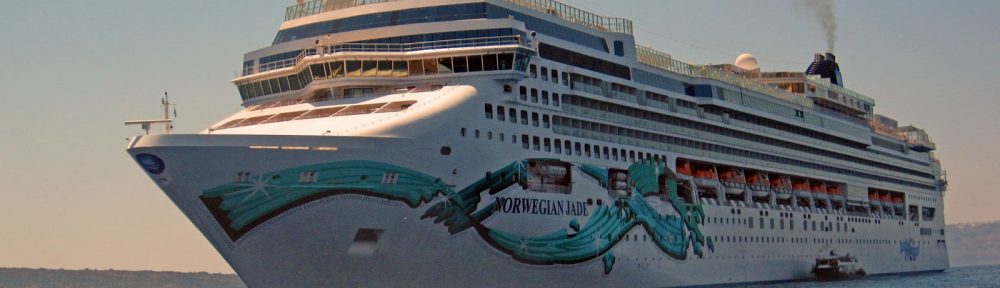
Norwegian Cruise Line had intended to restart in the United States on July 4, having submitted what it referred to as an ironclad plan and letter to the U.S. Centers for Disease Control and Prevention (CDC) in early April.

But as of early May, and with no reply from the CDC, company executives said that a July restart from U.S. ports won’t be happening.

“The July U.S. launch at least from our company, it’s just not possible,” said Frank Del Rio, president and CEO, on the company’s first-quarter earnings call in early May.

“It was possible back in early April when we proposed to the CDC 100 per cent vaccination. We’ve always said it takes about 90 days to stand up a vessel.

“So from April 5, when we submitted our proposal, 90 days would have been early July and that was possible, but today we’re in early May, so now we’re looking past that. But look there is more to it than just what the CDC says, there is only so much capacity to be able to stand up vessels.”

Del Rio said getting a cruise ship ready to sail after a 15 to 18-month layup was not an overnight process.

Seven Year Industry Projection: Carnival Largest Fleet, Royal Caribbean Largest Brand

With the cruise industry poised to resume its growth course post-COVID-19, Carnival Corporation is projected to increase its passenger capacity by approximately 25 per cent from 2019 (normal year comparison) to 2027, based on existing newbuild orders and expected deployment, according to the 2021 Cruise Industry News Annual Report.

The Royal Caribbean Group is projected to grow 33 per cent; Norwegian Holdings, 43 per cent, while MSC Cruises will double its passenger capacity over the same time period.

On a fleetwide basis, Carnival Corporation is projected to be able to carry more than 14 million guests by 2027, Royal Caribbean, more than eight million, MSC 4.8 million and Norwegian and Norwegian 3.5 million.

Royal Caribbean International will be the single largest brand with an estimated passenger capacity of about six million, while MSC moves up as the second-largest single brand on a global basis with a passenger capacity of 4.8 million.

CDC Releases Instructions for Trial Voyages in Path to Service Resumption

The U.S. Centers for Disease Control and Prevention (CDC) has released the next two phases of the Framework for Conditional Sailing Order (CSO) for cruise ships operating or seeking to operate in U.S. waters.

The CDC has published technical instructions for cruise ship operators preparing to conduct simulated voyages in advance of restricted passenger voyages under a COVID-19 Conditional Sailing Certificate.

“CDC expects to quickly approve applications that are both complete and accurate,” the agency said. 

The guidelines are complex, and there is one key workaround: if 98 per cent of crew are fully vaccinated and 95 per cent of passengers are vaccinated, a cruise operator does not need to conduct simulated sailings. 

The CDC said a cruise line operator should notify them and request approval to conduct a simulated voyage at least 30 calendar days prior to the date on which the cruise ship operator proposes to conduct the simulation but also noted it will respond to submissions within five business days.

With the issuance of these next two phases, cruise ship operators now have all the necessary requirements and recommendations they need to start simulated voyages before resuming restricted passenger voyages and apply for a COVID-19 conditional sailing certificate to begin sailing with restricted passenger voyages, according to a statement from the CDC.

Cruise lines will need to submit information to the CDC such as the dates and location of the voyage, as well as documentation that the cruise line has a written agreement (or a multi-port agreement) with all U.S. port and local health authorities where the cruise ship intends to dock or make port during a simulated voyage.