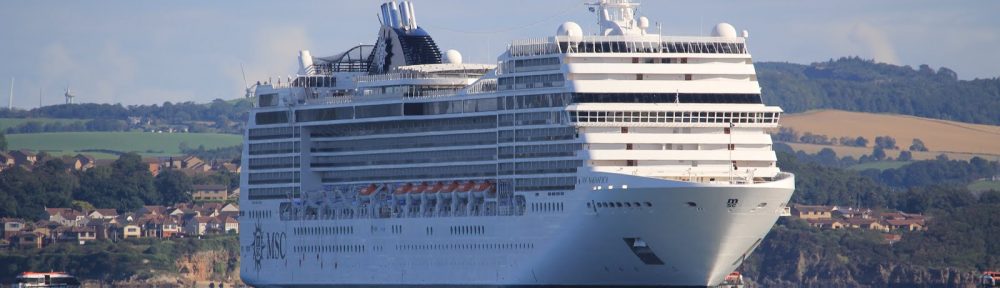
Norwegian Cruise Line Holdings Orders Three More Ships

Norwegian Cruise Line Holdings Orders Three More Ships

Norwegian Cruise Line Holding today announced that it has entered into an agreement with Fincantieri for the design and construction of three new cruise ships.

The order includes one ship for each of the company’s brands: Norwegian Cruise Line, Oceania Cruises, and Regent Seven Seas Cruises, with one vessel to be built as a sister ship to Oceania Sonata, one as a sister ship to Seven Seas Prestige, and one as a sister ship to the previously announced Norwegian Cruise Line newbuilds order.

All three ships will be built at Fincantieri’s shipyards in Italy and delivered between 2036 and 2037.

“Together with Fincantieri, a trusted partner for decades, we continue to advance a disciplined approach to fleet growth that builds on the strength of our brands, defines the future of cruising and elevates the guest experience for years to come,” said John W. Chidsey, President and Chief Executive Officer of NCLH. “This agreement secures access to valuable shipyard capacity through the end of 2037, supporting our long-term growth while maintaining financial discipline and driving sustainable shareholder value.”

The company said this new ship order supports the Company’s long-term growth pipeline and competitive position with modest initial capital outlays, allowing it to remain focused on strengthening the balance sheet and reducing leverage.

Following this agreement, NCLH now has a total of 17 newbuilds on order; with Norwegian Cruise Line totaling eight newbuilds through 2037, five newbuilds for Oceania Cruises to be delivered through 2037 and four newbuilds to be delivered through 2036 for Regent Seven Seas Cruises. This newbuild pipeline supports an expected 4 percent compound annual growth rate (CAGR) from 2026 through 2037, consistent with the company’s measured approach to expanding its fleet while investing in next-generation ships.

YearBrandDetailTonsBerths
Q1 2026Norwegian Cruise LineNorwegian Luna~156,000~3,565
Q4 2026Regent Seven SeasSeven Seas Prestige~77,000~822
2027Norwegian Cruise LineNorwegian Aura~170,000~3,880
2027Oceania CruisesOceania Sonata~86,000~1,390
2028Norwegian Cruise LineNext Generation “Methanol-Ready” Norwegian Prima Class~170,000~3,880
2029Oceania CruisesOceania Arietta~86,000~1,390
2030Norwegian Cruise LineNew Class 1~227,000~5,000
2030Regent Seven SeasSeven Seas Prestige Class 2~77,000~822
2032Oceania CruisesSonata Class 3~86,000~1,390
2032Norwegian Cruise LineNew Class 2~227,000~5,000
2033Regent Seven SeasSeven Seas Prestige Class 3~77,000~822
2034Norwegian Cruise LineNew Class 3~227,000~5,000
2035Oceania CruisesSonata Class 4~86,000~1,390
2036Norwegian Cruise LineNew Class 4~227,000~5,000
2036Regent Seven SeasSeven Seas Prestige Class 4~77,000~822
2037Norwegian Cruise LineNew Class 5~227,000~5,000
2037Oceania CruisesSonata Class 5~86,000~1,390

Fincantieri and Generative Bionics Partner on Humanoid Welding Robot

Fincantieri and Generative Bionics Partner on Humanoid Welding Robot

Fincantieri and Generative Bionics,an Italian company focused on autonomous humanoid robots, announced an industrial partnership to develop a humanoid welding robot designed to operate alongside humans in the shipbuilder’s shipyards.

The collaboration integrates Fincantieri’s industrial expertise with the robotic platform developed by Generative Bionics, with the goal of increasing safety and operational efficiency, improving production quality and enhancing sustainability, according to the companies.

“Advanced robotics and artificial intelligence applied to industrial processes represent a strategic lever for the evolution of shipbuilding and for the competitiveness of the European industrial system,” said Pierroberto Folgiero, chief executive officer and general manager of Fincantieri.

“The collaboration with Generative Bionics is part of the transformation journey we are undertaking to strengthen our operational excellence, enhance the work of our people and address in a structured way the challenges related to growing production complexity and the availability of specialized skills.”

The humanoid robot will support specific welding activities in naval manufacturing.

The robot will be equipped with artificial intelligence, advanced manipulation, perception and vision capabilities for monitoring the welding seam, and optimized locomotion to operate in complex environments.

The collaboration program is expected to span four years.

Initial on-site tests are scheduled by the end of 2026, with operational functionalities available within the first two years.

Development and testing will take place at Fincantieri’s Sestri Ponente shipyard.

The collaboration is part of Fincantieri’s strategy in advanced robotics and innovation.

The adoption of Physical AI systems supports production continuity and assists workers in repetitive, physically demanding or ergonomically challenging tasks.

Meyer Turku Unveils Net Zero Cruise Ship Concept

Meyer Turku Unveils Net Zero Cruise Ship Concept

Meyer Turku has completed a net zero cruise ship concept developed under its AVATAR project, achieving more than 90 percent reduction in lifecycle carbon footprint compared to the baseline defined by the International Maritime Organization.

The concept was developed as part of NEcOLEAP, Meyer Turku’s four-year research and development program co-funded by Business Finland, according to the company.

“AVATAR has provided a solid foundation for our development work,” said Anu Ahola, chief strategy and transformation officer at Meyer Turku.

“We now have a substantial portfolio of new ideas, tools and next-generation ship technologies.”

The concept vessel incorporates technologies and solutions expected to be technologically viable and available by 2030.

More experimental or early-stage technologies were deliberately excluded.

“No single solution is enough, for example, simply switching fuels will not achieve the desired impact,” said Liina Vahala, head of product development at Meyer Turku. “A net zero vessel concept is the sum of many complementary measures.”

The design emphasizes a more streamlined and lightweight structure, as well as improved energy efficiency of onboard spaces.

More energy efficient air-handling units reduce heating and cooling power demand on cabin decks by approximately 50 percent.

The chosen fuel is bio-methanol.

The concept vessel also utilizes wind-assisted propulsion technology and solar panels.

Sustainable materials and optimized use of space further contribute to reducing the vessel’s total lifecycle emissions.

A dynamic energy simulation model, a digital twin, was used to evaluate the impact of different design choices across the entire energy system.