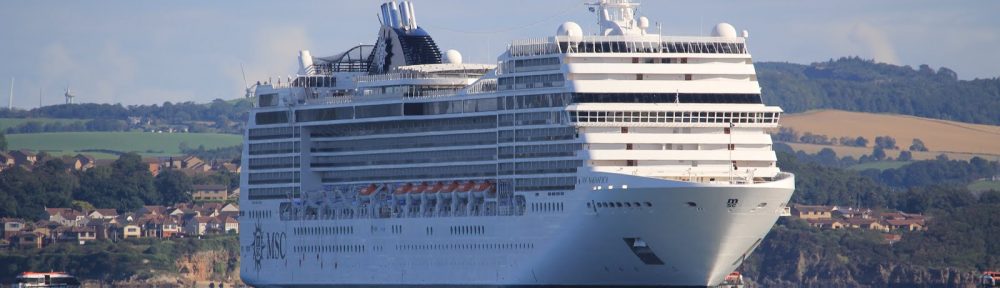
MSC Gets Approval to Restart Cruising in August

MSC Grandiosa and Magnifica

MSC Cruises announced today that the MSC Grandiosa and MSC Magnifica will resume operations in the Mediterranean starting from August 16 and 29, 2020 respectively.

The two ships will be the first to implement a new comprehensive health and safety protocol that has been approved by the relevant national authorities from the countries that the ships will call along their East and West Mediterranean itineraries this summer, according to a press release.

Pierfrancesco Vago, MSC Cruises’ Executive Chairman commented, “During the pause in our operations, we focused on developing a comprehensive operating protocol that builds upon already stringent health and safety measures that have long been in place onboard our ships. We have worked closely with the relevant EU-level, national health and other authorities from the countries that MSC Grandiosa and MSC Magnifica will call along their Mediterranean itineraries to develop a comprehensive set of procedures designed to protect the health and safety of all passengers onboard our ships as well as ashore to ensure that local communities feel comfortable welcoming our guests.”

Vago continued: “The new procedures include universal COVID-19 testing for all guests and crew prior to embarkation protected ashore visits at each destination only with an MSC Cruises’ excursion as an added level of protection for our guests and the introduction of a COVID Protection Plan for further peace of mind for our guests. With all of these measures in place, we aim to offer our guests the safest possible vacation.”

The MSC Grandiosa will offer seven-night cruises in the Western Mediterranean calling at the Italian ports of Genoa, Civitavecchia/Rome, Naples, Palermo and Valetta. 

The MSC Magnifica will offer seven-night cruises in the Eastern Mediterranean departing from the Italian ports of Bari and Trieste and calling at the Greek ports of Corfu, Katakolon and Piraeus.

Gianni Onorato, MSC Cruises’ CEO commented, “We are very pleased to be able to start welcoming back guests for a full-experience cruise vacation this summer on board two of our most popular ships — including our flagship MSC Grandiosa — and in the Mediterranean, the very region where our Company’s roots are and we have long been market leaders.”

For this initial phase of the restart of operations, the two MSC Cruises’ ships operating in the Mediterranean for the current summer season will initially only welcome guests who are residents in Schengen countries and subject to any restrictions imposed by the Italian authorities.

MSC Cruises has today cancelled all other cruises in The Mediterranean from August 16 through to and including October 31, 2020. In addition, MSC Cruises announced the cancellation of all U.S. cruise departures through to and including October 31, 2020.

Finally, MSC Cruises also cancelled the Far East cruises from September 10 through to and including October 26.
NCL Holdings forecasts ‘strong demand so long as it’s safe’

NCL Holdings forecasts ‘strong demand so long as it’s safe’
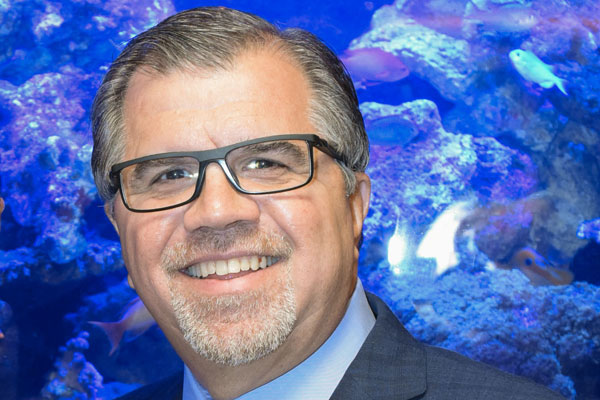
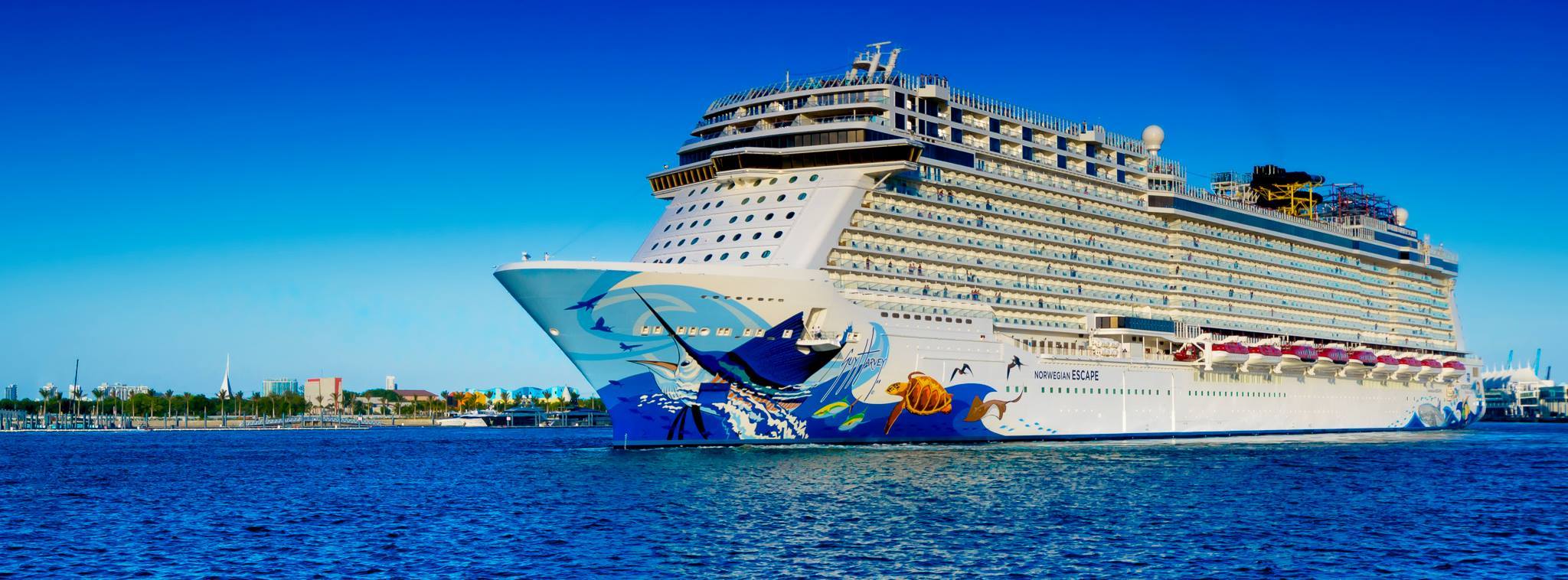
Norwegian Cruise Line Holdings chief executive Frank del Rio reported “strong demand for future cruises” as the company recorded a half-year loss of $2.65 billion this week.
Del Rio dismissed a suggestion the Covid crisis could put many cruise-focused travel agencies out of business, but he described the Covid infection of passengers and crew on Hurtigruten’s MS Roald Amundsen as “disappointing”.
He suggested Norwegian Cruise Line Holdings could see a “limited” return of sailing in November and December.
The company’s sailings are currently suspended through to the end of October.
Del Rio insisted: “There continues to be strong demand for future cruises despite our reduced marketing. Consumer demand is evident across markets.”
He forecast: “The last two months of 2020 could see a return of sailing with limited capacity.  We’ve taken important initial steps.
“We’re developing safety protocols with the formation of the Healthy Sail Panel which demonstrates our commitment to combating the spread of Covid and bringing back cruising sooner rather than later.”
The Healthy Sail Panel of experts, set up in collaboration with Royal Caribbean International in July, is working to develop recommendations for a safe resumption of cruising.
Del Rio said: “The panel will submit its initial recommendations to the [US] government and Centers for Disease Control (CDC) for evaluation.”
He acknowledged: “Things will be different, of course. We’ll be mindful of how measures impact on the cruise experience.”
NCL Holdings chief financial officer Mark Kempa said: “We expect to launch with a handful of ships at first with low occupancy.
“Our break-even [on operating ships] is at around 40% of normal revenue. Layer on corporate overheads and it would require 60% of normal revenue.”
Asked whether the crisis could transform cruise distribution, which remains overwhelmingly through travel agencies, del Rio said: “We have seen smaller travel agencies folding and larger ones furloughing employees. We’ve seen an uptick indirect business.”
But he argued: “It might be exaggerated because of the partial closures of agencies. We think travel agencies will survive. Travel agencies have shown their resilience over the long term.
“Not too long ago people were predicting the demise of travel agencies, but they came back stronger. Long term you won’t see much change.”
Del Rio insisted: “We enjoy a very loyal customer base in the cruise industry. Between 15 million and 20 million people have not been allowed to cruise this year – there will be a lot of pent-up demand.
“People are booking. We’ve not seen any major shifts in consumer behaviour. We’ve not changed our itineraries. If people favour cruising closer to home or not going to Asia, we’re not seeing it.
“My instinct is we will be [operating] somewhere in the range of 75% of capacity for the full year 2021. It might start at 50%-60%, with the limitation being concern about the spread of Covid more than about consumer demand.
“So long as we can ascertain cruising is safe we’ll have customers coming back in droves.”
Del Rio added: “We’re hopeful we’ll be able to put together a comprehensive set of health and safety protocols that get us back quickly.”
Asked about the Covid outbreak on the Hurtigruten ship which infected more than 50 passengers and crew, Del Rio said: “It’s disappointing – the re-emergence of Covid aboard vessels.
“But it’s an opportunity to learn something. The cruise companies and ports which suffered these setbacks have handled it well. We’ve not had a repeat of what happened at the start of the crisis.”
Kempa reported the group paid out $725 million in cash refunds to customers in the three months to June, more than the company’s cash burn of $575 million during the quarter.
He said future cruise credits make up 30% of advance bookings and monthly cash burn had fallen to about $160 million.
The company ended June with $2.26 billion in liquidity after raising $2.3 billion during the second quarter.
Norwegian Cruise Line Holdings operates 28 ships like Norwegian Cruise Line, Oceania Cruises and Regent Seven Seas Cruises.

Covid cases on ships show how complex the restart can be

MS Paul Gauguin Cruise Ship - YouTube

The global cruise industry took one step forward and two steps back this weekend in its quest to resume sailings after the pandemic grounded fleets worldwide.

One ship, UnCruise Adventures’ Wilderness Adventurer, on Saturday, became the first cruise line to resume overnight cruising in the U.S. since cruise lines halted operations in March. The vessel departed Juneau with 37 passengers and 30 crew for a seven-day cruise on the line’s Glacier Bay Adventure itinerary.

UnCruise celebrated the milestone on social media. “Normally there are 1.1 million cruise ship visitors to Juneau. Today the first 36 depart,” UnCruise said in a Facebook post. In an accompanying video of CEO Dan Blanchard with the ship at the dock, he said, “For all of Juneau, all of Alaska, we celebrate with you.”

But from two other ships, separated by 11 time zones, the news was not good. In Tahiti, a passenger on Paul Gauguin’s first cruise for international visitors tested positive for Covid-19. In Norway, Hurtigruten said that 36 of the 158 crew on the Roald Amundsen had tested positive.

The Paul Gaugin returned to Papeete, Tahiti, and passengers and crew were quarantined onboard. Hurtigruten temporarily suspended all expedition sailings on three of its ships in response to the Covid-19 outbreak on the Roald Amundsen.

So while one cruise line and one state celebrated what they hope to be the beginning of the end of the drought on overnight cruising, the outbreaks are a reminder that the industry faces many hurdles and roadblocks to a widespread resumption of operations.

“We have not been good enough, and we have made mistakes,” Daniel Skjeldam, CEO of Hurtigruten, said in a statement widely quoted in the European press about the outbreak, adding that “a preliminary evaluation shows a breakdown in several of our internal procedures.”

For Dan Blanchard, speaking from Juneau Saturday, the news from Norway was sobering, but he was still certain of his line’s ability to safely carry out the five additional sailings it has on the calendar.

At Least 40 Test Positive from MS Roald Amundsen COVID-19 Outbreak

“Even though the [Roald Amundsen] is a small ship, it’s monumentally bigger than our boats, in both capacity and crew,” he said. He also believes the precautions UnCruise is taking go beyond what other lines have in place. “Not only do we require testing from the state of Alaska, but we’ve had crew for over a month quarantined on the boat getting it ready.”

“If we protect the crew we protect the guests and vice versa,” he said.

What really sets UnCruise apart, he said, is the nature of its itineraries, which the line calls “adventure cruises.”

Blanchard said that the ship isn’t doing any port calls, and passengers are off the vessel for most of the day on excursions. “That’s unique to us as a company, and it just works out that it’s the right thing for today.”

UnCruise vessels, he said, are “more of a floating basecamp. Even with Hurtigruten, they are visiting small towns. It’s hard to compare apples to apples.”

But he acknowledged that nothing is risk-free.

“We realize there is definitely risk involved, and so do our passengers travelling with us,” he said. “But everyone also realizes with 37 guests and 28 crew spaced out and crew not even in crew quarters  they are staying in guest quarters — and being off the boat improves the odds greatly and maybe the new norms in what has to happen until we get a vaccine.”