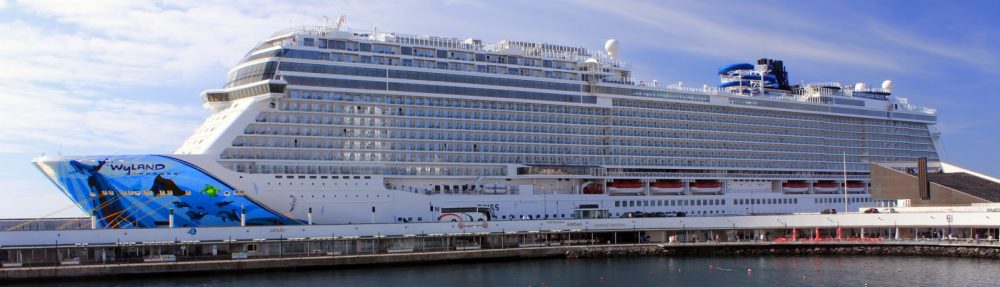
TUI Cruises’ Ships Running on Renewable LNG

TUI Cruises’ Ships Running on Renewable LNG

Two TUI Cruises ships are currently operating on bio-LNG, according to a statement shared on social media.

The company said that the Mein Schiff Relax and the Mein Schiff Flow are running entirely on renewable LNG during their summer seasons in Europe.

TUI noted that this greener fuel is based on biomethane, which can significantly reduce greenhouse gas emissions compared to fossil fuels.

“Thanks to the use of bio-LNG alone, we were already able to save around 26,000 tons of CO2 by July 2026 and are expected to reach around 50,000 tons by the end of the year,” the company stated.

In addition to burning cleaner fuels, TUI highlighted other initiatives aimed at improving sustainability, including the use of shorepower.

Various ships were retrofitted with connections over the past few years, including the Mein Schiff 1, the Mein Schiff 2 and the Mein Schiff 5.

Ships also use sustainable textiles and operate under the watch of dedicated environmental officers, who are said to work to keep operations as green as possible.

The company reduced the use of plastic onboard and shifted its shore excursions program to focus on environmentally friendly tours.

In 2024, TUI also launched the industry’s first methanol-ready cruise ship with the debut of the Mein Schiff 7.

The Mein Schiff Relax is currently offering itineraries departing from Germany to destinations in the Baltic and Scandinavia.

After debuting earlier this year, the Mein Schiff Flow is spending its maiden season in the Western Mediterranean with cruises to Spain, Italy, France, Morocco and Portugal.

Built by Fincantieri, the 4,000-passenger vessels introduced a new design to the fleet, becoming the company’s largest ships at 161,000 tons.

TUI is now working with Fincantieri on two additional LNG-powered vessels, which are scheduled to debut in 2031 and 2032.

Explora and Fincantieri Celebrate Explora III’s Delivery

Explora and Fincantieri Celebrate Explora III’s Delivery

The delivery ceremony of the Explora III, the third vessel built by Fincantieri for Explora Journeys, took place today in Genoa at the Fincantieri shipyard in Sestri Ponente.

Pierfrancesco Vago, executive chairman of MSC Group’s Cruise Division, said: “The delivery of the Explora III marks another important milestone in realizing our vision for Explora Journeys.”

“In just three years, we have defined a new and distinctive perspective in ocean travel. With each new ship, we expand our ability to offer guests new perspectives on the world through increasingly immersive experiences in the destinations we visit,” added Vago.

“The Explora III reflects our commitment to innovation, craftsmanship excellence and responsible growth, while contributing to the broader economic benefits that cruise tourism brings to coastal destinations and communities.”

Pierroberto Folgiero, CEO and general manager of Fincantieri, said: “The Explora III testifies to Fincantieri’s ability to lead the transformation of the shipbuilding industry through innovation, sustainability and the evolution towards new technologies and alternative fuels.”

“The entry into the fleet of the first ship powered by liquefied natural gas (LNG) marks a significant milestone in this journey, an expression of the development of increasingly sustainable and technologically advanced solutions,” added Folgiero.

Fincantieri said in a press release that the newbuild was celebrated with numerous authorities and institutions in attendance, including:

  • President of the Liguria Region, Marco Bucci
  • Mayor of Genoa, Silvia Salis
  • Admiral Inspector Antonio Ranieri, and
  • President of the Port System Authority of the Western Ligurian Sea, Matteo Paroli.

The Explora III is the third out of six ships; the remaining three are all under construction and will take to the sea within two years: the Explora IV and Explora V in 2027, and Explora VI in 2028.

Guests were welcomed by:

  • Biagio Mazzotta, president of Fincantieri
  • Pierroberto Folgiero, chief executive officer and general manager of Fincantieri;
  • Luigi Matarazzo, general manager of Fincantieri’s Merchant Ships Division
  • Massimo Canesin, director of the Fincantieri Shipyard in Sestri
  • Diego Aponte, chairman of the MSC Group
  • Pierfrancesco Vago, executive chairman of the Cruise Division of the MSC Group
  • Anna Nash, president of Explora Journeys
  • Maya Aponte, godmother of the ship, and
  • other managers of Fincantieri and MSC.

The Explora III will use liquefied natural gas (LNG), reducing emissions of sulfur oxides by 99 percent, nitrogen oxides by 85 percent, particulate matter by 98 percent and greenhouse gases by up to 20 percent.

It is designed to run on renewable and latest-generation fuels such as bio-LNG, synthetic LNG and biofuels. The Explora V and Explora VI will also adopt fuel cells.

Designed and built under RINA class surveillance, the Explora III has been acknowledged for its environmentally sustainable and passenger-comfort design, and was certified to sail in the polar regions.

MSC Cruises and Eni Prove Biofuel’s Readiness for Cruise Ship Engines

MSC Cruises and Eni Prove Biofuel’s Readiness for Cruise Ship Engines

MSC Opera Photo Credit Spacejunkie2 Flickr Account https://flic.kr/ps/GkiQt

Testing by Eni and MSC Cruises has confirmed the technical feasibility of using biofuel in its pure form to power cruise ship engines, the cruise line said in a press release. 

During the tests with Enilive’s HVO (Hydrogenated Vegetable Oil) diesel, one of the MSC Opera’s engines was powered for approximately 2,000 hours with pure HVO. 

No engine modifications were made, while performance and emissions data were recorded. 

The test demonstrated that HVO can be used for marine engines with no technological upgrades needed, with performance staying in line with traditional marine fossil fuels. 

Michele Francioni, Chief Energy Transition Officer of MSC Cruises, said:” We are very pleased to have satisfactorily confirmed the technical feasibility of 100% HVO on our cruise ship as part of our continuous decarbonization efforts. 

“We believe HVO may play an important role in the decarbonization of shipping and together with other immediately available fuels such as LNG and bio-LNG, constitutes an immediate opportunity that could be deployed onboard cruise ships to accelerate the transition towards renewable fuels, bringing us a step closer to our ultimate goal of reaching net zero GHG emissions by 2050”. 

According to the press release, the test recorded lower emissions of both NOx (16 percent) and particulate, as well as a reduction in GHG emissions inherent to the origin of the HVO product of around 80 percent compared to the use of traditional fuel. 

The reduction is said to be due to the usage of 100 percent biogenic feedstocks in the HVO production process. 

Technical data on engine performance and associated emissions were collected and assessed with the support of Wärtsilä as the engine manufacturer, and Bureau Veritas, which independently validated the results. 

Stefano Ballista, CEO of Enilive, noted that his company’s marine HVO diesel has been available at the ports of Genoa, Ravenna and Venice for direct delivery from the terminal to vessels via barge for several months. 

He described the fuel as a viable solution for the decarbonization of maritime transport.