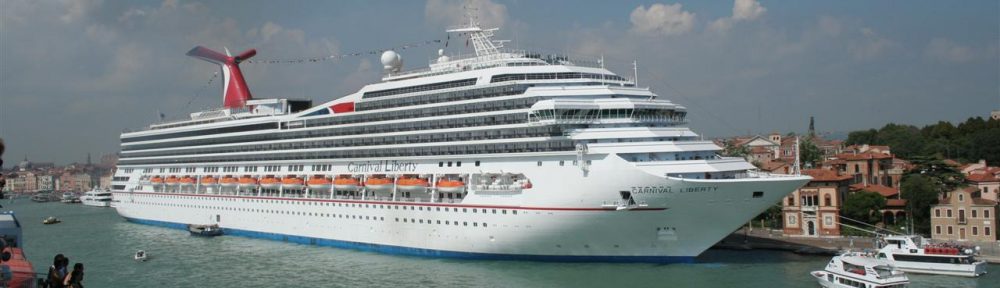
Carnival Corporation: More Efficient and Sustainable

“Our number one goal is reducing our emissions,” said Bill Burke, a chief maritime officer at Carnival Corporation.

That goal is a 40 per cent reduction in the company’s carbon emissions by 2030 when compared to a 2008 baseline, with carbon levels peaking for Carnival in 2011.

It’s a combination of efficiency and sustainability, Burke said.

That involves not only new efficient ships but finding more efficient equipment for the company’s existing fleet, making sure ships are operated well, meaning the right speeds, with the right engine loads.

“Voyage planning is another area where we are focused,” Burke said. “That sort of thing is ‘free,’ if we can get it right, it’s free savings.”

Burke has his sights set on HVAC system improvements as a key area where the company can save money on fuel and cut carbon emissions.

“The efficiency of the equipment has increased in the last few decades. If we haven’t already, we change out chillers and HVAC equipment,” he said.

One megawatt of savings translates roughly to about $1 million annually in fuel, Burke said.

“It’s then the money we can use for other things … it’s seed money to make ships more efficient.”

New Ships Get Efficient

New ships are generally 20 per cent more efficient per passenger than the last class, and that starts with the hull design, Burke said.

Then it’s a process of looking for the best and most efficient equipment fleetwide, with Carnival Corporate Shipbuilding in the UK focused on the job.

With the new deliveries of the AIDAnova, Costa Smeralda, Carnival Mardi Gras and P&O Iona, Carnival sister brands now have four technically identical new ships on the Carnival XL platform. Expect a lot of note comparing.

“We will compare performance, but a lot of that comes down to the itinerary,” Burke said, noting variables such as the speeds the ships travel at plus climate conditions driving air conditioning use.

Trying to compare performance, the company uses climate zones to normalize energy use when reviewing data.

That data becomes easier to use with ships in port, without a propulsion load, with Carnival now asking its brands to operate on just one generator while in port.

“The brands will make adjustments and we will help them with targeted investments to reduce the hotel load to allow them to first operate on one generator (in port) and then get the load lower. We’ve dropped the electrical load down by several megawatts.”

Ships are compared against each other with adjustments for size and climate conditions, with Carnival using its own port power coefficient to measure power usage by ship while docked.

2030 Goal

By 2030 Burke envisions what he called a green fleet with nearly 20 per cent of Carnival Corporation ships powered by LNG.

“Both LNG and non-LNG ships would get some portion of their fuel from biofuels. Batteries would be on a number of ships for peak shaving and non-LNG ships would operate advanced air quality systems (scrubbers),” Burke said.

Those ships running scrubbers would have wash-water filtration and significantly reduced particulate.

“All ships would have achieved our port power coefficient goals and easily operate in port in all climate conditions on a single diesel generator, indicating efficient port hotel service operations.”

Another project is a single fleet-wide maintenance and procurement system.

“That will allow us to better leverage our scale and remove excess inventory.”

Burke also plans to add more courses to the company’s Arison Maritime Center (CSMART) in the Netherlands.

“In addition to operational team training for our officer core, we do have energy efficiency training and we will expand that.”

Many ships, continued Burke, will have air lubrication systems, adding that around 60 per cent of the fleet will be able to plug into shore power by 2030. Another three-quarter of the fleet will have advanced wastewater purification systems, and all ships will have food waste digesters.

“Our ships will be completely instrumented for measuring the efficiency of our largest power consumptions … you have to be able to measure (consumers) to know how you’re doing.”

Data will result in self-correcting behaviour that will improve operational efficiency, according to Burke, who said the ships will continue to get more sensors and measuring capability.

“We will be well on our way to designing and building our first zero emissions and zero discharge ship … that’s the biggest challenge and we hope our work with LNG will have us well prepared for that next fuel.”

Residential Ship Njord to Be Built at Meyer Werft, Delivery Targeted for 2025

Ocean Residences has announced that it has signed a ship construction contract with Meyer Werft to build the M/Y Njord with target delivery in 2025.

“We are fortunate to have the opportunity to partner with Meyer Werft, a company that has kept its shipbuilding on course for 226 years – that’s seven generations – and which is the world leader in building innovative and complex passenger vessels with a stellar reputation for exceptional quality, precision and on-time deliveries,” said the CEO of Ocean Residences Development, Kristian Stensby. “Around 50 luxury liners have left their shipyard to date.”

According to a press release, the Njord is designed to meet the strictest environmental regulations, both at delivery and for the future. The vessel will be powered by dual-fuel engines, with tank capacity for marine gas oil and LNG, batteries for hybridization, heat recovery systems, and advanced power management systems.

To ensure that the vessel is future-proof, the engines and fuel tanks will be ready for easy conversion, to take advantage of future fuels with lower or neutral carbon footprint, Ocean Residences said.

MSC, Fincantieri and Snam Partner for ‘World’s First Oceangoing Hydrogen-Powered Cruise Ship’

MSC Cruises, Fincantieri and Snam have announced the signing of a Memorandum of Understanding to jointly determine the conditions for the design and construction of what would become the world’s first oceangoing hydrogen-powered cruise ship.

According to a press release, MSC Group, Fincantieri and Snam have joined forces to initially carry out a study that will assess the feasibility of designing and building “the world’s first ocean-going cruise ship powered by hydrogen.” MSC Group said that the ship would allow zero-emissions operations in certain areas and the development of the related hydrogen bunkering infrastructure.

Green hydrogen can be produced without fossil fuels, using renewable energy to split water in a process called electrolysis and can therefore be emissions-free on a full lifecycle basis, MSC said. It can be used to generate electrical power through a fuel cell, emitting only water vapour and heat. This type of ‘green’ hydrogen holds great potential to contribute to the decarbonization of the shipping industry, including cruising, whether in its pure form or as a hydrogen-derived fuel.

“As a company that has long made environmental sustainability its focus, we want to put ourselves at the forefront of the energy revolution for our sector and hydrogen can greatly contribute to this. However, today production levels remain low and hydrogen fuel is still far from being available at scale. With this project, we’re taking the lead to bring this promising technology to our fleet and the industry while sending the strongest possible signal to the market about how seriously we take our environmental commitments. As we advance with the development of the maritime technology required, we will also see that energy providers take note and ramp up production to unlock this and that governments and the public sector step in to provide the necessary support for a project that is critical to the decarbonization of cruising and shipping,” said MSC Group’s Executive Chairman of the Cruise Division, Pierfrancesco Vago.

The CEO of shipbuilding group Fincantieri, Giuseppe Bono, said that “every opportunity for new solutions and technologies is a source of growth for us.”

“This one allows us to offer our customers the best of innovation to help minimize the environmental impact,” he noted.

The CEO of international energy infrastructure operator Snam, Marco Alverà, said that the company was “strongly committed” to concrete initiatives for sustainable heavy transport – on the road, rail and by the sea – promoting the use of renewable gases such hydrogen and bio LNG.

“This agreement for us is part of a wider strategy to leverage on our experience, competencies and technologies in green gases and energy efficiency in order to contribute to the full decarbonization of the shipping value chain, including ports and logistics, which will be increasingly crucial in our economies,” Alverà explained.

“Hydrogen could be a key enabler in achieving the target of net-zero emissions in shipping, accounting for approximately 3 per cent of global CO2 emissions, as well as in all the hard to abate sectors,” he added.

As per the terms of the Memorandum of Understanding, during the next 12 months, the three companies will study key factors related to the development of oceangoing hydrogen-powered cruise ships.

These include arranging ship spaces to accommodate H2 technologies and fuel cells, technical parameters of onboard systems, calculating the potential greenhouse gas emissions savings, and technical and economic analysis of hydrogen supply and infrastructure.

MSC Cruises said that it was committed to achieving net carbon neutral operations by 2050.

“To accomplish this objective, the company is working in partnership with a wide range of shipyards, suppliers, manufacturers and other organizations as well as investing in different upcoming technologies and solutions for its fleet,” MSC Group wrote. “The implementation of the cooperation above described will possibly be an object of future binding agreements to be discussed by the parties in relation thereto.”