Former Costa president named MSC Cruises boss

Former Costa president named MSC Cruises boss

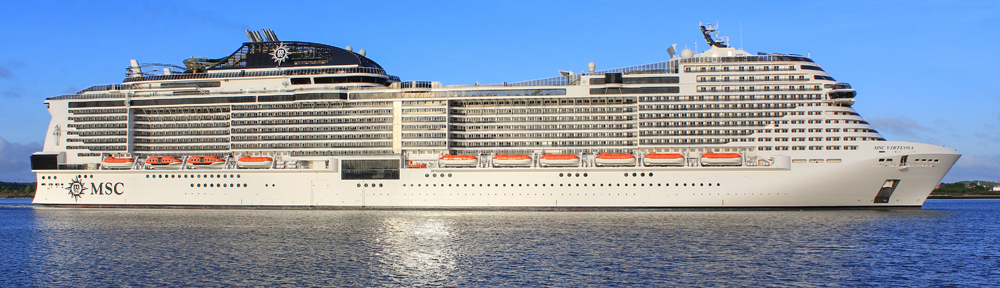
Former Costa president named MSC Cruises bossFormer Costa Cruises president Gianni Onorato is moving to Italian rival MSC Cruises as chief executive.

He takes up the new role on September 2, with current chief executive Pierfrancesco Vago stepping up to become executive chairman.

Vago will continue to lead the privately-owned cruise company, while scaling up the scope of his duties, MSC said.

“From his new position, he will also oversee all the other companies of the MSC group that have strategic relevance to the tourism sector,” the company said.

Onorato, who stood down from Costa in June after more than nine years as president, has almost 30 years experience in the cruise industry.

He said: “I am thrilled to have been appointed to this exciting role and I am also particularly excited to move to Geneva, where the MSC Cruises headquarters is based.”

“I will do everything I can to add value to the company and help MSC Cruises maximise its industry-leading position. I look forward to starting work with the management team in this significant moment of the company’s growth.”

MSC Cruises runs a fleet of 12 ships and confirmed in July that former Carnival UK sales and customer delivery director Giles Hawke was joining as UK managing director on November 13.

Fewer new ships but many new features

Fewer new ships but many new features

By Tom Stieghorst

*InsightIt is no secret that cruise lines aren’t taking delivery of as many new ships as they have in the recent past. Executives have explained their strategies as a more measured approach to capacity growth. So deliveries are spaced out, and some lines may get a new ship only once every three or four years.

One consequence is that more new features are being packed into newbuilds than ever before. The innovations come so fast and furious it becomes hard to remember them all.

At a briefing for the media at Cruise Shipping Miami, Princess Cruises highlighted 20 features to debut on its Royal Princess ship coming in June.*TomStieghorst

Some, like a larger outdoor movie screen, are evolutions of features that are on many Princess ships already.

Others will be brand new, such as Princess Live, a 300-seat TV studio that will host entertainment ranging from cooking demonstrations to art-house movies from 8 a.m. to midnight. Many of the shows will be piped into cabins via an on-demand video system that will offer guests access to hundreds of movies at no additional charge.

Passengers with smartphones can take an art and architecture tour of Royal Princess. In keeping with its construction in Italy, the ship will have what Princess says is the largest selection of hand-crafted gelatos and Super Tuscan wines at sea.

The ship will also have Princess’ first concierge lounge for suite passengers and touch-screen digital kiosks with face recognition technology that promise to make buying onboard photos faster and easier.

Princess didn’t even touch on some of the standout features already unveiled, like the Skywalk, a glass-bottomed promenade that will extend 30 feet out over the edge of the ship.

The same pattern can be seen at work at Norwegian Cruise Line, which will have a cornucopia of firsts when its Norwegian Breakaway debuts in May. For anyone who wants to see the next new thing, these two ships should keep them well occupied in coming months.

The task of expanding cruising globally

The task of expanding cruising globally

By Tom Stieghorst

*InsightThe biggest challenge for the cruise industry over the next decade may be the cultural one.

As cruise lines peer into the future, their prospects more than ever depend on countries where cruising is unfamiliar as a vacation option. The good news is that few people outside of North America have been on a cruise, meaning there’s plenty of potential for growth. But in many countries it’s still too early to tell if cruising is going to be a long-term hit with vacationers.

Cruising is largely an Anglo-American vacation. When the number of people who have cruised is measured against total population in various countries, the top four markets are the U.S., the United Kingdom, Australia and Canada. In all of these countries, more than 2% of the population has cruised.

*TomStieghorstGermans also appear to love to cruise.  Some of Carnival Corp.’s best performing ships sail for German brands.  The number of cruisers from Germany could overtake the total from the U.K. within five years, CLIA President Christine Duffy recently forecast.

Next comes Italy, home to Costa Cruises and MSC Cruises, but it produces only 4% of the world’s passengers, notes a report from Stivel Nicholas analyst Steven Wieczynski. By comparison, according to Stivel Nicholas, Germany accounts for 6% of global passengers, and North America accounts for 75%.

“While passenger counts from the other major European markets, including Italy, Spain and France, continue to grow, overall market penetration remains subdued,” he wrote in a recent report.

In Asia, many Japanese travel abroad, but relatively few go cruising. Although Princess Cruises is taking another stab at developing the market in Japan, some cruise executives say the idea of a cruise hasn’t taken root in that country.At a recent cruise conference in Hong Kong, Carnival Asia CEO Pier Luigi Foschi said the penetration rate for cruises in Japan is 0.08%, compared with about 3.4% in the U.S. In China, it is even lower, at 0.04%.

To their credit, Carnival and other cruise companies are investing significant sums to experiment in Asia to figure out what kind of cruise might appeal to residents there.

The potential for gaining even a small part of the 80 million Chinese who traveled abroad last year is too tempting for the cruise lines to pass up. The challenge will be creating a cruise for the non-Anglo world that translates well into the local vacation culture.