Royal Caribbean and NCLH Announce Q1 Call Dates

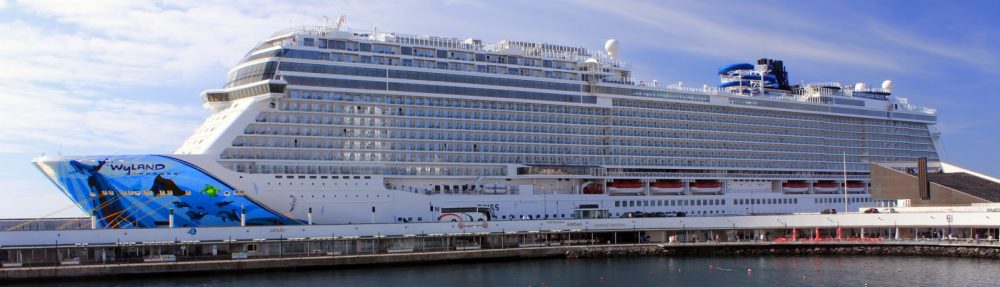
Norwegian Bliss photo credit Spacejunkie2 Flickr

Royal Caribbean Group has scheduled a conference call for 10:00 a.m. Eastern Time on Tuesday, April 29, 2025, to discuss the company’s first quarter 2025 financial results.

The call will be simultaneously webcast on the company’s investor relations website, rclinvestor.com.

In addition, Norwegian Cruise Line Holdings Ltd. will report its first quarter 2025 financial results on Wednesday, April 30, 2025, at 6:30 a.m. Eastern Time.

The conference call will be webcast via the Company’s Investor Relations website, https://www.nclhltd.com/investors.

Webcast replays of both calls will be available on the company websites for 30 days following the calls.

NCLH To Remove 5,000+ Berths from Fleet by 2027

Norwegian Cruise Line Holdings will remove over 5,000 berths from service by 2027, with four ships now set to exit the line’s trio of brands.

After previously announcing the departures of Regent’s Seven Seas Navigator and Oceania’s Insignia, NCLH confirmed on Monday that it is also retiring the Norwegian Sky and the Norwegian Sun.

Currently in service for Norwegian Cruise Line, the 2,000-guest sister ships will be handed over to Cordelia Cruises in 2026 and 2027, respectively.

With the Seven Seas Navigator and the Insignia being handed over to Crescent Seas in 2026 and 2027, the NCLH fleet will see a reduction of roughly 5,200 berths over the next two years.

Pursuing an aggressive newbuild strategy, the company will add new vessels to offset this reduction.

All of NCLH’s three brands are welcoming new ships over the next three years, including Oceania, which is taking delivery of new vessels in 2025 and 2027, adding 2,650 berths to its fleet

Regent Seven Seas also welcomes a new vessel, the Seven Seas Prestige. The 850-guest ship is scheduled to enter service in 2026.

Norwegian Cruise Line is set to take delivery of two Prima-class ships during the timeframe, including the 3,571-guest Norwegian Luna in 2026. The company will also welcome a fifth ship in the Prima series in 2027. This follows the new Norwegian Aqua, which was delivered by Fincantieri in March.

According to CIN data, the five new vessels will add more than 10,000 berths to Norwegian Cruise Line Holdings’ fleet.

For a breakdown of the company’s fleet, see the Global Cruise Ship Index by Cruise Industry News,

Fincantieri: ‘Covering All Brands’ with Eye on Future Fuels

Coming off a big newbuild order from Norwegian Cruise Line Holdings, Daniele Fanara, director of new building and after-sales at Fincantieri, is positive about the future.

“We are serving all segments of the market, from small luxury vessels to mega-size vessels to upper premium,” said Fanara, speaking to Cruise Industry News. “This covers all the brands in the cruise industry.”

Fanara said Fincantieri was very proud to be working with a variety of operators and being able to serve each of them in a tailored customized way.

“We have cross-fertilization with our technology, including the capacity to design the vessel,” he added.

NCLH Order

The new Norwegian Cruise Line Holdings order for eight ships includes orders for all three company brands, with new classes of ships for each of them. Norwegian, Oceania and Regent will all get new bigger ships, with orders for the Norwegian brand stretching to 2036.

“We are proud of the trust that Norwegian gave us to develop such an important program,” said Fanara.

Looking at future technologies, Fanara said the ships were being developed.

“Our attention is focused on three main fuels,” he said. “One is LNG, one is methanol, and one is hydrogen. Hydrogen is the most innovative one. We are developing new ideas on how and when we can implement hydrogen onboard the vessels.”

New ships for Oceania and Regent are being developed to be methanol-ready.

“Today there is no real answer on the fuel of the future,” Fanara continued. “It’s a matter of availability. What’s important from our side is that we are always studying the latest technology available. We are also exploring CO2 capture technology.”

Fanara said among the alternative fuels, LNG was notable in the fact it was being used today.

“Ships are sailing on LNG. The other technology is in a different phase of development. We need to monitor them so we are ready to implement them if necessary,” he explained.

Questions are coming in from cruise lines on alternative fuel practicalities, Fanara said, but with the most questions on hydrogen.

“It is the most innovative, it is the most unknown.”

Industry

Fanara called the cruise industry resilient.

“Soon after Covid, the speed at which the industry recovered and came back to strong booking and revenue levels is incredible,” he said.

Fanara expects other orders to follow, citing market demand and the value gap between cruise- and land-based vacations.

Shipbuilding Costs

Costs are up to build ships.

“A greener vessel is for sure more expensive to build,” Fanara noted. “But is the value of this additional cost worth it for the industry?

“The owners can say the ships are more expensive. We had Covid, we had wars and the result of this has been inflation. If you mix inflation and the technology transition, the result is not less expensive ships.”