Mein Schiff: Aggressive Growth

Mein Schiff: Aggressive Growth

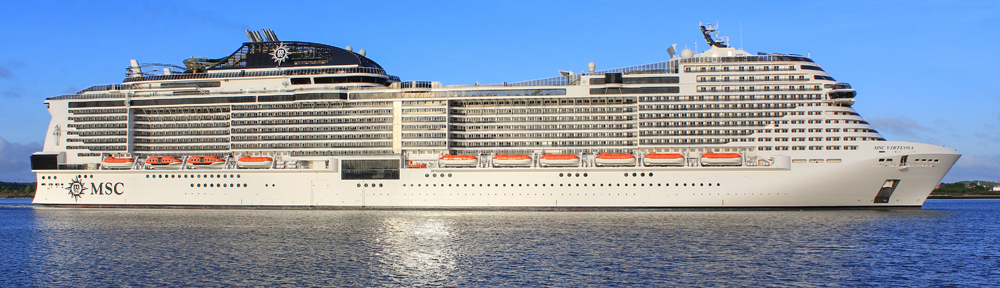
With the new Mein Schiff Flow to be introduced next year, following the sister ship, Mein Schiff Relax, this spring, and Mein Schiff 7 last year, the brand is on an aggressive growth path, more than doubling its guest capacity from 2023 to 2026.

With nine ships in service, Mein Schiff will have a 35.5 per cent share of the German-speaking cruise market as estimated by the 2025 Cruise Industry News Annual Report.

Mein Schiff is sailing into 2025 with a tailwind, according to the cruise line, noting strong demand from the German-speaking markets, Germany, Austria and Switzerland, and also increasingly from neighbouring European countries.

According to Wybcke Meier, CEO, the clear and differentiated position of the brand and the Mein Schiff fleet is in the premium segment of European cruises, thus seeking to appeal also to customers beyond the German market.

Clas Eckholt, Vice President of Commercial, said in a prepared statement that the focus is on offering an international cruise experience with a distinctly German touch.

At some 160,000 tons and with a double occupancy capacity of more than 4,000 guests, the new ship class is introducing a new era for the brand. The new ships are not only significantly larger than the rest of the fleet but are also fueled by LNG and are described as being future-compatible with low emissions bio- and e-LNG.

Also, introduced last year, the Mein Schiff 7 is said to be methanol-ready.

The rest of the ships are kept up to date with the latest project being the drydocking of the 2015-built Mein Schiff 4, which underwent a facelift earlier this year.
Fincantieri: ‘Covering All Brands’ with Eye on Future Fuels

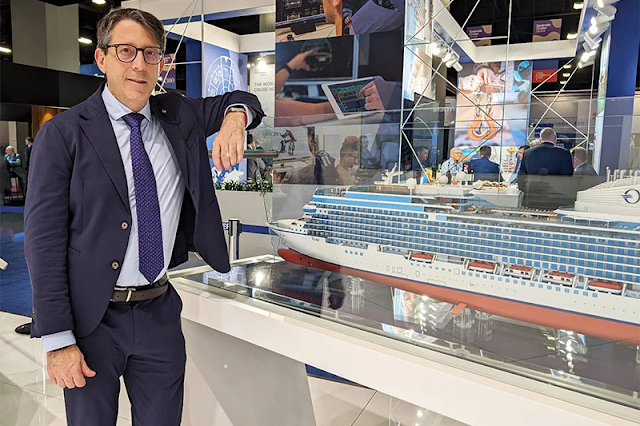
Coming off a big newbuild order from Norwegian Cruise Line Holdings, Daniele Fanara, director of new building and after-sales at Fincantieri, is positive about the future.

“We are serving all segments of the market, from small luxury vessels to mega-size vessels to upper premium,” said Fanara, speaking to Cruise Industry News. “This covers all the brands in the cruise industry.”

Fanara said Fincantieri was very proud to be working with a variety of operators and being able to serve each of them in a tailored customized way.

“We have cross-fertilization with our technology, including the capacity to design the vessel,” he added.

NCLH Order

The new Norwegian Cruise Line Holdings order for eight ships includes orders for all three company brands, with new classes of ships for each of them. Norwegian, Oceania and Regent will all get new bigger ships, with orders for the Norwegian brand stretching to 2036.

“We are proud of the trust that Norwegian gave us to develop such an important program,” said Fanara.

Looking at future technologies, Fanara said the ships were being developed.

“Our attention is focused on three main fuels,” he said. “One is LNG, one is methanol, and one is hydrogen. Hydrogen is the most innovative one. We are developing new ideas on how and when we can implement hydrogen onboard the vessels.”

New ships for Oceania and Regent are being developed to be methanol-ready.

“Today there is no real answer on the fuel of the future,” Fanara continued. “It’s a matter of availability. What’s important from our side is that we are always studying the latest technology available. We are also exploring CO2 capture technology.”

Fanara said among the alternative fuels, LNG was notable in the fact it was being used today.

“Ships are sailing on LNG. The other technology is in a different phase of development. We need to monitor them so we are ready to implement them if necessary,” he explained.

Questions are coming in from cruise lines on alternative fuel practicalities, Fanara said, but with the most questions on hydrogen.

“It is the most innovative, it is the most unknown.”

Industry

Fanara called the cruise industry resilient.

“Soon after Covid, the speed at which the industry recovered and came back to strong booking and revenue levels is incredible,” he said.

Fanara expects other orders to follow, citing market demand and the value gap between cruise- and land-based vacations.

Shipbuilding Costs

Costs are up to build ships.

“A greener vessel is for sure more expensive to build,” Fanara noted. “But is the value of this additional cost worth it for the industry?

“The owners can say the ships are more expensive. We had Covid, we had wars and the result of this has been inflation. If you mix inflation and the technology transition, the result is not less expensive ships.”

New Mein Schiff Relax Launched at Fincantieri

The launch of Mein Schiff Relax, the first of two InTUItion class new concept cruise ships that are dual-fuel powered (LNG and MGO) that Fincantieri is building for TUI Cruises, a joint venture between TUI AG and Royal Caribbean Cruises, took place at the Monfalcone shipyard.

The godmother of the ship was Elena Sperti, an employee of the shipyard.

At 160,000 tons the ship is a new prototype for the TUI fleet developed by Fincantieri and due to enter service in early 2025.

The vessels will be future-proof thanks to their ability to also burn low-emission fuels such as bio- or e-LNG: an important step towards climate-neutral cruising.