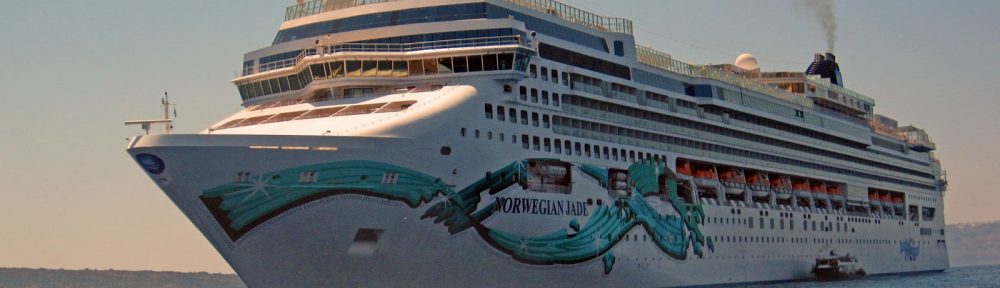
Norwegian Getaway Kicks Off Summer Program in the Mediterranean

Completing Norwegian Cruise Line’s 2023 lineup in Europe, the Norwegian Getaway is kicking off its summer program in the region today.

Sailing in the Mediterranean and Northern Europe, the 2014-built vessel is set to offer a series of nine- to 16-night itineraries departing from different ports.

The first cruise of the season, for instance, sails from Lisbon, Portugal, to Civitavecchia, a port near Italy’s capital city Rome.

Cruising in the Western Mediterranean, the nine-night itinerary includes visits to a total of seven destinations in Spain, France and Italy, such as Málaga, Ibiza, Barcelona, Villefranche and Livorno.

Continuing its season, the ship offers an Eastern Mediterranean itinerary on June 24. Also sailing one-way, the nine-night voyage sails from Civitavecchia to Italy’s Trieste after visits to ports in Italy, Sicily, Greece and Croatia.

Between late July and October, the Norwegian Getaway is also set to offer itineraries in Northern and Western Europe.

On September 15, for instance, the 4,000-guest ship offers a 16-night cruise to the British Islands and Iceland.

Sailing roundtrip from England’s Southampton, the itinerary also features visits to Western European destinations, including France’s Le Havre, Germany’s Hamburg and Belgium’s Zeebrugge.

Following additional itineraries in the region, the Getaway is set to return to North America on November 4. On that day, the ship wraps up a 13-night transatlantic crossing that sails between Southampton and New York City.

In addition to the Norwegian Getaway, eight Norwegian Cruise Line ships are set to operate in Europe in 2023.

The local program stretches through December and features the company’s two newest vessels – the 2022-built Norwegian Prima and the 2023-built Norwegian Viva.

Other vessels sailing in Europe this year include the Norwegian Breakaway, the Norwegian Epic, the Norwegian Dawn, the Norwegian Star, the Norwegian Jade and the Norwegian Gem.

Norwegian Cruise Occupancy Ramp Accelerates to Above 100%

Norwegian Cruise Line Holdings had an average load factor of 101.5 per cent in the first quarter, according to company executives speaking on the corporation’s first quarter earnings call.

“We reached load factors of 101.5 per cent in the first quarter, exceeding our guidance and breaking triple-digit levels for the first time in three years with some voyages exceeding occupancy above 115 per cent,” said Harry Sommer, incoming president and CEO of Norwegian Cruise Line Holdings.

“With this significant achievement, we have also nearly closed the occupancy gap versus 2019 levels,” he said.

For the second quarter, Sommer said he expects 105 per cent occupancy on average across the fleet.

“This average is slightly below 2019 levels as a result of our strategic shift to longer, more immersive itinerary at the Norwegian Cruise Line brand, naturally resulting in fewer thirds and fourths, which is what historically pushes passenger occupancy above the 100 per cent mark, all while enhancing margin over time,” he explained.

Most Recent Occupancy Rates:

Q1 2022: 48%
Q2 2022: 65%
Q3 2022: 81%
Q4 2022: 87%

Norwegian Sets New Targets Towards Zero Emissions

Norwegian Cruise Line Holdings launched an updated climate action strategy with short- and near-term greenhouse gas targets towards achieving net zero by 2050, according to a press release.

“We are proud to further refine and strengthen our climate action strategy and commitments including by setting milestone GHG intensity reduction targets which will guide us on our ambitious pursuit of net zero by 2050,” said Harry Sommer, president and chief executive officer-elect of Norwegian Cruise Line Holdings.

“Every aspect of our business from shoreside to shipboard is responsible for doing their part to design, deliver and demonstrate results for decarbonization and our Board of Directors has reinforced this expectation by establishing shared accountability and tying incentives for our entire management team to this critical effort. We also recently took an important step forward on our pursuit of net zero by announcing the modification of two of our future Prima Class newbuilds to accommodate the use of green methanol in the future.”

The key components of the new targets include reducing greenhouse gas emissions intensity by 10 per cent by 2026 and 25 per cent by 2030. These include emissions from the company’s fleet islands and facilities as well as fuel- and energy-related activities. The new targets serve to support NCLH’s existing strategy for achieving net zero by 2050. 

“We are also activating and mobilizing our full network of team members, ports and destinations, suppliers and partners, and guests to act now and join us on this transformative journey, further amplifying the efforts we could achieve on our own,” added Sommer.

The updated climate action strategy is centred around efficiency, innovation and collaboration. The company continues to invest in systems and technologies aimed at optimizing efficiency, such as HVAC system upgrades and waste heat recovery systems. NCLH is also working on long-term solutions including technologies that help support the ability to operate using green fuels.

The company has already completed tests of biofuel on several ships, using a blend of about 30 per cent biofuel and 70 marine gas. Long term, NCLH is also planning on using green methanol which would result in a drastic reduction in emissions and up to 95 per cent reduction in CO2 and has announced Prima ships five and six will be methanol ready.

Achieving net zero will require collaboration across the company’s network of stakeholders.

“We are encouraged to see the significant progress and momentum across sectors to decarbonize, but fundamental challenges continue to exist for the cruise industry to fully decarbonize by 2050,” said Jessica John, vice president of ESG, Investor Relations and Corporate Communications of Norwegian Cruise Line Holdings Ltd.

“Rather than waiting for these challenges to dissolve, our strategy is about acting now to implement solutions for efficiency today, innovate for future solutions and collaborate with our stakeholders along the way. Underpinning this strategy is good governance and effective risk management as we work to advance our climate action efforts and build our Company’s resilience.”