Cruise lines ‘to return to Turkey this year’

Image result for turkish cruise ports

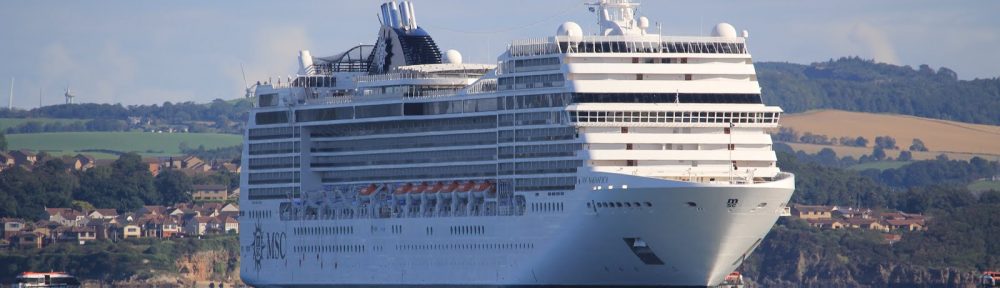
A Busy Cruise port in Turkey

Cruise lines plan a return to Turkey this year following a period of uncertainty due to terrorism and political upheaval.

Ports operator Global Ports Holdings today signalled a possible recovery after reporting a 6.3% slump in overall cruise revenue to $50.3 million last year over 2016.

Earnings [Ebitda] from cruise fell by 12.7% to $32.2 million as the company reported an annual loss of $14.1 million from a profit of $4.4 million the previous year.

This came despite the company’s ports outside Turkey, including Barcelona, Malaga and Valletta, recording 2017 passenger growth of almost 26%

The company’s ports handled more than 2,801 cruise ship calls and 4.1 million passengers.

However, cruise calls to Ege port in Kusadasi in Turkey fell by 53% with passenger numbers down by 66% to 118,954 year-on-year. The company also runs the Turkish ports of Bodrum and Antalya.

“Current trading in our cruise segment in our non-Turkish based ports remains strong. The weakness in Turkish cruise ports is expected to continue into 2018, although passengers and revenue are expected to stabilise compared to the decline experienced in 2017,” GPH said.

“A number of cruise lines have begun to communicate their plans to visit our Turkish ports in 2018, which we see as a good sign of a possible recovery.”

The company added: “Transit passengers recorded a 20.3% increase in 2017, while the expansion of more profitable turnaround passengers was relatively lower at 8%, resulting in two percentage point decrease in the share of turnaround passengers.”

Chairman and co-founder Mehmet Kutman said: “In May 2017 we listed on the London Stock Exchange. Despite the geopolitical challenges in Turkey since then, we have been able to deliver stable revenues and underlying profits, achieve strong operating cash flow and attractive dividends.

“Operating profit was down year on year mainly reflecting the costs of the IPO. Delivering shareholder value remains a key priority for the group as we look to the year ahead.”

Chief executive Emre Sayın added: “Our 2017 financial performance reflects the importance of our diversified business, with robust contributions from our commercial operations and strong performance in our cruise ports outside Turkey, where the geopolitical situation continues to be challenging.

“We are making progress with our strategy set out at the IPO to expand our global footprint of cruise ports, also reducing the significance of Turkey on our overall business.

“M&A [merger and acquisitions] discussions both in and outside Europe are progressing well and we have strengthened our global team as we pursue the next phase of growth. We feel good about 2018 as it starts growing again.”

‘Hurricanes prevented UK cruise numbers reaching two million mark’

Image result for caribbean hurricanes

The above Satellite shows three Hurricanes.

The number of cruises sold to British holidaymakers in 2017 may have exceeded two million if hurricanes had not hit the Caribbean, it has been claimed.

Clia last week reported a record year for the British cruise industry, with 1,959,000 Britons taking a cruise holiday in 2017 – an increase of 0.5% against 2016.

Stuart Leven, Clia’s UK and Ireland chairman, said it was a “major factor” that “five or six weeks” after hurricanes Irma and Maria struck ships were sent to help with the humanitarian effort.

He told Travel Weekly: “I would not lay it firmly at the door of hurricanes but several ships were taken out of service in order to help, which means there were fewer holidays to sell and flights were cancelled. It is a major factor.”

He added that the hurricanes had “not had any impact” on future bookings, adding that it could have been “the difference” between hitting the two million mark and not.

When asked about the figures at Abta’s First Time Cruisers Conference in central London, Leven said the UK market has “massive scope for growth”.

He said cruise lines would be encouraged to deploy more ships in the UK due to people cruising for the first time giving higher satisfaction scores after the sailing.

“If you can get more people on ships there is a massive scope for growth,” he said.

Leven cited how the UK cruise industry holds a 4.5% share of the holiday market, but if that figure increased by one percent that would add 500,000 passengers to the annual number of Britons taking cruises.

He also said: “Most of the agents are better at selling a cruise than the cruise lines are. They are the experts. Eight out of 10 bookings come through the trade.”

Norwegian Cruise Line Holdings’ momentum accelerates into 2018

Norwegian Cruise Line Holdings’ net income rose 23% last year to $780 million, as European pricing and bookings recovered faster than expected and the booking curve extended to a near-optimal length.

Revenue rose 10.7%, to $5.4 billion.

The Wave season for 2018 has started strong and the outlook for 2018 is bullish, driven by a strong economy and consumer demand, CEO Frank Del Rio said.

“This year is by far the most excited, the most energized and the most optimistic I have ever been at the start of a new year,” Frank Del Rio said.

He said the strong demand environment of late 2016 and 2017 has “accelerated through this year’s early Wave season, as both the number of bookings sold and the price points achieved reach record levels” across all three brands — Norwegian Cruise Line, Regent Seven Seas Cruises and Oceania Cruises.

“Our overall booked position during the first seven weeks of 2018 further improved compared to the same time last year,” he said.

He said on average NCLH guests are booking five weeks earlier than at the end of 2016.

Del Rio said the weak link if there is one, is China. “I don’t think China is hitting on all cylinders as it can,” he said, referencing the continued tensions with South Korea and the resulting uniformity of short cruise itineraries, which can only visit Japan. Nevertheless, he said China was profitable in 2017.