Fincantieri: ‘Covering All Brands’ with Eye on Future Fuels

Coming off a big newbuild order from Norwegian Cruise Line Holdings, Daniele Fanara, director of new building and after-sales at Fincantieri, is positive about the future.

“We are serving all segments of the market, from small luxury vessels to mega-size vessels to upper premium,” said Fanara, speaking to Cruise Industry News. “This covers all the brands in the cruise industry.”

Fanara said Fincantieri was very proud to be working with a variety of operators and being able to serve each of them in a tailored customized way.

“We have cross-fertilization with our technology, including the capacity to design the vessel,” he added.

NCLH Order

The new Norwegian Cruise Line Holdings order for eight ships includes orders for all three company brands, with new classes of ships for each of them. Norwegian, Oceania and Regent will all get new bigger ships, with orders for the Norwegian brand stretching to 2036.

“We are proud of the trust that Norwegian gave us to develop such an important program,” said Fanara.

Looking at future technologies, Fanara said the ships were being developed.

“Our attention is focused on three main fuels,” he said. “One is LNG, one is methanol, and one is hydrogen. Hydrogen is the most innovative one. We are developing new ideas on how and when we can implement hydrogen onboard the vessels.”

New ships for Oceania and Regent are being developed to be methanol-ready.

“Today there is no real answer on the fuel of the future,” Fanara continued. “It’s a matter of availability. What’s important from our side is that we are always studying the latest technology available. We are also exploring CO2 capture technology.”

Fanara said among the alternative fuels, LNG was notable in the fact it was being used today.

“Ships are sailing on LNG. The other technology is in a different phase of development. We need to monitor them so we are ready to implement them if necessary,” he explained.

Questions are coming in from cruise lines on alternative fuel practicalities, Fanara said, but with the most questions on hydrogen.

“It is the most innovative, it is the most unknown.”

Industry

Fanara called the cruise industry resilient.

“Soon after Covid, the speed at which the industry recovered and came back to strong booking and revenue levels is incredible,” he said.

Fanara expects other orders to follow, citing market demand and the value gap between cruise- and land-based vacations.

Shipbuilding Costs

Costs are up to build ships.

“A greener vessel is for sure more expensive to build,” Fanara noted. “But is the value of this additional cost worth it for the industry?

“The owners can say the ships are more expensive. We had Covid, we had wars and the result of this has been inflation. If you mix inflation and the technology transition, the result is not less expensive ships.”

Fincantieri: Building the Future

“We are redesigning the future of navigation on a strategic and technological level,” Luigi Matarazzo, general manager of the Merchants Ships Division at Fincantieri, told Cruise Industry News.

“The ships we are building will increasingly resemble large, hyper-connected, energy self-sufficient, lighter and greener, propelled floating cities, capable of recycling up to 90 per cent of the waste produced onboard.

“With the technologies already available today, we can thermally recover up to 20 per cent of the energy contained in the fuel,” he continued.

“And the efficiency measures recently introduced in non-propulsion systems onboard have led to further reductions. For example, a ship of about 130,000 tons is able to reduce its fuel consumption up to 1,200 tons per year, which corresponds to about 7 per cent of the ship’s annual fuel consumption.

“We have validated and applied a series of initiatives on the ships we are building. Examples of energy-saving solutions include fan coil installations in cabins and public areas, variable-speed electric motors, recalibration of fresh-water production systems, LED and other high-efficiency lighting and automatic lighting controls, and much more. Each of these solutions can reduce fuel consumption from 48 to 290 tons per year. This is the path we are on.”

Playing a fundamental role in the green transition will be hydrogen and hydrogen carriers, such as ammonia, liquid hydrogen carriers and synthetic hydrocarbons derived from hydrogen, according to Matarazzo. But this will require the creation of a supply chain based on renewable energy sources, which is able to meet the increased demand without negative side effects on global warming, he added.

“On the technological level, the main obstacles are generated by constraints in terms of space and weight. Fuel cells, batteries, fuel tanks, energy recovery and auxiliary systems have a significant impact on the onboard space and weight of a ship.

“However, I want to stress that the challenges do not lie solely with the cost-efficient application of new technologies. In fact, there are important non-technological barriers.

“In terms of resources, there is still no clear and well-defined scenario regarding the future availability of hydrogen and its derivatives, which will also certainly drive pricing (of fuels).

“Production capacity and a network of supply hubs will be key enabling factors to accelerate the decarbonization of the shipping sector.”

Since 2021, Fincantieri has been committed to implementing measures to improve its yards’ impact on the environment. The latest initiative is solar farms being built at five of the yards to generate more green electricity while also reducing the energy bill, said Matarazzo.  Installations will feature 22,000 solar panels covering an area of more than 50,000 square meters, able to produce about 10 MW.

Fincantieri is also part of a public-private partnership launched by the European Commission and the Waterborne Technology Platform to decarbonize waterborne transport, as well as several joint ventures with private companies and research organizations exploring new fuels.

Meanwhile, the next 18 months will be busy for Fincantieri.

“In Monfalcone, by the end of this year we will deliver the MSC Seascape, the second EVO class ship and the fourth vessel in MSC Cruises’ Seaside class, and then, in 2023, Explora I, the first of six luxury ships ordered by MSC’s Explora Journeys brand,” Matarazzo said.

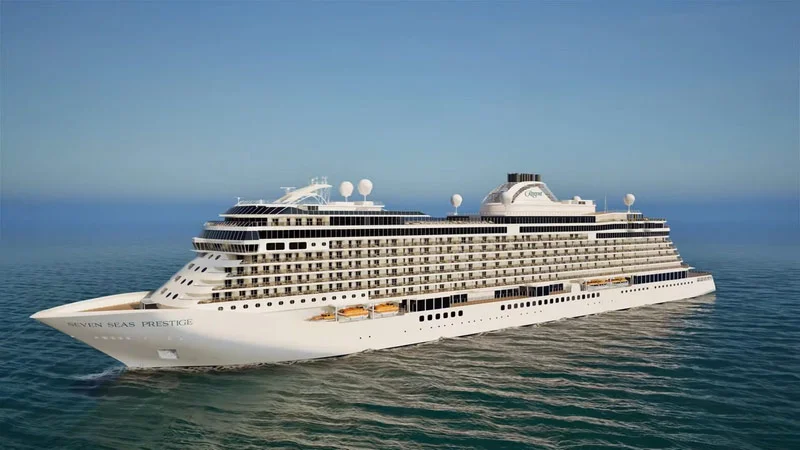
“Also next year, Marghera will deliver the second ship in Norwegian Cruise Line’s Prima class, the Norwegian Viva, followed by Cunard Line’s Queen Anne. The Sestri yard will deliver the Vista, the first of two new-generation ships that will start the Allura class for Oceania Cruises; a fourth ship for Virgin Voyages; a ninth and tenth ship for Viking Cruises; and the newest ship for Regent Seven Seas Cruises.”

Excerpt from Cruise Industry News Quarterly Magazine: Fall 2022 

Cruise shipbuilding versus ship refurbishments

Cruise Ship Building yardUnlike the scheduled cruise ship refurbishments, major refits may include even a cruise ship lengthening, like in the case of Royal Caribbean ship Enchantment of the Seas lengthened in 2005 (see the photo below). The Enchantment ship lengthening cost ~ US$55 million, it was a process of cutting the ship in two and inserting a whole new 73 ft (22 m) 3,500 tons midsection, pre-built at the Aker Finnyards. The month-long dry-dock at the Keppel Verolme shipyards (Rotterdam, The Netherlands) resulted in adding 151 brand new cabins, a 50% bigger Pool Deck area, a new kids area, a teen center, several new bars and lounges, an expanded main dining room, a new specialty restaurant. This “refurbishment cost” record was recently beaten by the CCL line and the US$155 million Carnival Destiny refit 2013 producing a brand new ship named Carnival Sunshine!

The average cost of building a cruise ship is around US $450 for mid-sized vessels and up to $800 million for bigger cruise ships. These prices, along with the current economy status force many cruise lines to hold off from building new ships – the biggest expense of all. As a rule, all new cruise ships on order/currently under construction are by contracts signed years ago when the dollar had a good rate.

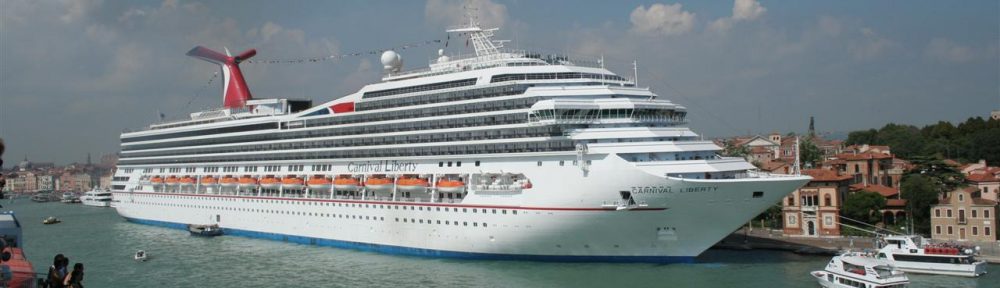
cruise ship builders and refurbishment companies (firms)Cruise ship building prices are high enough to not meet the return requirement. Even the mighty Carnival Corporation (the largest cruise company in the world) puts its ship building plans on hold. Royal Caribbean is one of the few companies continuing to place orders for new ships – and not any ships, but the ever largest, the most innovative, the most expensive in the world. Still, most passenger ship lines are trying to keep their current fleet fresh and good looking. Two of the best examples are Holland America with its $450 million SOE program for ship renovations, and Carnival investing over $250 million to fully refit and refurbish 8 of its oldest vessels.