 To reduce the impact of big cruise ships in Venice, Italian ministers have decided to route the largest ships away from the center city, while still allowing them to dock there.
Cruise traffic would enter the Venetian lagoon on the southwest end, transiting the Malamocco channel, which is already used by cargo ships.
As a first step, an environmental study has been commissioned to evaluate the dredging of a cut-off canal leading from the cargo channel to the existing Venice cruise ship terminal.
Activists say that the dredging will harm the Venice lagoon by deepening it and creating more wave action, while at the same time disrupting sediments and water life in the area.
But a committee of Italian ministers said the plan mitigates the effects of increasingly large ships on Venice while preserving their positive contribution to the economy.
“It seems to me to be a balanced solution,” Transport Minister Maurizio Lupi said in announcing the decision.
Some parties had pushed for a more radical option, such as relocating the cruise terminal to the industrial port at Marghera, a plan favored by Venetian Mayor Giorgio Orsoni.
Venice hosted more than 1.8 million cruise passengers last year, making it the third-busiest cruise port in Europe, after Barcelona and Civitavecchia, near Rome.
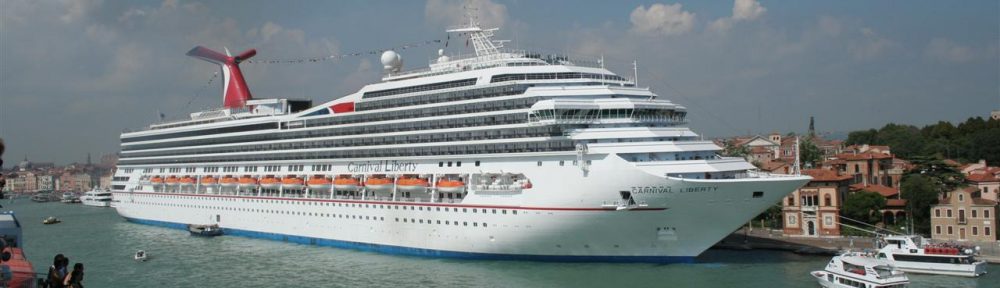
An increasingly vocal group of activists has protested that modern cruise ships have grown out of scale with Venice and are causing damage to the city’s foundations, an assertion disputed by the cruise industry.
As part of the new plan, the committee of Italian ministers reinstated a ban on cruise ships of more than 96,000 gross tons from using the current route through the Lido and down the Giudecca Canal.
That route takes cruise ship passengers through the heart of Venice and past Piazza San Marco, its biggest attraction.
Cruise lines, through CLIA Europe, emphasized the importance of Venice and the Venice Passenger Terminal to the entire cruise industry.
“While we believe that the passage of cruises through the Giudecca Canal is safe, we agree that a sustainable solution for Venice requires a new alternative route for ships, and so we are pleased that the Italian government is working very hard to find a sustainable solution,” a CLIA statement said.
A study last year found that the cruise industry in Venice created an annual economic impact of 345 million euros (about $462 million).
Individual cruise lines have been planning for Venice’s mandated reduction in ship size. Celebrity Cruises, for example, next year will sail a 91,000-gross-ton, Millennium-class ship on Eastern Mediterranean itineraries from Venice, while moving its 122,000-gross-ton, Solstice-class ship to Baltic itineraries.
The Italian government had originally banned cruise ships of more than 96,000 gross tons from the current route effective Jan. 1, but that ban has been stayed by a regional Italian court, pending a decision on an alternative route into the city.
The decision to move forward on the environmental study of the back channel addresses the court’s objection.
The plan calls for deepening the Contorta Sant’ Angelo, a 4-kilometer channel between Marghera and Venice that was cut in the 1960s for fuel barges, from a depth of 1.5 meters to 9 meters.
Authorities estimate the dredging project will take about two years and cost about 115 million euros (about $154 million).
 Passengers

 Wetravel2u's Weblog