Fincantieri has announced the signing of a memorandum of understanding with Enel Green Power Italia to explore and develop the use of green hydrogen for port operations and long-range maritime transport.
In particular, Fincantieri said the two companies will evaluate the possibility of collaborating both in the supply of green hydrogen to naval, submarine and surface vessels, and to industrial users within the port area, including the design and construction of the necessary infrastructure elements, including storage, where necessary; and in the design and development of a system for the management of energy flows, including the involvement of other companies from the respective groups.
Enel’s Eugenio Montale power plant in La Spezia (Liguria region) will be used as an initial test site for the activities covered by the agreement, thus launching a sustainable energy transition path for the site.
In the context of the energy transition, hydrogen can make a valuable contribution to the decarbonization of energy-intensive industries such as chemicals, aviation, maritime transport and non-electrified railways, provided it is produced in a sustainable manner, Fincantieri stated in a prepared announcement.
Enel Green Power is committed to the creation and development of projects for the production and use of ‘green’ or ‘renewable’ hydrogen, derived from the electrolysis of water-powered exclusively by renewable electricity. The Group has therefore started studying new business models that include the supply of green hydrogen for the decarbonization of industrial sectors, with partnerships and projects already being developed in Italy, Chile, the United States and Spain.
According to the two companies, this MoU may also lead to further agreements.
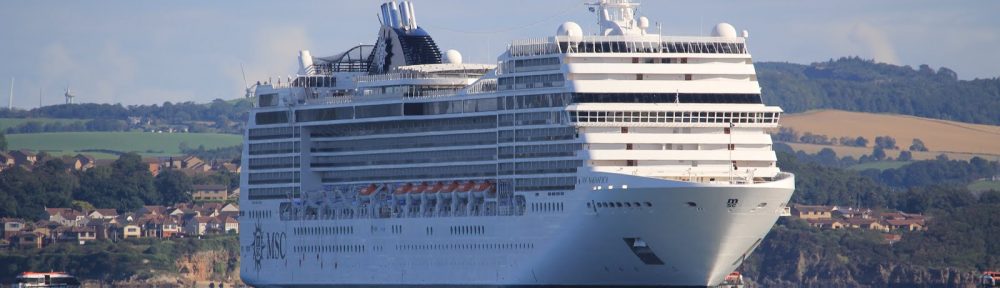
MSC Cruises has officially taken delivery of its new flagship, the MSC Seashore, from Fincantieri’s Monfalcone shipyard. According to a press release, the 4,560-passenger Seashore is the largest cruise ship to be built in Italy.
Sister ship MSC Seascape is still under construction at the shipyard and is due to come into service in winter 2022.
MSC said that an intimate ceremony was held to mark the occasion as tradition dictates at the Fincantieri shipyard in Monfalcone and was attended in person by MSC Cruises Executive Chairman Pierfrancesco Vago, other members of the Aponte and Aponte-Vago families, Giampiero Massolo and Giuseppe Bono, Chairman and CEO of Fincantieri, as well as representatives from MSC’s new builds team along with executives and workers from the shipyard.
During the ceremony, which pays tribute to centuries-old maritime traditions, Roberto Olivari, Fincantieri’s shipyard director, presented to Giuseppe Galano, master of the MSC Seashore, an ampoule containing the water that first touched the hull when the ship was floated out earlier this year.
“The construction of MSC Seashore is an investment that generates a direct and indirect economic impact of almost 5 billion euros on the Italian economy. At the same time, it’s coming into service also activates an important economic and employment driver for coastal communities and much beyond, generating a further significant economic impact every year for the tourism industry,” Pierfrancesco Vago, executive chairman of the Cruise Division of MSC Group, said.
“Our new flagship is a further testament to our leadership in sustainability, with each new ship featuring the latest and most advanced environmental technology and solutions. Additionally, over and above our industry-leading health and safety protocol, the MSC Seashore is the first cruise ship in the world to feature a new and ground-breaking air sanitation system. ‘Safe Air’ uses UV-C lamp technology, eliminating 99 per cent of viruses and bacteria to guarantee clean and safe air for all guests and crew on board,” he added.
According to Vago, the Seashore demonstrates MSC’s commitment to “continuous innovation in terms of the guest experience.”
“She is, without doubt, our most stunning and sophisticated vessel to date and takes to a whole new level the already successful Seaside platform, with public spaces completely reimagined, a new secondary lounge and a broader offering both in terms of restaurants and retail options amongst many other new and much improved features. This will create a unique onboard experience for our guests this summer in the Mediterranean and during the Winter season when she will move to Miami to represent our full brand values with North American consumers,” Vago noted.
The CEO of Fincantieri, Giuseppe Bono, said that the MSC Seashore is the fourth cruise ship that the shipyard group has delivered in Italy during this “still extremely demanding year.”
“All these milestones, and others to come, have been successfully achieved and this is never taken for granted. This is why I consider this ship not only the best symbol of recovery for the whole cruise sector but also of the capability of the group to leverage its competencies and soundness to fully preserve our workload,” Bono said.
MSC has a long-term objective to achieve net carbon neutral operations by 2050. According to the cruise line, each new ship represents “another step towards this goal, alongside other investments to help accelerate the development of next-generation environmental technology.”
The MSC Seashore in particular features hybrid exhaust gas cleaning systems, selective catalytic reduction systems, achieving a 98-per cent reduction of sulfur oxide emissions and reducing nitrogen oxide emissions by 90 per cent.
The Seashore’s wastewater treatment system has been designed in line with the International Maritime Organization’s MEPC 227(64) Resolution and achieves purification standards that are higher than most wastewater treatment facilities ashore, MSC said.
MSC Cruises, Fincantieri and Snam have announced the signing of a Memorandum of Understanding to jointly determine the conditions for the design and construction of what would become the world’s first oceangoing hydrogen-powered cruise ship.
According to a press release, MSC Group, Fincantieri and Snam have joined forces to initially carry out a study that will assess the feasibility of designing and building “the world’s first ocean-going cruise ship powered by hydrogen.” MSC Group said that the ship would allow zero-emissions operations in certain areas and the development of the related hydrogen bunkering infrastructure.
Green hydrogen can be produced without fossil fuels, using renewable energy to split water in a process called electrolysis and can therefore be emissions-free on a full lifecycle basis, MSC said. It can be used to generate electrical power through a fuel cell, emitting only water vapour and heat. This type of ‘green’ hydrogen holds great potential to contribute to the decarbonization of the shipping industry, including cruising, whether in its pure form or as a hydrogen-derived fuel.
“As a company that has long made environmental sustainability its focus, we want to put ourselves at the forefront of the energy revolution for our sector and hydrogen can greatly contribute to this. However, today production levels remain low and hydrogen fuel is still far from being available at scale. With this project, we’re taking the lead to bring this promising technology to our fleet and the industry while sending the strongest possible signal to the market about how seriously we take our environmental commitments. As we advance with the development of the maritime technology required, we will also see that energy providers take note and ramp up production to unlock this and that governments and the public sector step in to provide the necessary support for a project that is critical to the decarbonization of cruising and shipping,” said MSC Group’s Executive Chairman of the Cruise Division, Pierfrancesco Vago.
The CEO of shipbuilding group Fincantieri, Giuseppe Bono, said that “every opportunity for new solutions and technologies is a source of growth for us.”
“This one allows us to offer our customers the best of innovation to help minimize the environmental impact,” he noted.
The CEO of international energy infrastructure operator Snam, Marco Alverà, said that the company was “strongly committed” to concrete initiatives for sustainable heavy transport – on the road, rail and by the sea – promoting the use of renewable gases such hydrogen and bio LNG.
“This agreement for us is part of a wider strategy to leverage on our experience, competencies and technologies in green gases and energy efficiency in order to contribute to the full decarbonization of the shipping value chain, including ports and logistics, which will be increasingly crucial in our economies,” Alverà explained.
“Hydrogen could be a key enabler in achieving the target of net-zero emissions in shipping, accounting for approximately 3 per cent of global CO2 emissions, as well as in all the hard to abate sectors,” he added.
As per the terms of the Memorandum of Understanding, during the next 12 months, the three companies will study key factors related to the development of oceangoing hydrogen-powered cruise ships.
These include arranging ship spaces to accommodate H2 technologies and fuel cells, technical parameters of onboard systems, calculating the potential greenhouse gas emissions savings, and technical and economic analysis of hydrogen supply and infrastructure.
MSC Cruises said that it was committed to achieving net carbon neutral operations by 2050.
“To accomplish this objective, the company is working in partnership with a wide range of shipyards, suppliers, manufacturers and other organizations as well as investing in different upcoming technologies and solutions for its fleet,” MSC Group wrote. “The implementation of the cooperation above described will possibly be an object of future binding agreements to be discussed by the parties in relation thereto.”