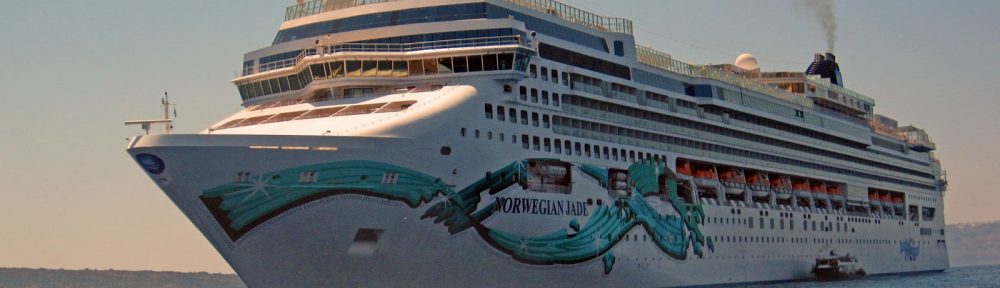
Norwegian Sets New Targets Towards Zero Emissions

Norwegian Cruise Line Holdings launched an updated climate action strategy with short- and near-term greenhouse gas targets towards achieving net zero by 2050, according to a press release.

“We are proud to further refine and strengthen our climate action strategy and commitments including by setting milestone GHG intensity reduction targets which will guide us on our ambitious pursuit of net zero by 2050,” said Harry Sommer, president and chief executive officer-elect of Norwegian Cruise Line Holdings.

“Every aspect of our business from shoreside to shipboard is responsible for doing their part to design, deliver and demonstrate results for decarbonization and our Board of Directors has reinforced this expectation by establishing shared accountability and tying incentives for our entire management team to this critical effort. We also recently took an important step forward on our pursuit of net zero by announcing the modification of two of our future Prima Class newbuilds to accommodate the use of green methanol in the future.”

The key components of the new targets include reducing greenhouse gas emissions intensity by 10 per cent by 2026 and 25 per cent by 2030. These include emissions from the company’s fleet islands and facilities as well as fuel- and energy-related activities. The new targets serve to support NCLH’s existing strategy for achieving net zero by 2050. 

“We are also activating and mobilizing our full network of team members, ports and destinations, suppliers and partners, and guests to act now and join us on this transformative journey, further amplifying the efforts we could achieve on our own,” added Sommer.

The updated climate action strategy is centred around efficiency, innovation and collaboration. The company continues to invest in systems and technologies aimed at optimizing efficiency, such as HVAC system upgrades and waste heat recovery systems. NCLH is also working on long-term solutions including technologies that help support the ability to operate using green fuels.

The company has already completed tests of biofuel on several ships, using a blend of about 30 per cent biofuel and 70 marine gas. Long term, NCLH is also planning on using green methanol which would result in a drastic reduction in emissions and up to 95 per cent reduction in CO2 and has announced Prima ships five and six will be methanol ready.

Achieving net zero will require collaboration across the company’s network of stakeholders.

“We are encouraged to see the significant progress and momentum across sectors to decarbonize, but fundamental challenges continue to exist for the cruise industry to fully decarbonize by 2050,” said Jessica John, vice president of ESG, Investor Relations and Corporate Communications of Norwegian Cruise Line Holdings Ltd.

“Rather than waiting for these challenges to dissolve, our strategy is about acting now to implement solutions for efficiency today, innovate for future solutions and collaborate with our stakeholders along the way. Underpinning this strategy is good governance and effective risk management as we work to advance our climate action efforts and build our Company’s resilience.”

Destination will be the “dominant influence” for customers in 2023

Celebrity Eclipse at the Hubbard Glacia photo credit Spacejunkie2 (Flickr)

A poll of 1,000 people carried out by cruise.co.uk found almost half (44%) of respondents describe destination as the “main factor” in their holiday decision-making process.

A quarter of respondents said the price tag was most influential, while a fifth indicated it was the cruise brand which swayed their choice. The specific ship and departure date were the lowest-ranking, with 5% of responses each.

The survey also revealed more than 50% of respondents had travelled on three or more cruise lines, and less than 20% stayed loyal to one brand, choosing instead to holiday based on destination and cost.

Tony Andrews, deputy managing director of cruise.co.uk, said: “Cruising is such a great way to see the world, so it’s easy to see why destination came up trumps in our survey.

“The ability to reach all corners of the globe from the comfort of a ship, combined with the value for money a holiday at sea offers, means we’re seeing customers coming back time and time again to discover new destinations or revisit firm favourites.”

Jamaica Experiences Its Biggest Winter Season Ever

Jamaica’s Minister of Tourism, Edmund Bartlett has stated that Jamaica is experiencing its biggest winter season in the history of tourism, adding that the tourism boom is set to continue, according to a press release.

“For the January to March 2023 period, it is estimated that Jamaica welcomed 1.18 million visitors, which represents a growth of 94.4 per cent when compared to the same period in 2022. This represents earnings of $1.15 billion, 46.4 per cent above the $786.8 million earned for the same period in 2022,” said Bartlett.

“If there was ever an industry that has the potential to transform our nation, our communities and the lives and livelihoods of the Jamaican people for the better, it is tourism.

Bartlett added that gross domestic product (GDP) for the economy is projected to grow by up to 3.0 per cent to 5.0 per cent during January – March 2023 compared to the same period in 2022.

Speaking at the Sectoral Debate in Parliament, Bartlett said that arrivals for 2022 were up by 117 per cent while earnings were up by 71.4 per cent compared to 2021. In 2022, Jamaica welcomed 3.3 million visitors and earned about $3.7 billion. Projections earnings in 2024 go up to $4.1 billion.

“Never before in the history of Jamaica has tourism made such a great contribution to the national economy and we are willing to contribute to that process and to make even greater contributions,” added Bartlett.

“Investments continue to boom to drive the industry’s recovery (and) over the last five years tourism investment contributed 20 per cent of the island’s total foreign direct investments (FDI) and over the next 5 to 10 years, there are multiple upcoming investment projects which will see the addition of 15,000 to 20,000 new rooms with an investment of $4 billion to $5 billion.”