New Mein Schiff Relax Launched at Fincantieri

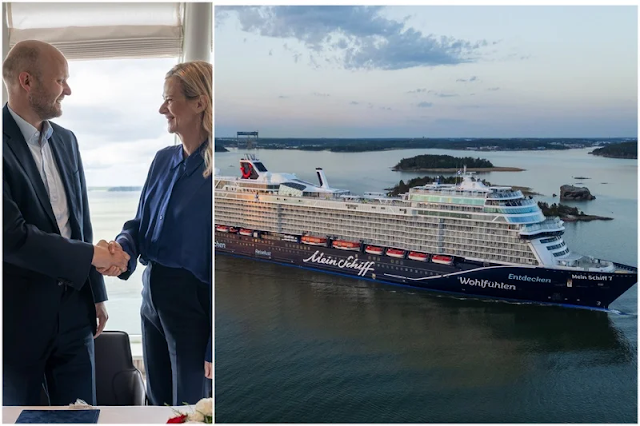
The launch of Mein Schiff Relax, the first of two InTUItion class new concept cruise ships that are dual-fuel powered (LNG and MGO) that Fincantieri is building for TUI Cruises, a joint venture between TUI AG and Royal Caribbean Cruises, took place at the Monfalcone shipyard.

The godmother of the ship was Elena Sperti, an employee of the shipyard.

At 160,000 tons the ship is a new prototype for the TUI fleet developed by Fincantieri and due to enter service in early 2025.

The vessels will be future-proof thanks to their ability to also burn low-emission fuels such as bio- or e-LNG: an important step towards climate-neutral cruising.

EU Shore Power Regulations Fall Short of Potential

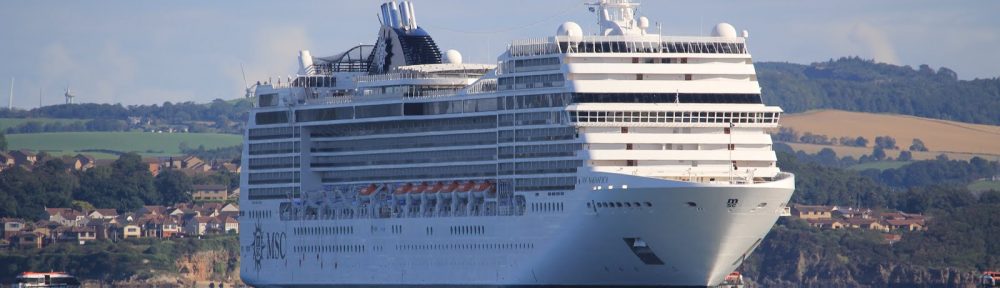
MSC Virtuosa connected to the Shoreside Power System  photo credit Spacejunkie2 (flickr)

The European Union (EU) is in a race to decarbonize the commercial shipping industry, and part of the strategy includes a requirement for ships to plug into shore power across the bloc’s ports. In line with the FuelEU Maritime Regulation and the Alternative Fuels Infrastructure Regulation, container and cruise ships over 5,000 GT must connect to shore power in the largest EU ports come January 2030.

The regulations have been hailed as critical measures in decarbonizing maritime transport, which accounts for three to four percent of total CO2 emissions in the EU. However, achieving shore power ambitions will be a herculean task. According to the International Council on Clean Transportation (ICCT), the bloc will only achieve a 24 percent reduction of at-berth CO2 emissions under the current setup.

The NGO contends that to achieve a 100 percent at-berth reduction in CO2 emissions, the forthcoming revision of both regulations should include a requirement for all ships greater than or equal to 400 GT to connect to shore power in EU ports. To achieve this, the EU will require nearly 1,929 MW of additional shore power installation to meet average at-berth annual energy demands, and 3,342MW for peak energy demand.

It also argues that boilers should also be retrofitted, electrified, or connected to shore power facilities, just like auxiliary engines, because they are responsible for 44 percent of all at-berth CO2 emissions. Boilers would require 36 percent of all needed shore power for ships berthing in EU ports.

The paper highlights that increasing the level of ambitions by including at-berth electricity demand for all ship types greater than or equal to 400 GT could reduce CO2 emissions by 42 percent. Adding more ports would help to avoid 58 percent of the total at-berth CO2 emissions.

Currently 51 ports in 15 EU member states are equipped with 340 shore power connectors, and Sweden, the Netherlands and Germany lead the pack. The current shore power network supplies around 309 MW, mostly for container, passenger and cruise ships.

Though cargo ships are the most common docking in EU ports, accounting for 43 to 46 percent, their energy demands are relatively low at 14 percent of the total. In contrast, despite their small absolute number in the fleet, the energy demand of cruise ships stands at 21-28 percent of the total. 

The largest additional shore power installations will be needed in Italy, Spain and France where energy demand cumulatively stands at 3,004 GWh, mainly due to high cruise ship traffic. Cruise ships alone in the three countries would account for 59 to 63 percent of shore power needed. 

Holland America: Full Fleet Shore Power Ready

Following the shore power installation on the Volendam, Holland America Line’s entire fleet is now equipped for shore power connectivity.

The Volendam recently completed its installation in Vancouver, British Columbia, and was connected to the port’s shoreside electricity for a full day on September 27.

“At Holland America Line, our legacy of exceptional onboard care extends to caring for the planet, and having our entire fleet capable of shore power connection is a tremendous milestone in our sustainability efforts,” said Gus Antorcha, president of Holland America Line. “We have committed to reducing our carbon emission intensity by 20 per cent by 2030 from our 2019 baseline, and we’re on our way to reaching that goal through a variety of initiatives that include shore power. We look forward to more global ports embracing shore power capability in the future and are ready to work with them to connect.”

Ports that the cruise line’s ships visit with shore power include Juneau, Alaska; New York; San Francisco and San Diego, California; Seattle, Washington; Halifax, Montreal and Vancouver, Canada; Bergen, Ålesund and Kristiansand, Norway; Kiel, Germany; and Shanghai and Xiamen, China.

Holland America Line began converting ships for shore power connectivity in 2006 with its four Vista Class ships.

The cruise line’s Pinnacle Class ships (the Koningsdam, Nieuw Statendam and the Rotterdam) all were built with shore power systems installed, while the Eurodam and Nieuw Amsterdam were launched with a partial installation that has since been completed.

In addition to shore power, the company has also adopted a variety of environmental practices such as banning single-use plastics onboard and using biodegradable or paper-based alternatives.

“We’ve made our packaging changes in a thoughtful manner to ensure that we can both reduce our footprint and also maintain our outstanding guest experience,” added Antorcha.