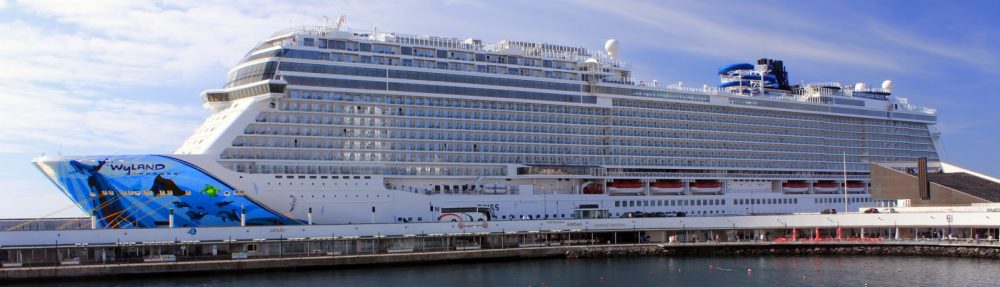
The new Disney Adventure sailed from Germany earlier this week to embark on its first set of sea trials.
Currently in the final stages of construction at the MV Werften shipyard, the vessel is now undergoing a series of assessments and trials in the Baltic and North Seas.
Over 1,400 workers are reportedly on board the ship, which is scheduled to be delivered to Disney Cruise Line in late September.
According to Ostsee Zeitung, the Disney Adventure will see testing of technology and systems while sailing to another German port, Bremerhaven.
The week-long trials are also said to include a technical visit to Rügen, an island on the Baltic coast of Germany.
The Disney Adventure is expected to undergo a second set of sea trials later this month.
The 208,000-ton ship is then set to embark on a delivery voyage to Asia ahead of its maiden cruise, which is scheduled to depart from Singapore on December 15, 2025.
As the largest cruise ship in the company’s fleet, the Adventure will be Disney’s first vessel dedicated to Southeast Asia.
Sailing from the Marina Bay Cruise Centre Singapore on a year-round basis, the 6,000-guest ship will offer three- and four-night cruises to nowhere.
The vessel’s schedule in the region was recently extended with the addition of extra departures through December 2026.
In addition to the Disney Adventure, Disney Cruise Line is also welcoming the Disney Destiny to its fleet this year.
The LNG-powered ship is currently under construction at the Meyer Werft shipyard in Germany for delivery in the fourth quarter.
As a sister to the Disney Wish and the Disney Treasure, the 2,500-guest vessel is set to welcome guests for its inaugural voyage in November 2025.
Sailing from Fort Lauderdale’s Port Everglades, the Destiny will spend its maiden season offering four- and five-night cruises to the Bahamas and the Caribbean.
Meyer Turku hosted a festive ceremony on August 29, 2025, to celebrate the float out of Royal Caribbean International’s new Legend of the Seas.
According to a press release, the traditional float-out ceremony included speeches by representatives of the shipyard and the cruise line, as well as a gun salute and a playful competition to open the water valves of the construction basin in Finland.
During the weekend following the ceremony, the new 250,800-ton ship was moved to the outfitting dock, where finishing work will continue for another year.
“The Legend of the Seas continues the state-of-the-art Icon Class, which allows the Finnish maritime industry to showcase its unique expertise at its best,” said Casimir Lindholm, CEO of Meyer Turku.
“The shipyard, Royal Caribbean and an extensive network of partners work together to develop the processes and concepts from ship to ship. Alongside its sister ships, the Legend of the Seas will also mark an important milestone in increasingly responsible shipbuilding,” he added.
At 365 meters long, nearly 50 meters wide, the 248,000-ton LNG-powered vessel is the third ship in Royal Caribbean’s Icon class.
The first in the series, the Icon of the Seas, was delivered to the brand in November 2023, followed by the Star of the Seas in July 2025.
The fourth Icon Class ship, currently under construction at the shipyard and yet to be named, will be completed in 2027.
According to Meyer Turku, Royal Caribbean’s agreement with the shipyard also includes options to build fifth and sixth Icon Class ships.
Following initial itineraries in Europe, the ship is scheduled to debut in the United States ahead of sailing in the Caribbean during the 2026-27 winter season.
Nippon Paint Marine announced that its application of AQUATERRAS, an advanced polymer technology, on the AIDAdiva has resulted in lower costs and downtime, as the need for planned in-water hull cleaning was removed for over three years.
John Drew, director at Nippon Paint Marine, Europe, told Cruise Industry News the patented structure, paired with a hydrolysis-driven self-polishing mechanism, optimises hull smoothness over time and delivers a reduction in fuel consumption and greenhouse gas emissions.
“Our team of experts has a detailed understanding of the challenging itineraries that cruise vessels must operate under, often spending extended periods within regions in which the impact of biofouling is keenly felt, as well as managing stakeholder pressure from consumers where sustainability is a priority,” Drew explained.
Meeting the Industry Where It Is
According to Drew, the industry is adapting to an increasingly complex regulatory environment designed to support the reduction of carbon emissions and increase sustainability.
“Our clients are focused on balancing the need to mitigate emissions from their fleets through enhanced operational efficiencies and the integration of clean technologies while remaining commercially competitive,” he added.
To meet these requirements, the company launched AQUATERRAS, which combines hydrophilic and hydrophobic micro-domains to resist biological adhesion.
Drew added that, while delivering a speed loss of 1 per cent over 60 months, compared to the 5.9 per cent industry average, the attributes enable vessels to generate up to 14.7 per cent in fuel savings and associated emissions reduction.
“Hull performance directly affects both operating costs and environmental impact, so maintaining a clean hull across such varied conditions is critical,” he said. “AQUATERRAS has demonstrated its ability to meet these challenges.”
“For example, following its application to the AIDAdiva in 2022, the vessel operated for three years without the need for any in-water hull cleaning, maintaining a fouling-free vertical bottom despite extensive service in high-biofouling regions such as the Caribbean and Mediterranean,” he explained.
The performance supported sustained fuel efficiency gains and eliminated the environmental risks associated with traditional coatings due to its biocide-free characteristics.
Drew added that the solution, for both drydock and newbuild projects, does not require specialist application equipment and can be applied at any yard.
The Focus for the Future
“Looking ahead, innovation in marine coatings will be shaped by three priorities: advancing sustainability, maximising operational efficiency and ensuring compliance with increasingly stringent and fragmented environmental regulations,” said Drew.
“We expect to see a continued shift away from biocidal systems toward alternative technologies that deliver long-term fouling prevention without environmental trade-offs, as well as a focus on developing low-volatile organic compounds solutions that are designed to minimise the release of harmful organic chemicals into the surrounding environment during application and drying,” he added.
Nippon Paint Marine will invest heavily into research and development leading into 2026, as innovation means looking well beyond the next 12 months, Drew said. Innovations and materials need to be tested over a number of years in varied operating conditions before being launched to market.
Collaboration is the Way Forward
“Working closely with shipowners, operators, shipyards, and research partners is imperative for us, as it ensures our innovations align with the operational challenges our customers face,” Drew said.
“Through working together, we can help our partners meet their various commercial and environmental targets, today and in the long term. This means continuing to innovate while ensuring our products support the highest levels of performance, are cost-effective and support ongoing regulatory compliance.”