Carnival Corporation’s nine brands enjoyed full ships in the third quarter of 2023 as the company delivered a profit of over $1 billion and record revenue.
The ships on average were 109 percent full. Cruise ship occupancy is calculated by having two people in each stateroom, bringing a ship to 100 per cent. Any additional guests, such as children, will push a ship over the 100 per cent mark.
The company said that the 109 per cent occupancy number was better than its own expectations and marked a return to historical levels, compared to just 84 per cent in 2022 and 113 per cent in 2019, the last normal year prior to the pandemic.
“On the European front, occupancy came in better than anticipated for Costa and AIDA, with both brands hitting 119 per cent occupancy in August. Not to be outdone, P&O Cruises achieved its highest occupancy in over a decade,” said Josh Weinstein, president and CEO, on the company’s third-quarter earnings call.
“And so I can’t say that their yields were higher. But I can tell you that their occupancy is back, and they are well on their way, and that’s absolutely as expected,” said Weinstein, commenting on the company’s P&O brand.
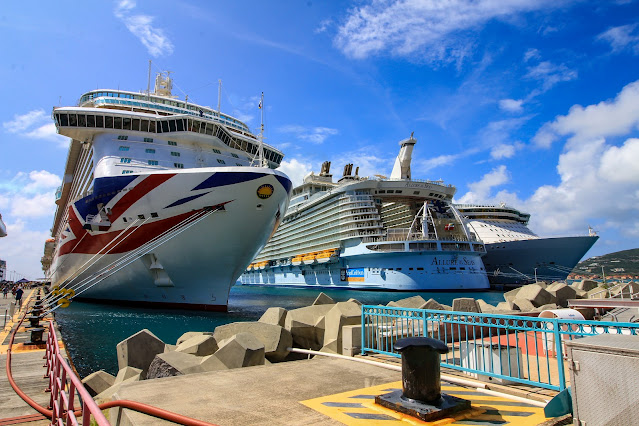
Royal Caribbean International will be the largest cruise brand in the world by 2029 noticeably ahead of Carnival Cruise Line, according to the 2023 Cruise Industry News Annual Report.
The Royal Caribbean brand will have an annual global capacity of approximately 6.5 million passengers in 2029, compared to 5.4 million for Carnival Cruise Line.
Royal Caribbean will sail 30 ships versus 27 for Carnival.
While Royal Caribbean will be the largest globally, based on known deployment and the current orderbook of new builds to be introduced, Carnival will most likely continue to dominate in the Caribbean where the brand tends to concentrate its deployment.
The other largest brands on a global scale in order of size will be MSC Cruises, Norwegian Cruise Line, Princess, Celebrity, AIDA, Costa, TUI and Holland America.
Two question marks would be what happens in China with Carnival’s joint Adora venture that could grow quickly when the Chinese market returns, and if more Costa ships were to be transferred to Carnival’s Fun Italian Style product.
AIDA Cruises has expanded the use of shore power in its fleet, reaching a significant milestone in its decarbonization efforts, according to a press release.
The AIDAsol was recently connected to shore power in nearly all ports during its recent voyage from April 16 to 21, 2023.
The ship was supplied with green energy from shore in Rostock-Warnemünde, Aarhus (Denmark), Kristiansand (Norway), and Hamburg.
The growing shore power infrastructure in Northern Europe has made it possible for AIDA Cruises to achieve this milestone.
AIDA President Felix Eichhorn stated that the company’s goal is to use shore power in all ports where port infrastructure is available. He added that the company’s investments in clean technology are actively supporting the goals of the EU’s “Fit for 55” program to build a corresponding infrastructure in all major EU ports by 2030.
During its recent voyage, AIDAsol made history by being the first cruise ship to conduct shore-side and shipboard integration tests on a newly built facility in Aarhus, Denmark. The official opening of Denmark’s first shore power plant for cruise ships is scheduled for later this year.
The AIDAsol was also supplied with energy from shore during its stop in Kristiansand, Norway, which it already did in 2022.
AIDA Cruises has been investing in sustainable cruising for many years, with a goal to achieve carbon-neutral ship operation for its fleet by 2050.
The company has been considering the use of environmentally friendly technology since 2004, and more than ten years have passed since it was able to start the usage of shore power in regular operation with an AIDA ship in Hamburg Altona in 2017. The company signed a memorandum of understanding in April 2022 with Cruise Baltic, a network of 31 ports and destinations, to use shore power in the ports of the Baltic Sea region.
AIDAsol’s arrival in Hamburg, its home port for this year’s summer season, marked another significant moment in AIDA Cruises’ decarbonization efforts. The ship was connected to Europe’s first shore power plant for cruise ships and switched off its main engines shortly after docking at the Cruise Center Altona.
The expansion of the use of shore power is part of AIDA Cruises’ efforts to use low-emission liquefied natural gas (LNG) and other alternative energy sources such as batteries and fuel cells. The company is working with various partners to find solutions for the use of regenerative and synthetic fuels.
“AIDA Cruises shows what can already be possible today,” said Eichhorn. “We can only achieve the energy transition together.”